
About William L. Smith
Lived 1758 – 1812 (aged 54). William L. Smith was an American politician, diplomat and lawyer.
William Loughton Smith (1758 – December 19, 1812) was an American lawyer, politician, and diplomat from Charleston, South Carolina. He represented South Carolina as a Federalist in the United States House of Representatives from 1789 until 1797, during which time he served as chairman of the Committee on Ways and Means.
Early life and legal career
Smith was born in Charles Town in the Province of South Carolina in 1758 to Benjamin Smith and Anne Loughton. His father earned his fortune as an importer of British luxury goods (primarily furniture and high-end silverware) into Charleston. His father's considerable wealth allowed him to sit out the Revolutionary War while obtaining his education in Europe.
In 1774, Smith studied law at the Middle Temple in London, Great Britain and continued his studies in Geneva from 1774 to 1778. Smith remained in Europe for the remainder of the American Revolutionary War. During the Washington administration, Smith accompanied Washington on tours of Rhode Island and the Southern states.
Smith was subsequently reelected to the Second Congress and Third Congress. Smith later joined the Federalist Party and was reelected to the Fourth and Fifth Congress under that ticket. In the Third Congress, Smith served as chair of the Committee on Elections. In the Fourth and Fifth Congresses, Smith served as chair of the Committee on Ways and Means.
Smith was opposed to the emancipation of slaves, believing it would benefit neither whites nor blacks. As he explained on the floor of the House of Representatives on March 17, 1790:
"If the blacks did not intermarry with the whites, they would remain black until the end of time; for it was not contended that liberating them would whitewash them; if they did intermarry with the whites, then the white race would be extinct, and the American people would all be of mulatto breed. In whatever light, therefore, the subject was viewed, the folly of emancipation was manifest."
In 1808, his politics shifted away from Alexander Hamilton and toward Thomas Jefferson, with Smith embracing the Embargo Act of 1807 as a way to increase the U.S.'s self-sufficiency.
Don’t just read it —
keep it.
Full-length biographies made to live with: read them, listen on the way to work, watch them tonight.
- E-book
- Audio
- Video
Instant download · yours to keep · every purchase keeps this site free
Important facts
People in William L. Smith's life
Named in this biography and alive at the same time
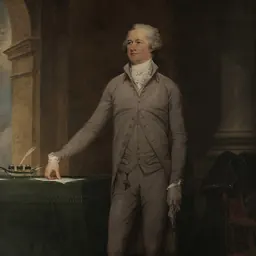
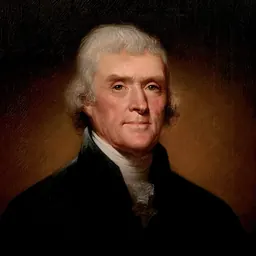
Related people
Same field, nearest in time

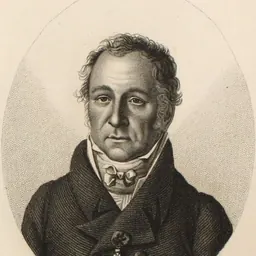


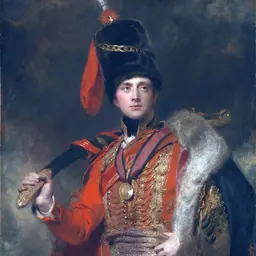
Contemporaries
People whose lives overlapped William L. Smith's





Frequently asked questions
Who was William L. Smith?
American politician
When was William L. Smith born?
William L. Smith was born on 2 October 1758 in Charleston.
When did William L. Smith die?
William L. Smith died on 19 December 1812 in Charleston.
What was William L. Smith's occupation?
William L. Smith was a politician, diplomat and lawyer.
What nationality was William L. Smith?
William L. Smith was American.
Sources & further reading
· DBpedia: William Loughton Smith
Cite this page
APA: Biography.guide. (2026). William L. Smith. https://biography.guide/william-l-smith-politician/
MLA: "William L. Smith." Biography.guide, https://biography.guide/william-l-smith-politician/.
Chicago: "William L. Smith." Biography.guide. https://biography.guide/william-l-smith-politician/.
Data last updated: 2026-09-26 · Spot an error? Report a correction.
Page generated 2026-09-27 05:16 UTC