
About William Knox
Lived 1732 – 1810 (aged 78). William Knox was a British official and pamphleteer.
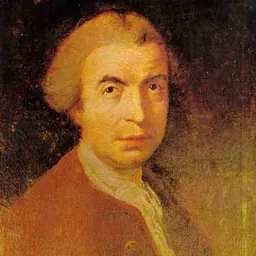
William Knox (1732–1810) was an Irish official who acted as joint Under-Secretary of State for the Colonies in Great Britain, and a controversialist known as a pamphleteer of the period leading up to the American Revolutionary War.
Early life Knox was born in Ireland at Clones, County Monaghan, the son of the physician Thomas Knox and his wife Nicola King, and was brought up in the Church of Ireland, in an evangelical family. He attended Trinity College, Dublin, where he was influenced by Philip Skelton. He received the basics of his political education from Sir Richard Cox, in the Irish House of Commons.
Lord Halifax appointed Knox "one of his majesty's council and provost-marshal" of the Province of Georgia when Henry Ellis was made governor of the colony in British North America. Ellis and Knox arrived at Savannah, Georgia on 16 February 1757, and Knox returned to England in 1761.
Knox's views formed a basis for the conciliatory propositions of Lord North in 1776; but was a hawk in the prosecution of the American war. He suggested the creation of a separate Loyalist colony from Maine in 1780. The New Ireland plan was approved by the king and ministers, but later was dropped.
William Knox from 1801 corresponded with Edmund Fanning as agent for Prince Edward Island. He died at Ealing near London, on 25 August 1810. It was advertised over his name in 1802. Several letters to and from George Grenville are in the Grenville Papers, vols. iii. and iv., and Knox's opinions are mentioned in Thomas Hutchinson's Diary.
Thomas Knox, eldest son, was brought up on the family slave-run estate at Knoxboro Creek on the Savannah River. He was later, as a teenager, in a responsible position in New Brunswick, and married Elizabeth Putnam, daughter of James Putnam. He matriculated at Oriel College, Oxford in 1787, and the same year entered Lincoln's Inn. He later was called to the bar. He took part, as a militia colonel in the unit founded by his father, in the Battle of Fishguard of 1797, but later lost his post. William George Knox was the father of the barrister André Blasini Knox.
One of the sons, left land in New Brunswick by his father, gave up a post in the East India Company to move there, where he was encountered there by Joseph Gubbins in 1811.
Of the daughters:
Caroline married in 1809 Carew Smyth, recorder of Limerick Letitia Elizabeth married in 1814 Arthur Dillon, future 3rd Baronet Harriet died unmarried
Don’t just read it —
keep it.
Full-length biographies made to live with: read them, listen on the way to work, watch them tonight.
- E-book
- Audio
- Video
Instant download · yours to keep · every purchase keeps this site free
Important facts
People in William Knox's life
Named in this biography and alive at the same time




Related people
Same field, nearest in time
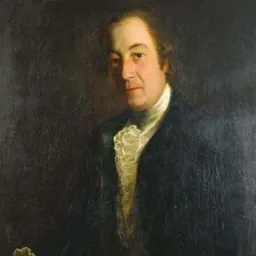
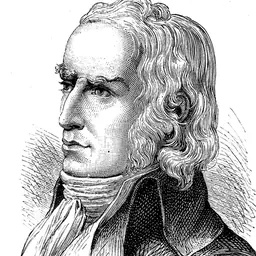
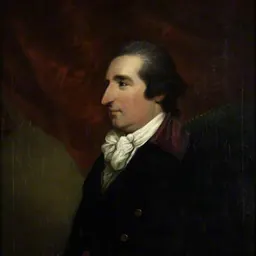

Contemporaries
People whose lives overlapped William Knox's


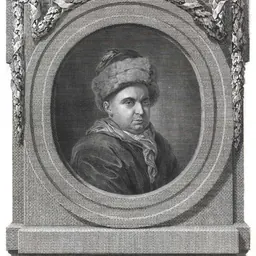


Frequently asked questions
Who was William Knox?
Irish official and pamphleteer
When was William Knox born?
William Knox was born on 17 January 1732.
When did William Knox die?
William Knox died on 25 August 1810.
What was William Knox's occupation?
William Knox was an official and pamphleteer.
What nationality was William Knox?
William Knox was British.
Sources & further reading
· DBpedia: William Knox (official)
Cite this page
APA: Biography.guide. (2026). William Knox. https://biography.guide/william-knox-official/
MLA: "William Knox." Biography.guide, https://biography.guide/william-knox-official/.
Chicago: "William Knox." Biography.guide. https://biography.guide/william-knox-official/.
Data last updated: 2026-09-20 · Spot an error? Report a correction.
Page generated 2026-09-27 05:26 UTC