
About William Johnson
Lived 1665 – 1718 (aged 52–53). William Johnson was an English and British politician.
William Johnson (c. 1660 - 1718) of Blackwall, Middlesex, and Mandeville's Manor, Sternfield, Aldeburgh, Suffolk, was an English merchant, shipbuilder and Tory politician who sat in the English and British House of Commons for 29 years from 1689 to 1718
Early life Johnson was the second son of Sir Henry Johnson and his wife Dorothy Lord, daughter of William Lord of Melton, Kent. He was educated at Leyden in 1678. He went to Bengal as a factor for the East India Company and sometime after 1683, he returned to England and established himself as a merchant, trading to Africa and the Peninsula. but lived mainly near the shipyard inherited by his brother Henry at Blackwall. By 1687, he married Agneta Baron, daughter of Hartgill Baron, clerk of the privy seal, of Windsor, Berkshire.
Career From 1687 to 1689 Johnson was an Assistant of the Royal African Company. At the 1689 English general election, he was returned as Tory Member of Parliament for Aldeburgh on the interest of his brother Henry. Also in 1689, he was appointed Commissioner for assessment, for Middlesex, Suffolk and Aldeburgh to 1690, and Deputy Lieutenant for Tower Hamlets at least to 1702. He was not active in the Convention Parliament, but served on six committees including one to consider the management of the East India trade, one for the bill for restoring corporations, and one on a petition from the Royal Africa Company.
At the 1698 English general election, Johnson and his brother both stood at Aldeburgh, where they were returned unopposed again, and he stood on his own at Orford, where he was defeated. He petitioned, and then in February 1700, he went on a long voyage to the East Indies and China. The petition was finally declared in his favour after the dissolution of Parliament. From the first general election of 1701, he stood only at Aldeburgh, where he was returned unopposed then and in the second general election of that year. As a Tory, he supported the motion of 26 February 1702 to vindicate the Commons’ proceedings over the impeachment of the Whig ministers in the previous session. He was committee member of the East India Company again from 1702 to 1705. He was not recorded as voting on the Tack on 28 November 1704. In 1709 he became an Elder Brother of Trinity House for the rest of his life.
Death and legacy Johnson was reported to have died at Cape Coast Castle in November 1718. He and his wife had three sons and nine daughters. All his property was to be sold, and the proceeds divided equally among the surviving members of his family, except for his one married daughter.
Don’t just read it —
keep it.
Full-length biographies made to live with: read them, listen on the way to work, watch them tonight.
- E-book
- Audio
- Video
Instant download · yours to keep · every purchase keeps this site free
Important facts
People in William Johnson's life
Named in this biography and alive at the same time

Related people
Same field, nearest in time


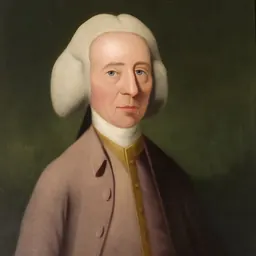

Contemporaries
People whose lives overlapped William Johnson's



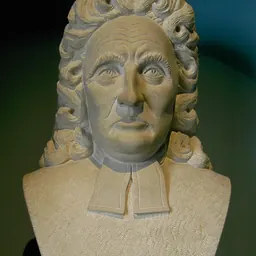

Frequently asked questions
Who was William Johnson?
English Member of Parliament (died 1718)
When was William Johnson born?
William Johnson was born in 1665.
When did William Johnson die?
William Johnson died in 1718.
What was William Johnson's occupation?
William Johnson was a politician.
What nationality was William Johnson?
William Johnson was English and British.
Sources & further reading
· DBpedia: William Johnson (MP for Aldeburgh)
Cite this page
APA: Biography.guide. (2026). William Johnson. https://biography.guide/william-johnson-politician-1665/
MLA: "William Johnson." Biography.guide, https://biography.guide/william-johnson-politician-1665/.
Chicago: "William Johnson." Biography.guide. https://biography.guide/william-johnson-politician-1665/.
Data last updated: 2026-09-20 · Spot an error? Report a correction.
Page generated 2026-09-27 05:15 UTC