
About William J. Carson
Lived 1840 – 1913 (aged 73). William J. Carson was an American military personnel.
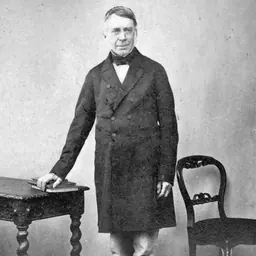
William J. Carson (August 30, 1840 – December 13, 1913) was a United States Army soldier and recipient of the United States' highest military decoration, the Medal of Honor, for his actions at the Battle of Chickamauga in the American Civil War.
Carson, a bugler and private in the 15th United States Infantry Regiment of the United States Regular Army, helped rally a detachment of the Regular Army Brigade (Regular Brigade) of the Union Army of the Cumberland to hold an advanced position for a critical period of time at the Battle of Stones River on December 31, 1862. The forward regiments held off a large Confederate attack long enough to permit the Union forces which were withdrawing elsewhere on the battlefield to regroup and hold critical defensive lines protecting their supply line and route of retreat over the Nashville turnpike and a railroad line. The forward regiments ultimately had to withdraw in haste in the face of superior force but then held key fallback defensive positions and held the field at the end of the battle. While in the retreat across an open field and under fire, Carson helped a wounded comrade from the battlefield, saving him from probable death on the field or capture.
On both days of the Battle of Chickamauga, on his own initiative, Carson played a key role in rallying Union troops under heavy attack near the end of the Union line. These actions delayed further Confederate attacks long enough on the first day for the broken Union regiments to regroup and hold their ground. On the second day of the battle, the extra time gained by the troops rallied by Carson's actions allowed most of the Union Army to retreat to the defenses of Chattanooga, Tennessee, without pursuit by the Confederate soldiers. Carson's actions rallied the troops and gave the impression that a large number of Union reinforcements were arriving. Renewed Confederate assaults were delayed so the Confederates could mass their forces against the supposed reinforced Union line. This delay allowed most of the Union Army on the field, including most of the XIV Corps to which the regulars were assigned, to retreat to a more secure position at Chattanooga. The small remaining rear guard force, including Carson, held the Union line for three additional critical hours until most of the remaining defenders ran out of ammunition and were taken prisoner.
Early life William J. Carson was born in Westmoreland County, Pennsylvania, on August 30, 1840. In 1845, his parents moved to Washington County, Ohio, and in 1852 they again moved to Logan County, Ohio, near Bellefontaine, the county seat. William worked on the family farm in spring, summer, and early autumn, and attended the district school in winter. He was at Bellefontaine when the American Civil War began.
On September 2, 1861, Carson enlisted in the 15th United States Infantry Regiment, and was assigned to Company "E", 1st Battalion, under the command of Captain Henry Keteltas.
American Civil War service William J. Carson participated with his regiment in all of its Civil War battles from the Battle of Shiloh (Pittsburgh Landing) on April 7, 1862, to the Battle of Chickamauga (Chickamauga, Georgia) on September 19 and 20, 1863 after which he was taken prisoner. Carson was a bugler but he picked up a rifle and joined in the fighting if needed. His distinguished record earned him a high amount of praise from officers and fellow soldiers and eventually the Medal of Honor for his gallantry at the Battle of Chickamauga.
Battle of Shiloh and beyond The 1st Battalion of the 15th U.S. Infantry Regiment was ordered to join then Brigadier General Ulysses S. Grant for the Battle of Fort Donelson but the fort was captured before the battalion could join Grant. The battalion then went to Nashville, Tennessee where it was assigned to the brigade of Brigadier General Lovell H. Rousseau, in the division of Major General Alexander McCook, in the first Army of the Ohio. The division moved south to join Grant but arrived the night after the first day of the Battle of Shiloh. The 1st Battalion, 15th United States Infantry Regiment fought on the second day of the Battle of Shiloh, April 7, 1862. After Shiloh, the regulars participated in the Siege of Corinth. They spent the remainder of the year marching and maneuvering through Mississippi, Alabama, Tennessee and Kentucky before returning to Nashville in November 1862.
Battle of Stones River Soon after Major General William S. Rosecrans assumed command of the first Union Army of the Ohio and changed its name to the Army of the Cumberland on October 24, 1862, he took steps to increase the number of men in the four Regular Army regiments (Carson's 15th, and the 16th, 18th and 19th U. S. Infantry Regiments) under his command to their authorized strength and to place them in a single "Regular Brigade." The brigade was formed on December 18, 1862, and placed under the command of Lieutenant Colonel Oliver Shepherd of the 18th United States Infantry Regiment in the division of Brigadier General Lovell H. Rousseau and the center corps or wing of Major General George H. Thomas. The Regular Brigade was designated 4th Brigade, 3rd Division, Center (wing or corps). On December 25, 1862, the Regular Brigade had five battalions with a total of forty-three companies. On the next day, Rosecrans began to march his force from his base at Nashville toward Murfreesboro, Tennessee, where he intended to strike the Confederate Army of Tennessee commanded by General Braxton Bragg.
On the first day of the Battle of Stones River near Murfreesboro, December 31, 1862, Rosecrans and Bragg both intended to attack their opponent's right wing. The Confederates attacked first and drove back Major General Alexander McCook's right wing. Rousseau's division was Rosecrans's only reserve but he had to use them in the battle to stop the Union retreat on his right. Rousseau's forces formed to the right of Brigadier General Philip H. Sheridan's division which was holding the right side of the line while men of the units in retreat passed by. Captain Keteltas's E Company, 1st Battalion, 15th U.S. Infantry Regiment was in an advanced position across a cotton field and in front of isolated cedar trees and deployed as skirmishers while the rest of the regiment was back in the trees. Bugler William J. Carson later wrote that the skirmishers fell back to the trees in the face of an overwhelming Confederate attack.
The strong Confederate attack finally forced the regulars to withdraw from the woods toward the rear of their original position near a railroad line and the Nashville pike. Carson later wrote that the advancing Confederate poured several volleys into the retreating regulars. The regulars rallied around a knoll and behind a 10-gun battery, five guns each of the 5th U.S. Artillery and the 1st Michigan Artillery. "On they came like so many deamonds," (sic) wrote Carson. The 15th U.S. Infantry suffered 50 casualties among its 319 officers and men. Soon, the regulars realized they were being flanked on the left. Lt. Colonel Shepherd sent his men toward the crucial Nashville turnpike to meet the Confederate advance. Finally, and only after their officers themselves recognized the danger, the Regular Brigade had to retreat across the open cotton field to the railroad line and the cover of their batteries on another nearby knoll as the Confederates again advanced in large numbers. The regulars suffered many casualties as they retreated across the open field with the pursuing Confederates firing on them as they ran toward their objective.
Carson was under fire and about halfway across the open cotton field during this withdrawal when he saw John Argo of his regiment wounded in both thighs. Bragg finally decided to withdraw from the field on January 3, 1863, because he feared Rosecrans was being reinforced. Rosecrans's force, including the regulars, were too exhausted to pursue the retreating Confederates, and also were hindered because the Confederates captured or destroyed much of the Union Army's food. Several others died later. Although a tactical draw, the Battle of Stones River was considered a victory by the North and the regulars were highly praised for their part in the battle. The stand of the regulars in the advanced position of the cedar grove enabled Rosecrans to strengthen his line along the Nashville Pike and save his supply line and his army. Carson had contributed to this by his actions in rallying the advanced units. He also demonstrated his courage in performing his job under precarious conditions and in rescuing one of his wounded comrades under fire and protecting him from death or capture.
Tullahoma campaign In early 1863, new companies and replacement troops increased the Regular Brigade to 2,000 soldiers, more men than the number that the brigade had at the Battle of Stones River. In April, Rosecrans relieved Colonel Oliver Shepherd, who had been promoted to colonel of the 15th U.S. Infantry, of command of the Regular Brigade and assigned Brigadier General Gordon Granger to the command. Many of the remaining veteran officers of the regiment obtained reassignments because of their admiration for Shepherd and lack of faith in Granger. Although these officers were lost to the brigade, Rosecrans recognized the developing problem and after 19 days replaced Granger with Brigadier General John Haskell King, an officer of the brigade who was promoted from major in the regular army and who had been wounded at the Battle of Shiloh.
Between June 24 and July 3, 1863, Major General Rosecrans maneuvered General Bragg's Confederate army out of middle Tennessee and into the defenses around Chattanooga in the Tullahoma Campaign (Middle Tennessee Campaign) without being required to fight a pitched battle. As the campaign started, Major Sidney Coolidge had to take command of the Regular Brigade because Brigadier General King's previous wound had not healed sufficiently to permit him to serve in the field. Coolidge performed well as the regulars drove Confederate forces from Hoover's Gap in the Battle of Hoover's Gap on June 26, 1863, in some of the sharpest fighting of the campaign. The Army of the Cumberland suffered fewer than 600 casualties while advancing 80 miles during the campaign.
After participating in the Tullahoma campaign's maneuvers, the Regular Brigade had spent its time drilling and then repairing roads and guarding railroad lines. With Thomas's and McCook's corps threatening his supply lines, Bragg evacuated Chattanooga on September 8, 1863. On September 10, 1863, the Regular Brigade crossed the Tennessee River at Bridgeport, Alabama, with General King in command. Captain Albert B. Dod had joined the 15th U.S. Infantry and, since he outranked Captain Keteltas, assumed command of the 1st Battalion while Keteltas resumed command of Company E. Rosecrans did not expect General Bragg to attack his force and did not know that Bragg had received 20,000 additional men and had two more divisions from Virginia due to arrive soon. Thomas and McCook had to bring their corps north toward Chattanooga in order to concentrate the scattered Union Army in one location. As the Union divisions moved along Chickamauga Creek, Rosecrans had Brigadier General Thomas Leonidas Crittenden's division move south to Lee & Gordon's Mill, along the Chickamauga, to support the movements of Thomas and McCook. On September 18, 1863, Bragg's Confederate force secured two bridges over the Chickamauga and prepared to attack Crittenden's position the next day. The regulars arrived on the field about 6 miles from Chattanooga at sunrise on September 19, 1863. along the La Fayette Road at about 6:00 a.m. on September 19, 1863 and according to Carson, they were ordered to a position a mile to the east of the field. Before most of the Union soldiers could finish breakfast, advancing Confederates reached their position. Baird's division pressed forward to fight the Confederates near Reed's bridge. At the outset, the regulars pushed back the advancing Confederates and captured 126 prisoners. Two of Baird's brigades broke from the attack. The battery was unable to retreat because the Confederates shot their horses. After firing a few volleys, most of the 15th U.S. Infantry retreated. Carson attached himself to the 18th U.S. Infantry's color guard and rallied part of that regiment. Surprised by this sudden stand of defiance, the Confederates slowed their pursuit of the men in retreat. The survivors of the 16th Infantry were combined with the 19th Infantry while the 15th Infantry and 18th Infantry had less than half of their men present, many of them wounded. Between the officers who had left the brigade during the command changes and the killed and wounded, few experienced leaders were in command at the start of the battle and fewer still remained to lead the brigade after the first day of the battle on September 19.
The worn out Union troops held their position at nightfall on September 19, Unlike his actions at Stones River, Bragg planned to renew the attack because he had 11 brigades on hand or about to arrive which had not participated in the battle on the first day. Thomas placed Baird's division on the northern end of the field, with the Regular Brigade assigned to hold the left end of the line until the anticipated arrival of Major General James S. Negley's division, which Thomas had requested Rosecrans to send. Meanwhile, Brigadier General King placed his men in a column of battalions in an effort to ward off a flanking attack by the Confederates if the regulars had to defend the end of the line. Rosecrans promised to send them, which he had not done before as Thomas had requested and expected. Colonel Joseph Dodge's brigade was nearby and was hastily moved to the end of the regular's line. They had no time to throw up even the most elementary defenses before being forced into action. Then the Confederates turned their attention from the regulars and were able to rout Brigadier General Samuel Beatty's brigade from Negley's division. Beatty's recently arrived brigade was strung out north of the end of the line held by Dodge and the regulars.
The fight was not over as the 19th U.S. Infantry's skirmishers were cut off from the main body of defenders and were overwhelmed. The remaining troops of the 18th U.S. Infantry, accompanied by Private Carson, had to withdraw to King's third line of defense, which was manned by Carson's 15th U.S. Infantry Regiment. For the second time that morning, Brannan decided it would imperil the Union line to move and he kept his men where they were, but Brigadier General Thomas J. Wood obeyed Rosecrans's order to fill the supposed gap that Brannan's departure would create. Eleven thousand Confederates moved into the gap, collapsing the southern portion of the Union line. About half the Union Army of the Cumberland began to flee the battlefield while the rest of the army was unaware of the disaster. Nonetheless, Thomas's divisions, with timely reinforcement by Brigadier General Gordon Granger's Reserve Division, were able to hold their position and withdraw that evening in order because of the defense and delaying actions of their rear guard.
Heavy casualties were sustained by both sides in the battle, with the Regular Brigade suffering 56 per cent of its men killed, wounded or missing. This included 61 killed, 255 wounded and 523 missing or captured. Carson said he found 10 bullet holes in his clothing and was "slightly wounded".
Aftermath: Prisoner, Medal of Honor Carson and many other soldiers of the Regular Brigade and a few other supporting regiments did not escape with most of Thomas's men but were captured late in the day after they ran out of ammunition. Nonetheless, Carson's bugle calls earlier in the day had not only rallied the troops but had led the Confederates to believe that the Union line had been reinforced.
In his report on the battle, Captain Dod wrote of Carson as follows:
After he was captured at Chickamauga, Carson spent three months in Pemberton Prison in Richmond, Virginia, where he was ill for the entire period.
Later life After the war, William J. Carson was married to the former Deborah J. Conn (1834 – November 15, 1934). The Carsons had a son, Clarence H. Carson (1867 – March 27, 1939).
William Carson was a member of the Grand Army of the Republic after the war. Colonel Goddard recounted his good standing in the community and his proud playing of the bugle calls at meetings of his G.A.R. Post:
Carson became the Vice President of the Survivors of the Regular Brigade, Army of the Cumberland for at least three years in the 1890s. In 1895, the veterans returned to the Stones River battlefield and to the Chickamauga battlefield for the dedication of the national battlefield park on the anniversary of the battle, September 19, 1895.
Carson was aged 73 at his death in Muncie, Indiana, on December 13, 1913.
Don’t just read it —
keep it.
Full-length biographies made to live with: read them, listen on the way to work, watch them tonight.
- E-book
- Audio
- Video
Instant download · yours to keep · every purchase keeps this site free
Important facts
People in William J. Carson's life
Named in this biography and alive at the same time

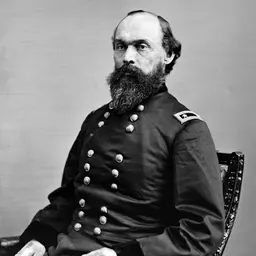

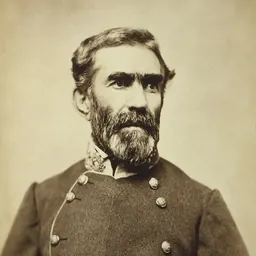

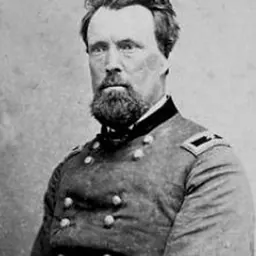

Related people
Same field, nearest in time
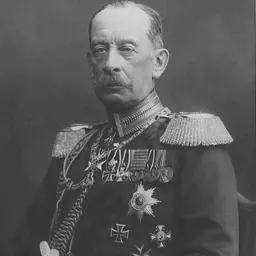


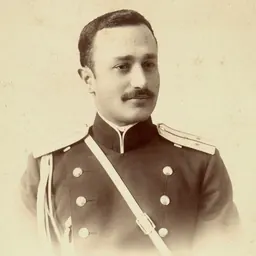
Contemporaries
People whose lives overlapped William J. Carson's
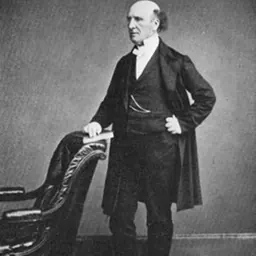
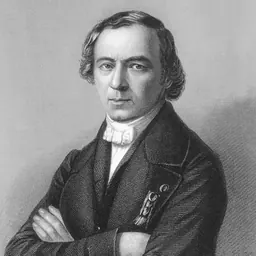

Frequently asked questions
Who was William J. Carson?
Union Army Medal of Honor recipient
When was William J. Carson born?
William J. Carson was born on 30 August 1840 in Westmoreland County.
When did William J. Carson die?
William J. Carson died on 13 December 1913 in Muncie.
What was William J. Carson's occupation?
William J. Carson was a military personnel.
What nationality was William J. Carson?
William J. Carson was American.
Sources & further reading
· Wikipedia: William J. Carson
· DBpedia: William J. Carson (Medal of Honor)
Cite this page
APA: Biography.guide. (2026). William J. Carson. https://biography.guide/william-j-carson/
MLA: "William J. Carson." Biography.guide, https://biography.guide/william-j-carson/.
Chicago: "William J. Carson." Biography.guide. https://biography.guide/william-j-carson/.
Data last updated: 2026-09-26 · Spot an error? Report a correction.
Page generated 2026-09-27 05:14 UTC