
William Ingersoll Bowditch
American abolitionist and suffragist
About William Ingersoll Bowditch
Lived 1819 – 1909 (aged 89–90). William Ingersoll Bowditch was an American abolitionist.
William Ingersoll Bowditch (August 5, 1819 – January 24, 1909) was an American lawyer, writer, abolitionist, and suffragist from Massachusetts. The landmarked William Ingersoll Bowditch House in Brookline, Massachusetts, was a station on the Underground Railroad prior to the American Civil War. One historian has argued that "From 1835 to 1860 the history of the moral movement against slavery in America is the history of William Lloyd Garrison and his great coadjutors like Wendell Phillips, Theodore D. Weld, Parker Pillsbury, Frederick Douglass, Theodore Parker, Lucretia Mott, Stephen and Abby Kelly Foster, the sisters Grimké, Samuel E. Sewall, Ellis Gray Loring, Maria Weston Chapman, David Lee and Lydia Maria Child, Francis Jackson, Samuel J. May, Samuel May, Edmund Quincy, Henry I. and William I. Bowditch, and Lucy Stone." Another history describes Bowditch as the "leading Constitutional scholar" among the abolitionists. In 1849 Bowditch wrote that the U.S. Constitution was a radically pro-slavery document.
Life and career Bowditch was the seventh of the eight children of astronomer, mathematician, and actuary Nathaniel Bowditch and his wife Mary Ingersoll. His older brother Henry Ingersoll Bowditch (1808–1891) was a doctor and Harvard Medical School professor who also heavily involved in the abolitionist movement. He spent most of his professional life as a conveyancer (a subfield of real estate law), and as an estate trustee. In 1844 he married Sarah Rhea Higginson, who was said to always be "in hearty sympathy with her husband's reform work."
Bowditch began his involvement in the abolitionist movement around 1841 when he got to know Ellis Gray Loring, Samuel Philbrick, and William P. Atkinson. When Ellen and William Craft escaped north in 1848, the first place they stayed in Brookline was Bowditch's house, before they had to be relocated for their own security. The Rendition of Anthony Burns (1854), and shorter pamphlets published by the American Anti-Slavery Society, including The anti-slavery reform: its principle and method.
After the raid on Harper's Ferry, one of John Brown's surviving sons "sought and found refuge at the home of Mr. Bowditch in Brookline. It is said that his extensive armament frightened the maid servant, and that Mr. Bowditch assured Brown that such defenses were not needed. 'Perhaps not,' he answered, 'but it is safer. I am resolved never to be taken alive.' He was unmolested while he remained in Brookline." In 1893 he responded to a letter inquiring about the history of the Underground Railroad in Massachusetts, writing:
Dear Sir: In reply to the question contained in your letter of Mar. 28, last, I would say: We had no regular route and no regular station in Massachusetts. I have had several fugitives in my house. Generally I passed them on Wm. Jackson at Newton. His house being on the Worcester Railroad, he could easily forward any one. One person, I (with others) drove to Concord in a two horse carry-all, and deposited him with Mrs. Brooks, the mother of Judge Geo. M. Brooks. Sometimes we rescued them from the ships in the harbor. I have had in my house Wm. and Ellen Craft, John Brown Jr., Henry (Box) Brown, and others ... Respectfully yours, Wm. I. Bowditch Another account lists him as successor to Rev. Dr. James Freeman Clarke as president of the Massachusetts Woman Suffrage Association, serving for seven years.
Bowditch died at his home in Massachusetts in 1909 after an illness of about three months. He was remembered by Henry Browne Blackwell in Woman's Journal: "With strong convictions and emphatic expression, Mr. Bowditch was a man of sterling integrity and warm affections. My daughter and myself once had the privilege of being the guests of Mr. and Mrs. Bowditch for ten days, at their beautiful woodland home on Lake Chateaugay, in the heart of the Adirondacks, where we greatly enjoyed their reminiscences of 'the times that tried men's souls.'"
Selected works
Don’t just read it —
keep it.
Full-length biographies made to live with: read them, listen on the way to work, watch them tonight.
- E-book
- Audio
- Video
Instant download · yours to keep · every purchase keeps this site free
Important facts
People in William Ingersoll Bowditch's life
Named in this biography and alive at the same time

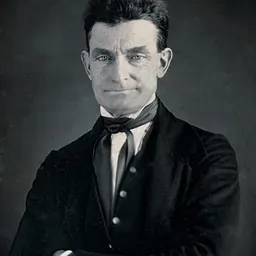


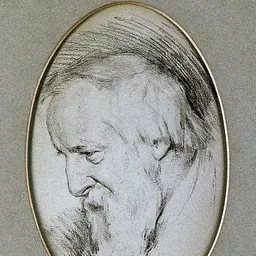
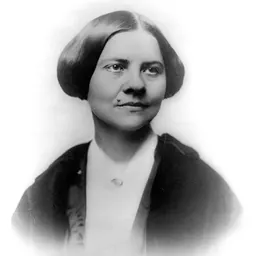


Related people
Same field, nearest in time
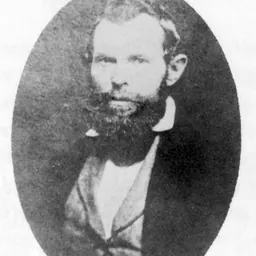
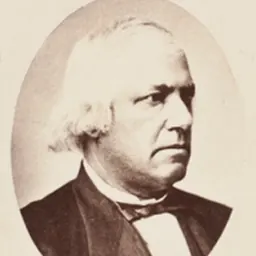



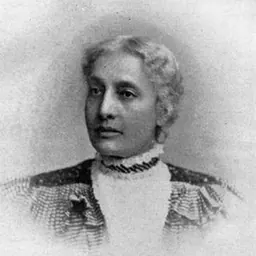
Contemporaries
People whose lives overlapped William Ingersoll Bowditch's
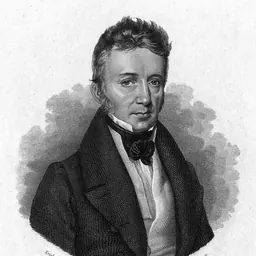

Frequently asked questions
Who was William Ingersoll Bowditch?
American abolitionist and suffragist (1819–1909)
When was William Ingersoll Bowditch born?
William Ingersoll Bowditch was born in 1819 in Salem.
When did William Ingersoll Bowditch die?
William Ingersoll Bowditch died in 1909 in Brookline.
What was William Ingersoll Bowditch's occupation?
William Ingersoll Bowditch was an abolitionist.
What nationality was William Ingersoll Bowditch?
William Ingersoll Bowditch was American.
Sources & further reading
· Wikipedia: William Ingersoll Bowditch
· DBpedia: William I. Bowditch
Cite this page
APA: Biography.guide. (2026). William Ingersoll Bowditch. https://biography.guide/william-ingersoll-bowditch/
MLA: "William Ingersoll Bowditch." Biography.guide, https://biography.guide/william-ingersoll-bowditch/.
Chicago: "William Ingersoll Bowditch." Biography.guide. https://biography.guide/william-ingersoll-bowditch/.
Data last updated: 2026-09-20 · Spot an error? Report a correction.
Page generated 2026-09-27 05:26 UTC