
About William Hulme
Lived 1788 – 1855 (aged 66–67). William Hulme was a military personnel, auckland, auckland Province and postmaster.
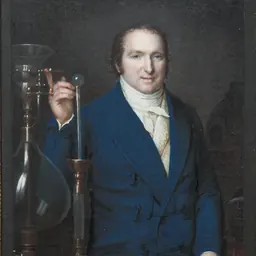
Lieutenant Colonel William Hulme (10 May 1788 – 21 August 1855) was an officer of the 96th Regiment of Foot, British Army.
Early years and family William Browne Hulme was born at Halifax, Nova Scotia on 10 May 1788.
His brother, John Lyon Hulme, was born at Manchester, Nova Scotia, on 23 September 1790. He went on to receive a commission in the Corps of Royal Engineers on 24 June 1809; serving in the Peninsular War in Portugal, particularly on the Lines of Torres Vedras, Spain and south-western France from 1810–1814, and the Netherlands campaign from 1815, commanding a division of the pontoon train. They followed the army through to Paris, France, after Waterloo, all under the Duke of Wellington. He also served in Malta and Ireland. John married Mary Hart at St David, Exeter, Devon, on 3 June 1829, and following her death in 1833, retired from service with rank of Brevet Major on 5 December 1835. His nephew, Charles Francis Hulme, Ensign, 40th Regiment of Foot, born at Norfolk Island, visited him at home in St Sidwells, Exeter, during the 1861 census.
Their father, also William Brown Hulme (1757–1841), having been transferred from the Drawing Room at the Tower of London was, at the time of their birth, an assistant engineer and draughtsman at Halifax, Nova Scotia. He went on to serve as Sheriff of Sydney County, Nova Scotia, from 12 June 1792; in the 7th Regiment of Foot from 11 October 1796; 6th Irish Brigade from 20 September 1799; 2nd Garrison Battalion with rank of lieutenant from 26 September 1805; and the Royal Staff Corps (RSC) from 1796, with rank of lieutenant from 3 October 1805 to the rank of captain from 31 May 1809. He'd also noted he was severely injured in Spain. The RSC, an army corps responsible for military engineering, were first in the field during the Peninsular War. In 1808, 45 RSC were with Major General Brent Spencer's corps on the south coast of Spain, and 50 more with Sir John Moore's corps. The RSC were based at Hythe, Kent,
Half-brother, Edward Hulme, went on to be a surgeon. He left Britain for New Zealand in 1856.
Career Upon leaving college,
India Hulme's service in the East Indies began on arrival at the Malay Peninsula on 11 September 1807.
Third Anglo-Maratha War Mahidpur Stationed at Jalna, Captain Hulme's two Royal Scots flank companies, with two regiments of native cavalry and four guns, marched out north-northeast on 11 October 1817, to join 1st division headquarters at Harda on 22 October. Brevet Lieutenant Colonel Thomas Fraser's Royal Scots companies marched out east-northeast on 15 October for Mehkar but were redirected to assist the British force under attack at Nagpur. Joining the 2nd division at Amravati on 7 November, they moved on to take part in the Battle of Sitabuldi, Nagpur. Meanwhile, Hulme and his flank companies, moving northwest, crossed the Narmada River in flat-bottomed boats with the 1st division on 30 November, arrived at Piplya on 8 December and marched on to encamp near Ujjain, some 28 miles (45 km) from Mahidpur. The 1st and 3rd divisions of the army encamped there on 12 December.
Crossing the river at the ford, they came under cannon fire and formed up under shelter of the opposite bank, along with Hislop and staff. Malcolm ordered Hulme's flank companies, the MER and 2/14th MNI to move up and form on top of the bank.
Hulme's flank companies were tasked with leading the attack toward the right on Holkar's left flank and at Dubli. Steady but determined, suffering severe injuries from grape and chain shot, a bayonet charge through Holkar's artillery cleared Dubli and drove the flank's infantry to flee; Holkar's artillerymen carrying on their deadly cannonade to the last. Holkar's left flank were pursued along the river bank to their camp, which when attacked by the Royal Scots caused them to retreat across the river. Battle honours of Nagpore and Maheidpoor were added to the 1st Regiment (Royal Scots) colours on 26 February 1823. Following approval of the Army of India Medal (AIM) in 1851, Hulme, then retired in New Zealand, was amongst thirty-eight recipients with the Maheidpoor clasp, presented to officers and men of 1st Regiment (Royal Scots), 2nd Battalion, who were specially mentioned in the Commander-in-Chief's orders.
Thalner Fort Marching from Mahidpur, the army stopped over at Indore, 2–6 February, and crossed Narmada River on 13 February. At Khargone they were joined by Lieutenant Colonel Heath and his detachment of Madras European Regiment from Handia on 18 February, and marched on down Sendhwa ghat. They received Sendhwa fort, ceded under the Treaty of Mandsaur, on 23 February.
Miles ahead, a sick officer carried by palanquin, making for encampment across the river, was fired upon as he passed Thalner Fort, requiring him to turn back. Shot was also fired at the baggage column entering the town. As the day proceeded, with support of the Rifle Corps and the 3rd Light Infantry, they moved up with two guns to shelter in a ravine south-east of the fort. Murray fell wounded toward the wicket, fending off with his sword. As the Arabs closed the wicket, a grenadier on the outside thrust his musket through the gap whilst Lieutenant Colonel Mackintosh, Commissariat, and Captain M‘Craith, Madras Pioneers, forced the door open. M‘Craith grabbed Murray with one hand and dragged him through whilst warding off blows with his sword in the other.
The head of the storming party fell back in confusion. Though the garrison had advantage of the gate's kill zone, MacGregor and thirty or forty of his grenadiers re-entered unopposed, and finding the wicket still open, poured fire through it to clear a way for the party to enter. As the gates opened, the late Major Gordon's storming party, Hulme and Maitland now commanding, poured in and put the garrison, said to number from 180 to 300, to the sword. Many Arabs sheltered in their houses for defence; some collected on one of the towers and made a feeble resistance; others threw themselves off the wall to the river and were dashed. Apparently, only two escaped. MacGregor was killed in the assault; Lieutenant John MacGregor severely wounded defending his brother's body; Lieutenant Alex Anderson, Madras Engineers, and Lieutenant Chauval, 1/2nd Madras Native Infantry, were severely wounded. Carnaticus commented in 1820:
The general impression through the British camp was, that we had acted treacherously on this occasion; but the execution of the Killedar, a Bramin and nearly related to some of the first families in the country, and his having been exposed naked from the walls, branded our name with an idea of barbarity and injustice, that in that quarter of India will not be easily effaced or forgotten. Sir T. Hislop supposed, or more probably was led to think so by some of those about him, that the garrison acted treacherously upon the head of our party, in first admitting them through the wicket, and then setting upon them; but, however Sir T. Hislop's well-known humanity and moderation may acquit him (and we have good reason to know, that he was not the most morally culpable in that transaction) of a wanton or premeditated shedding of blood, still, in the affair of Talnair, his name as the chief commander must remain attached to it, and surely not under the most flattering colours.
Several years later, from 29 January 1824, Brevet Major Hulme was transferred from the 7th Regiment, Royal Fusiliers, to be Captain of the new 96th Regiment of Foot then being reformed at Salford Barracks, Manchester, in continuation of preceding regiments of the same designation and battle honours—Peninsular, Egypt and the Sphinx. They were immediately sent from Liverpool in June–August 1824 to garrison Hulme's hometown of Halifax, Nova Scotia.
Hulme was stationed with the 96th Regiment at Halifax from September 1824, and in Bermuda from September 1825, where a son, William, was born in October 1825.
Landed at Gosport, Hampshire, in 1836, the regiment marched to Gravesend in October, then sailed to station at Leith, Edinburgh Castle and Greenlaw in Scotland. They moved to Glasgow in November, then to Enniskillen and Dublin in Ireland a year later. Back to England, they were stationed at Liverpool and Lancaster. Hulme was promoted to rank of brevet lieutenant colonel on 10 January 1837.
Norfolk Island penal settlement Though assigned to Launceston, in March he accompanied Captain Alexander Maconochie to Norfolk Island to relieve the 50th Regiment and command the troops there. Another son, Charles Francis, was born at Norfolk Island on 9 March 1842. The Hulmes and the detachment of the 96th departed Norfolk Island by the Duke of Richmond on 28 February, arriving at Launceston, Van Diemen's Land, on 11 March 1844. With Hulme now appointed command of troops in New Zealand, they left Launceston for that country on 23 March 1844.
New Zealand Relieving Major Thomas Bunbury and the 80th Regiment in New Zealand, Brevet Lieutenant Colonel Hulme arrived in Auckland on 14 April 1844, from Launceston, Van Dieman's Land, on the Marian Watson, along with Lieutenant Edward Barclay, Assistant Surgeon Stewart, and 59 soldiers of the 96th Regiment. Major Robertson, Ensign John Campbell and 55 soldiers and family's had arrived by the Water Lilly on the same day. His military career is perhaps better known for his part in the Flagstaff War, 1845–1846, the first Anglo-Māori war.
Flagstaff War Otuihu Governor Robert FitzRoy gazetted a proclamation of martial law within 60 miles of Russell as well as notice of 26 April, stating that: "During the continuance of war, no natives may approach the Ships, the Soldiers, or encampment at the Bay of Islands,—wherever placed; without having a Missionary, or a Protector, with a white Flag, with them, lest the Soldiers should mistake friends for enemies, and fire upon them in error." Hulme reported:
At daylight, I was much surprised to see a white flag flying in Pomare's pah; but as the proclamation only authorized loyal natives to shew it, I could not recognise it as an emblem of peace from a supposed rebel.—The troops commenced disembarking, and when landed, I sent two Interpreters with a message into the pah, to desire Pomare to come to me directly; his answer was,—"The Colonel must come to me." He sent the same answer to a second message. One of the interpreters now offered to remain a hostage in the pah—this I would not hear of. I then sent my final message to Pomare, that if he did not come to me in five minutes, I would attack his pah, this threat induced Pomare to come.
Hulme explained to Pomare that his conduct had been very bad; that he must go on board North Star, and accompany Hulme to Auckland to account for it to the Governor. In May 1845 Heke's pā was attacked by troops from the 58th, 96th and 99th Regiments with Royal Marines and a Congreve rocket unit. In parallel operations elsewhere, on 7 May, Lieutenant George Phillpotts, RN, with seamen of HM Ships North Star and Hazard, burnt five small villages belonging to Heke, broke up two large canoes and brought off two large ones. On 9 May, a party under Mr. Lane broke up two large canoes and carried off four boats taken from Kororāreka.
The military forces arrived at Heke's pā at Puketutu on 7 May 1845. Lieutenant Colonel Hulme and his second in command Major Cyprian Bridge made an inspection of Heke's pā and found it to be quite formidable. Lacking any better plan they decided on a frontal assault the following day. Te Ruki Kawiti and his warriors attacked the colonial forces as they approached the pā, with Heke and his warriors firing from behind the defences of the pā. There followed a savage and confused battle. Eventually the discipline and cohesiveness of the British troops began to prevail and the Māori were driven back inside the pā. But they were by no means beaten, far from it, as without artillery the British had no way to breach the defences of the pā. Hulme decided to disengage and withdraw his force to Kerikeri. They transferred to the North Star, Slains Castle, Velocity and Albert, and sailed for Auckland on Sunday, 11 May. On 15 May, the remaining force of Major Bridge, 200 men and 8 marines, along with Tāmati Wāka Nene and his warriors, attacked Te Kapotai pā at Waikare by night; the inhabitants evacuating the pā with little resistance. Property said to have been stolen from Kororāreka and elsewhere was believed to have been concealed in dense bush, making it impossible to find. Phillpotts took away several boats.
From the arrival of additional troops in June 1845, Hulme was superseded in command of the forces in New Zealand by Lieutenant Colonel Henry Despard, 99th Regiment, a soldier who did very little to inspire any confidence in his troops.
Australia Based in Hobart, Van Diemen's Land, with his troops, since arrival of the ship Java on 19 December 1846, Hulme advanced from Brevet Lieutenant Colonel to Lieutenant Colonel without purchase in 1848. He then retired from soldiering in 1849 and moved back to New Zealand. That year, Hulme introduced the idea of a motion and ordinance in favour of enabling Maori land in the northern district of New Zealand to be used for cattle grazing by squatting. "Nothing, he thought, would tend so much to the general good and welfare of New Zealand as the opening up of its lands to the occupation of European settlers and squatters." In response: "The Governor said that the resolution as it now stood could not be entertained by the Council—but he thought that they might readily adopt a different one, which might answer the ends aimed at, and be less objectionable. As it stood he could not advise its adoption, for this reason that it involved a question that was one of universal interest for the whole of New Zealand, South as well as North; and although the General Legislative Council of the whole islands had power vested in it to adopt resolutions on this subject, yet as this Council did not represent the whole islands, it could not entertain a subject affecting the entire country."
Post Office Hulme was appointed by Governor George Grey as the first Postmaster for the Province of Auckland from 1 January 1854 but received less support in the idea of an appointment to Postmaster-General for New Zealand.
Death William Hulme died on Tuesday, 21 August 1855, in his 68th year and was buried with military honours in Symonds Street Cemetery on Friday, 24 August. The New-Zealander wrote:
The late Lieut. Col. Hulme was a fine specimen of a thorough English soldier; intrepid and cool on all occasions. In 1849 he sold out of the service, and returned to Auckland, where to the hour of his death, he was all along held in the highest estimation as an upright and honourable colonist.
Don’t just read it —
keep it.
Full-length biographies made to live with: read them, listen on the way to work, watch them tonight.
- E-book
- Audio
- Video
Instant download · yours to keep · every purchase keeps this site free
Important facts
People in William Hulme's life
Named in this biography and alive at the same time



Related people
Same field, nearest in time

Contemporaries
People whose lives overlapped William Hulme's




Frequently asked questions
Who was William Hulme?
British Army officer
When was William Hulme born?
William Hulme was born in 1788.
When did William Hulme die?
William Hulme died in 1855.
What was William Hulme's occupation?
William Hulme was a military personnel, auckland, auckland Province and postmaster.
Sources & further reading
· DBpedia: William Hulme (British Army officer)
Cite this page
APA: Biography.guide. (2026). William Hulme. https://biography.guide/william-hulme/
MLA: "William Hulme." Biography.guide, https://biography.guide/william-hulme/.
Chicago: "William Hulme." Biography.guide. https://biography.guide/william-hulme/.
Data last updated: 2026-09-20 · Spot an error? Report a correction.
Page generated 2026-09-27 05:26 UTC