
William Hillman Shockley
American mining engineer and botanist
About William Hillman Shockley
Lived 1855 – 1925 (aged 69–70). William Hillman Shockley was an American botanist, mining engineer, amateur photographer, botanical collector and scientific collector.
William Hillman Shockley (September 18, 1855 – May 26, 1925) was an American engineer, photographer, and botanist. After graduating from the Massachusetts Institute of Technology, Shockley worked as a mining engineer in Florida and Nevada, collecting plant specimens during his time in the American West. Fluent in multiple languages, Shockley's engineering work took him to Africa, Asia, Australia, Europe, and South America. Across these regions, he took thousands of photographs documenting both local mining and society.
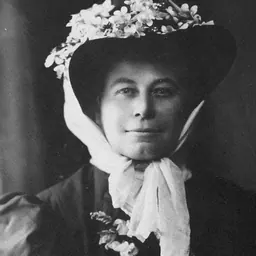
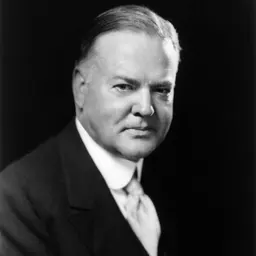
In 1908, after he moved to Tonopah, Nevada, he married May Bradford, the first woman to be a U.S. Deputy Mineral Surveyor. They had one child, William B. Shockley, who later co-invented the transistor and received a Nobel Prize. After moving to Palo Alto, California, where his family were neighbours and friends of later U.S. president Herbert Hoover, William H. Shockley lectured at Stanford University. He died in 1925.
Shockley's botanical work has resulted in several species being named for him. Over 2,200 photographs of his travels to Asia, Europe, and Oceania, illustrating pre-American influence on mining, have been acquired and partially digitized by Duke University Libraries. Shockley was descended from Mayflower settler John Alden and what the botanist Willis Linn Jepson called "a sea-faring race, captains of whaling ships and the like"; Shockley's father had been a whaling captain.
Early career After graduation, Shockley worked as a mining engineer with his brothers in Florida, California, and Nevada, becoming well known. While working at Ocala, Florida, he collected ferns that featured in the botanist Daniel Cady Eaton's The Ferns of North America. During this time, Shockley collected specimens in Nevada and California. He was the first person to collect specimens from the California White Mountains, making several trips to the upper elevations of the range. He sent duplicate specimens to the botanist Asa Gray and his herbarium. Gray utilized Shockley's collections to describe the species Acamptopappus shockleyi; additional species were first described from Shockley's collections.
International work and travels In 1895, Shockley moved to Europe. He stayed in Shanghai, China, in 1896 and 1897. In 1897, he was hired by a London-based British–Italian company, the Peking Syndicate Company, as a surveyor for their mining and petroleum operations in the province of Shanxi in western China. Arriving in Beijing in January 1898, he spent the next four months surveying Shanxi. While he and his surveying team had official support from the local government, they were impeded by winter conditions on the mountainous roads they used. During his time in China and on his other travels, Shockley took many photos of both the social life and the mining industry of the places he visited. In 1904, Shockley published a report on his time in Shanxi. His report reflected that the region's coal production had continued a trajectory of depression that the German scientist Ferdinand von Richthofen had observed in 1870, with Shockley estimating an annual output of 50,000 tons from the region against Richthofen's estimate of 160,000 tons three decades before.
Shockley remained in China until 1899, He also passed through Japan on his way to other locations. From 1899 to 1900, he traveled through and photographed southern Asia, including India, Singapore and its botanic gardens, Ceylon (now Sri Lanka), Penang, and Rangoon. He was in Western Australia from late fall 1901 to May 1902, particularly at the Wiluna Gold Mine. Shockley visited Siberian Russia several times. Some of his photographs from his 1900 visit included Indigenous Siberians. He stayed in Bogoslovsk (now Karpinsk) twice, in the summers and falls of 1904 and 1905, and visited Moscow and Perm.
In 1903, Shockley traveled to Peru. He was in Sudan and Egypt in 1905. Shockley would also go to Argentina, Chile, and Eritrea as part of his work on mining operations, alongside many European cities.
Later life and death In London, the Shockleys had their only son, William Bradford Shockley, in 1910. William B. Shockley co-invented the transistor, for which he was awarded the Nobel Prize in Physics.
Shockley was a member of the American Institute of Mining Engineers.
Legacy The botanist Sereno Watson described Lupinus shockleyi using a specimen collected by Shockley. The botanist Alice Eastwood named the species Aquilegia shockleyi for Shockley, describing the species from a specimen he collected from Soda Springs Canyon, Nevada.
Aquilegia shockleyi(Shockley's columbine) Alice Eastwood (1905) Described from Shockley's specimen no. 504, collected from Soda Springs Canyon, Nevada
Lupinus shockleyi(Purple desert lupine) Sereno Watson (1887)
Don’t just read it —
keep it.
Full-length biographies made to live with: read them, listen on the way to work, watch them tonight.
- E-book
- Audio
- Video
Instant download · yours to keep · every purchase keeps this site free
Important facts
People in William Hillman Shockley's life
Named in this biography and alive at the same time





Related people
Same field, nearest in time

Contemporaries
People whose lives overlapped William Hillman Shockley's





Frequently asked questions
Who was William Hillman Shockley?
American mining engineer and botanist (1855-1925)
When was William Hillman Shockley born?
William Hillman Shockley was born in 1855 in New Bedford.
When did William Hillman Shockley die?
William Hillman Shockley died in 1925 in Los Angeles.
What was William Hillman Shockley's occupation?
William Hillman Shockley was a botanist, mining engineer, amateur photographer, botanical collector and scientific collector.
What nationality was William Hillman Shockley?
William Hillman Shockley was American.
Sources & further reading
· Wikipedia: William Hillman Shockley
· DBpedia: William H. Shockley
Cite this page
APA: Biography.guide. (2026). William Hillman Shockley. https://biography.guide/william-hillman-shockley/
MLA: "William Hillman Shockley." Biography.guide, https://biography.guide/william-hillman-shockley/.
Chicago: "William Hillman Shockley." Biography.guide. https://biography.guide/william-hillman-shockley/.
Data last updated: 2026-09-20 · Spot an error? Report a correction.
Page generated 2026-09-27 05:23 UTC