
About Alice Eastwood
Lived 1859 – 1953 (aged 94). Alice Eastwood was a Canadian and American botanist, botanical illustrator, curator, editor, botanical collector and scientific illustrator.
Early life Alice Eastwood was born on January 19, 1859, in Toronto, Canada West, to Colin Skinner Eastwood and Eliza Jane Gowdey Eastwood. Her father worked at the Toronto Asylum for the Insane. When she was six her mother died; Eastwood and her siblings were cared for by various relatives, and for a time, Alice and her sister were placed at the Oshawa Convent in Toronto.
Eastwood was a self-taught botanist and learned from published botany manuals including Gray's Manual and the Flora of Colorado. She used her limited teacher's salary to fund summer trips into the Colorado mountains, bringing back botanical specimens which would form the basis of the University of Colorado's herbarium.
Career Early in her career, Eastwood made collecting expeditions in Colorado and the Four Corners region. She became close with the Wetherill Family, and visited Alamo Ranch in Mesa Verde often, beginning in July 1889. She was considered a part of the family, and so did not sign the guest register on later trips. Each time Eastwood visited, she was particularly welcomed by Al Wetherill, who shared an interest in her work. In 1892, he served as her guide on a 10-day trip to southeastern Utah to collect desert plants. During the same year on an expedition in Colorado, Eastwood collected the type specimen of Oreocarya aperta, a desert flowering plant in the forget-me-not family which she discovered in Mesa County. She published it eleven years later in the Bulletin of the Torrey Botanical Club, and the species is so rare that today it is only known from her collection.
Eastwood also made collecting expeditions to the edge of the Big Sur region, which at the end of the 19th century was a virtual frontier, since no roads penetrated the central coast beyond the Carmel Highlands. On those excursions she discovered several plants, including Hickman's potentilla which she named after J. B. Hickman, her guide for the trip.
Before she moved to San Francisco Eastwood lived in San Diego, an area in which she studied and explored. Here she was inspired to write a biographical essay entitled Early Botanical Explorers on the Pacific Coast and the Trees They Found There, detailing the discoveries of earlier botanists.
Eastwood rented an apartment near Nob Hill in San Francisco when she took the job of curator at the academy. An appreciator of all forms of plant life, her daily walks to work inspired her to write an article entitled The Flora of the Nob Hill Cobblestones, originally published in 1898. Within it she identified 64 species of plants, many commonly called weeds, which she collected specimens of for the herbarium. Her work was published in Willis Jepson's journal Erythea under the title Plant Inhabitants of Nob Hill, San Francisco which had been revised unbeknownst to Eastwood. She corrected it years later when it was re-published by the California Botanical Club, as she felt the title misrepresented the nature of her article.
California Academy of Sciences In 1891, after reviewing Eastwood's specimen collection in Denver, Mary Katharine Brandegee, Curator of the Botany Department at the California Academy of Sciences, hired Eastwood to work in the academy's herbarium. Departing from the curatorial conventions of her era, Eastwood segregated the type specimens from the main collection. The cabinet she had stored them in was damaged; using her apron, she lowered the specimens from a window to a friend as the fire after the earthquake approached, then commandeered a wagon. The specimens and records she saved were almost all that survived of the academy's collection. Starting in 1928, Eastwood accompanied fellow botanist Susan Delano McKelvey on several collecting expeditions in the Southwest and they built a lasting collaboration, frequently corresponding and exchanging specimens. By keeping the first set of each collection for the academy and exchanging the duplicates with other institutions, Eastwood was able to build the collection, Abrams noting that she contributed "thousands of sheets to the Academy's herbarium, personally accounting for its growth in size and representation of western flora". By 1942 she had built the collection to about one third of a million specimens, nearly three times the number of specimens destroyed in the 1906 fire. She helped to create the Shakespeare Garden within the park, and in 1971 the Alice Eastwood Garden was named by the San Francisco Garden Club in her honor.
Eastwood published over 310 scientific articles during her career. She served as editor of the biological journal Zoe and as an assistant editor for Erythea before the 1906 earthquake, and founded a journal, Leaflets of Western Botany (1932–1966), with John Thomas Howell. She also served as an advisor for Mary Elizabeth Parsons' comprehensive book The Wild Flowers of California: Their Names, Haunts, and Habits.
Her main botanical interests were western U.S. Liliaceae and the genera Lupinus, Arctostaphylos and Castilleja.
Eastwood died from cancer in San Francisco on October 30, 1953. The California Academy of Sciences retains a collection of her papers and works. In 1949, in recognition of her achievements, the American Fuchsia Society awarded her with its Medal of Achievement. She was honored in the binomial name of Boletus eastwoodiae, an attractive though poisonous bolete of western North America which she collected. However, this was renamed Boletus pulcherrimus due to a misidentification of type material. It still bears the common name of Alice Eastwood's bolete. Eastwood worked to save a redwood grove in Humboldt County, which was later named Alice Eastwood Memorial Grove. (Eastwood's Monkeyflower) Fritillaria eastwoodiae (Butte County fritillary) Malacothamnus eastwoodiae (Alice's lovely bushmallow) Podistera (Lomatium) eastwoodiae (Eastwood's Woodroot) Salix eastwoodiae (Eastwood's willow)
Genera named after Eastwood Aliciella Eastwoodia Eastwoodiella
Don’t just read it —
keep it.
Full-length biographies made to live with: read them, listen on the way to work, watch them tonight.
- E-book
- Audio
- Video
Instant download · yours to keep · every purchase keeps this site free
Important facts
People in Alice Eastwood's life
Named in this biography and alive at the same time




Related people
Same field, nearest in time

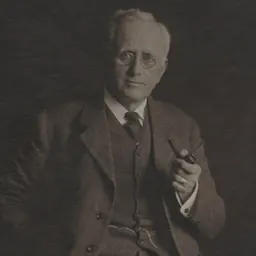


Contemporaries
People whose lives overlapped Alice Eastwood's
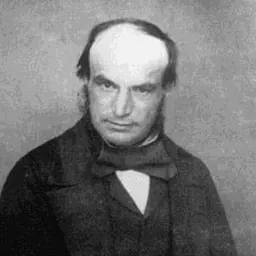
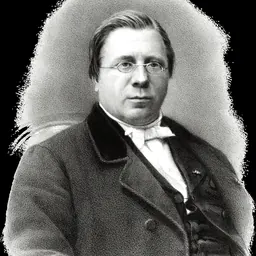
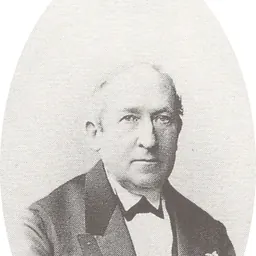


Frequently asked questions
Who was Alice Eastwood?
Canadian American botanist (1859-1953)
When was Alice Eastwood born?
Alice Eastwood was born on 19 January 1859 in Toronto.
When did Alice Eastwood die?
Alice Eastwood died on 30 October 1953 in San Francisco.
What was Alice Eastwood's occupation?
Alice Eastwood was a botanist, botanical illustrator, curator, editor, botanical collector and scientific illustrator.
What nationality was Alice Eastwood?
Alice Eastwood was Canadian and American.
Sources & further reading
Cite this page
APA: Biography.guide. (2026). Alice Eastwood. https://biography.guide/alice-eastwood/
MLA: "Alice Eastwood." Biography.guide, https://biography.guide/alice-eastwood/.
Chicago: "Alice Eastwood." Biography.guide. https://biography.guide/alice-eastwood/.
Data last updated: 2026-09-24 · Spot an error? Report a correction.
Page generated 2026-09-27 05:03 UTC