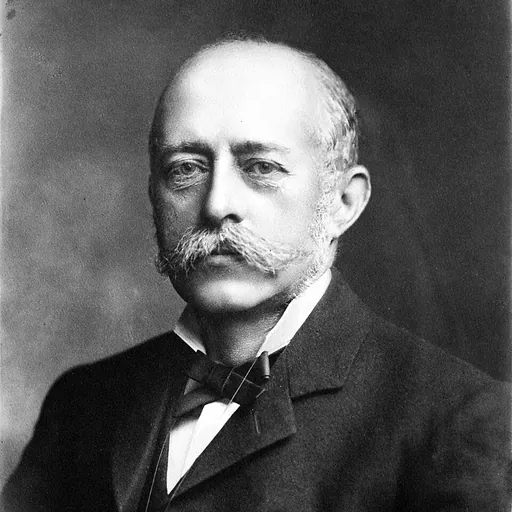
About William Henry Corfield
Lived 1843 – 1903 (aged 59). William Henry Corfield was a physician.
William Henry Corfield (14 December 1843 – 26 August 1903) was an English public health physician. Appointed Professor of Hygiene and Public Health at University College London in 1869, Corfield had a major influence on public health and household sanitation in Victorian England before there was extensive knowledge of bacteriology and a clear understanding of infectious disease transmission. He was also an early advocate of land filtration and sewage farms.
Life William Henry Corfield was born at Shrewsbury on 14 December 1843. He was the eldest son of Thomas Corfield, a chemist, and Jane Corfield (née Brown). He was educated at Cheltenham Grammar School; he was a precocious scholar and obtained a Demyship to study Natural Science at Magdalen College, Oxford in March 1861 and matriculated on 12 October 1861 at the age of 17. In 1863 he took a first class in Mathematics at Moderations. The Prince is reported to have remarked that 'If I were not a prince, I would be a plumber.’ Corfield, at the request of Lord Londesborough, examined the house and outlined his findings in a letter to The Times, 22 January 1872. Later Corfield said, in a discussion on preventing enteric fever at the Royal Medical and Chirurgical Society:
Links between poor sanitation and health had been part of public discourse since the 1840s notably led by Edwin Chadwick among others. However, the 1870s marked the start of increasing investment in sanitary reform.
At the time a defective sewage pipe was considered the probable source of the infection, but in later years Corfield revised his view and felt that contaminated food or drink consumed at lunch at a shooting party was a more likely cause. Whatever the source of the infection, the incident served to focus attention on sanitation and in combination with a growth in local government responsibilities and spending, and the extension of the right to vote, led to sanitary reforms becoming a national priority. The revised Public Health Act 1875 that followed contained many recommendations for improving towns, building sewage systems, and creating a mandatory inspectorate. Corfield can be seen as a leader of a second wave of public health scientists who implemented many of the reforms advocated by earlier activists, such as Edwin Chadwick.
The 1873 Marylebone milk crisis In 1873 following an extensive press campaign by Charles Murchison and William Jenner, Corfield was engaged along with John Whitmore, the local Medical Office of Health, and John Netten Radcliffe, the Medical Department's inspector, to investigate the potential role of milk supplied by the Dairy Reform Company in a severe outbreak of typhoid in Marylebone, London. Corfield and colleagues discovered that the likely source was contamination of the milk by water from a polluted well in one of the farms. As a result, the company announced that they would conduct weekly sanitary, veterinary, and chemical inspections of the entire milk supply chain. Such sanitary measures were rare at a time when there was no compulsory legislation. The report was an important event in public health – The Daily Telegraph observed that “the light thrown by this report upon the powers of Science ought to arouse, and must arouse, the activity of those who are entrusted with the power to protect society". Murchison believed that the investigation publicised the risk of typhoid through contaminated milk (previously water had been considered the major vector), and encouraged preventive legislation which was eventually enacted in the 1880s.
Later career In 1875, Corfield established the first ever Hygiene Laboratory for training students in public health at University College London. Following the death of his friend and colleague, Edmund Parkes in 1876, he actively promoted the creation of a museum of practical hygiene in London as a memorial. The Parkes Museum of Hygiene was opened in 1879; its patrons included Queen Victoria, other members of the Royal Family, Cabinet Ministers and representatives of several of the ancient Guilds of the City of London.
In 1902 Corfield delivered the annual Milroy Lecture at the Royal College of Physicians entitled: 'On the ætiology of typhoid fever and its prevention’.
Personal life Corfield, who was a sociable figure, enjoyed many interests outside his profession. He was a keen fly-fisherman, a collector of rare books, a connoisseur of old bindings, and owned a fine collection of Bewick’s woodcuts.
He died aged 59 in Marstrand, Sweden whilst on a fishing holiday, after suffering for some time from dyspepsia and diarrhoea.
At the time of his death Corfield was President of the Epidemiological Society. He was a Past President of the Society of Medical Officers of Health, and vice-president of the Sanitary Institute. He was also Honorary Corresponding Member of the Royal Academy of Medicine in Belgium, the Imperial Society of Medicine in Constantinople, and the Italian Royal Society of Hygiene. He was an Honorary Member of the French Society of Hygiene and the Hungarian Society of Public Health and a Fellow of the Medical Society of Sweden.
Works A Résumé of the History of Hygiene, 1870 A Digest of Facts Relating to the Treatment and Utilization of Sewage, 1870 (1st edition), 1887 (3rd Edition) Water and Water Supply, Part 1; and Sewerage and Sewerage Utilisation Part 2, New York, 1875 Reports of the British Association Sewage Committee 1870–6. (Co-author) Dwelling Houses: their Sanitary Construction and Arrangements, 1880 (1st edition), 1898 (4th edition), translated into French from 2nd edition by P. Jardet, Paris, 1889 The Laws of Health, 1880 (1st edition), 1896, 9th edition; translated into French, Italian and Hungarian Public Health Laboratory Work, 1884 (jointly with W. W. Cheyne and C. E. Cassal) A Treatise on Hygiene and Public Health, 1892 Diseases and Defective House Sanitation, 1896; translated into French, Italian, and Hungarian The Etiology of Typhoid Fever and its Prevention, 1902
Don’t just read it —
keep it.
Full-length biographies made to live with: read them, listen on the way to work, watch them tonight.
- E-book
- Audio
- Video
Instant download · yours to keep · every purchase keeps this site free
Important facts
People in William Henry Corfield's life
Named in this biography and alive at the same time





Related people
Same field, nearest in time

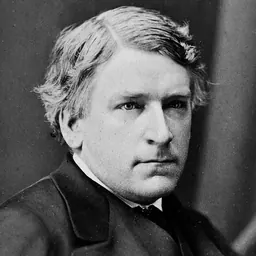
Contemporaries
People whose lives overlapped William Henry Corfield's
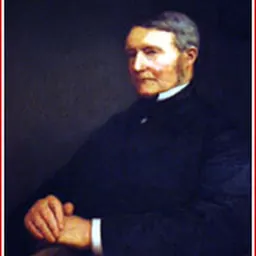
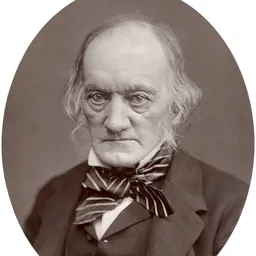
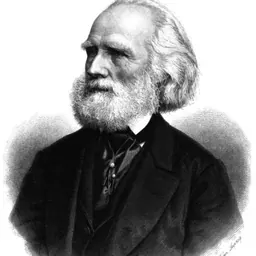
Frequently asked questions
Who was William Henry Corfield?
British hygienist (1843–1903)
When was William Henry Corfield born?
William Henry Corfield was born on 14 December 1843 in Shrewsbury.
When did William Henry Corfield die?
William Henry Corfield died on 26 August 1903.
What was William Henry Corfield's occupation?
William Henry Corfield was a physician.
Sources & further reading
· Wikipedia: William Henry Corfield
· DBpedia: William Henry Corfield (hygienist)
Cite this page
APA: Biography.guide. (2026). William Henry Corfield. https://biography.guide/william-henry-corfield-physician/
MLA: "William Henry Corfield." Biography.guide, https://biography.guide/william-henry-corfield-physician/.
Chicago: "William Henry Corfield." Biography.guide. https://biography.guide/william-henry-corfield-physician/.
Data last updated: 2026-09-24 · Spot an error? Report a correction.
Portrait: Wikimedia Commons · author & licence
Page generated 2026-09-27 05:08 UTC