
About William Hazledine
Lived 1763 – 1840 (aged 77). William Hazledine was a British civil engineer, inventor, industrialist, iron founder, engineer and businessperson.
William Hazledine (1763 – 26 October 1840) was an English ironmaster. Establishing large foundries, he was a pioneer in casting structural ironwork, most notably for canal aqueducts and early suspension bridges. Many of these projects were collaborations with Thomas Telford, including the Pontcysyllte Aqueduct and the Menai Suspension Bridge.
Telford called him "the Arch conjuror himself, Merlin Hazledine".
Early life and career Hazledine was born in Shawbury in 1763, one of several children of William Hazledine, a millwright; when he was young the family moved to Sowbatch, near Moreton Corbet. He and his brother John were trained as millwrights by their uncle. (Later, John and younger brothers Robert and Thomas set up an ironworks in Bridgnorth, Shropshire).
The partnership with Webster was dissolved, and in 1793 he purchased land at Coleham in Shrewsbury, where he set up a larger foundry with steam-powered equipment. The foundry eventually employed nearly 500 workers. In 1796 he cast the frame for the Ditherington Flax Mill designed by Charles Bage. It was the world's first iron-framed building.
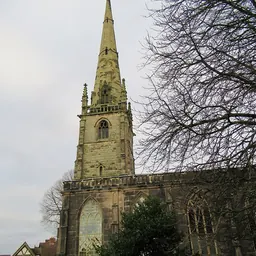
Hazledine died in 1840 at his home, Newport House, in Dogpole, Shrewsbury, and was buried at St Chad's Church. There is a memorial, with a bust of Hazledine by James Heffernan whilst working under Francis Leggatt Chantrey, in the church. Note - Gunnis states the monument is by local sculptor John Carline which is more likely.
Structures Hazledine's legacy is a range of spectacular structures including:
Ditherington Flax Mill, Shrewsbury, England (1797) Pontcysyllte Aqueduct, Froncysyllte, Wales (1795-1805) Chirk Aqueduct, Chirk, Wales (1799) Craigellachie Bridge, Scotland (1812–1814) Menai Suspension Bridge, Wales (1819–1826) Mythe Bridge, Tewkesbury, England (1823–1826) Aldford Iron Bridge, Eaton Hall, Cheshire, England (1824) Conwy Suspension Bridge, Wales (1824–1826) Cleveland Bridge, Bath, Somerset, England (1826) Stretton Aqueduct, Staffordshire, England (1832–3)
Namesakes In Coleham, "Hazeldine (sic) Crescent" and "Hazledine Court" were named for him, as were "Hazledine Way", part of Shrewsbury's later 20th century inner ring road, linking Reabrook housing estate to Meole Brace.
Don’t just read it —
keep it.
Full-length biographies made to live with: read them, listen on the way to work, watch them tonight.
- E-book
- Audio
- Video
Instant download · yours to keep · every purchase keeps this site free
Important facts
People in William Hazledine's life
Named in this biography and alive at the same time
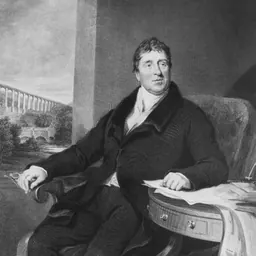


Related people
Same field, nearest in time

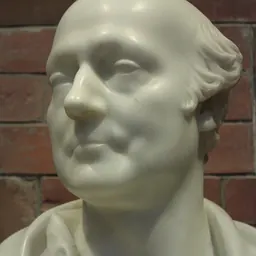
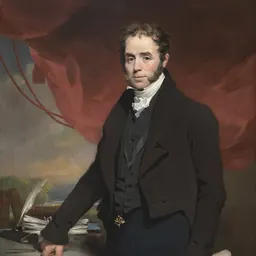
Contemporaries
People whose lives overlapped William Hazledine's




Frequently asked questions
Who was William Hazledine?
British civil engineer
When was William Hazledine born?
William Hazledine was born on 6 April 1763 in Shawbury.
When did William Hazledine die?
William Hazledine died on 26 October 1840 in Shrewsbury.
What was William Hazledine's occupation?
William Hazledine was a civil engineer, inventor, industrialist, iron founder, engineer and businessperson.
What nationality was William Hazledine?
William Hazledine was British.
Sources & further reading
· Wikipedia: William Hazledine
Cite this page
APA: Biography.guide. (2026). William Hazledine. https://biography.guide/william-hazledine/
MLA: "William Hazledine." Biography.guide, https://biography.guide/william-hazledine/.
Chicago: "William Hazledine." Biography.guide. https://biography.guide/william-hazledine/.
Data last updated: 2026-09-20 · Spot an error? Report a correction.
Page generated 2026-09-27 05:06 UTC