
About William Harcourt, 3rd Earl Harcourt
Lived 1743 – 1830 (aged 87). William Harcourt, 3rd Earl Harcourt was a British military officer and politician.
Field Marshal William Harcourt, 3rd Earl Harcourt, (20 March 1743 – 17 June 1830) was a British Army officer. In the Seven Years' War, he served as an aide-de-camp to Lord Albemarle during the expedition to Havana. He also commanded his regiment at the Battle of White Plains and then captured General Charles Lee at Basking Ridge during the American War of Independence. After that he commanded the British Cavalry at the Battle of Willems during the Flanders campaign. He succeeded the Duke of York as commander during that campaign and oversaw the British retreat and their final evacuation from Bremen. His last main military role was as Governor of the Royal Military College at Great Marlow.
Life
Born the younger son of Simon Harcourt, 1st Earl Harcourt and Rebecca Harcourt (née Samborne Le Bas), Harcourt was commissioned]as an ensign in the 1st Regiment of Foot Guards on 10 August 1759. He became a captain in the 16th Light Dragoons, a regiment which had been raised at his father's expense and was known as "Harcourt's Black Horse", on 27 October 1759. Harcourt transferred to the 3rd Dragoons on 30 June 1760 and was subsequently sent to Mecklenburg-Strelitz with his father to escort the consort-elect of George III, Charlotte of Mecklenburg-Strelitz, to England. In recognition of this mission he was appointed an equerry to Charlotte later that year. He also sat in Parliament as Member of Parliament for Oxford from 1768 to 1774. Promoted to colonel on 29 August 1777, he became aide-de-camp to George III in September 1777 and honorary colonel of the 16th Light Dragoons in October 1779. Harcourt bought St Leonard's Hill in Clewer from the Duke of Gloucester in 1781 and, having been promoted to major general on 20 November 1782, he was then appointed Deputy Ranger of Windsor Great Park. Harcourt commanded the British cavalry at the Battle of Willems in May 1794 during the Flanders campaign. Appointed the governor of Fort William on 21 March 1794, he succeeded the Duke of York as commander during the Flanders campaign and oversaw the British retreat and their final evacuation from Bremen in Spring 1795.
Harcourt was promoted to general on 1 January 1798 and he became the first governor of the Royal Military College at Great Marlow in June 1801. Appointed as a Deputy Lieutenant of Berkshire in November 1801, he succeeded his elder brother George to the earldom in April 1809 and was appointed governor of Portsmouth in July 1811. Harcourt bore the Union standard at the coronation of George IV on 19 July 1821.
Harcourt died at St Leonard's Hill on 17 June 1830 and was buried at Stanton Harcourt in Oxfordshire. The estates passed to his first cousin, Edward Vernon, who was Archbishop of York and son of his aunt Martha Harcourt; on inheriting the estates Vernon changed his name to Harcourt. A monument to Harcourt can be seen in the North Quire Aisle of St George’s Chapel, Windsor. The figure, sculpted by Robert William Sievier in 1832, was originally intended for St Michael's Church in Stanton Harcourt, but was moved to its current location on the orders of William IV after the King took a liking to the "splendid statue". Where the original statue was to be placed in the south transept of Stanton Harcourt, now stands a plaster model, identical to the white marble figure at Windsor.
Family On 3 September 1778 Harcourt married Mary, widow of Thomas Lockhart of Craig House in Scotland, and daughter of the Rev. W. Danby of Farnley in North Yorkshire; they had no children.
Don’t just read it —
keep it.
Full-length biographies made to live with: read them, listen on the way to work, watch them tonight.
- E-book
- Audio
- Video
Instant download · yours to keep · every purchase keeps this site free
Important facts
People in William Harcourt, 3rd Earl Harcourt's life
Named in this biography and alive at the same time
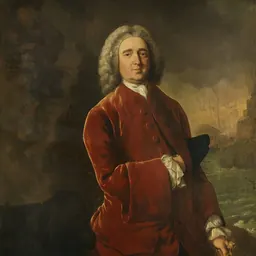
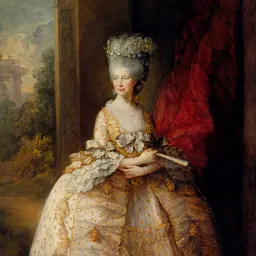


Related people
Same field, nearest in time

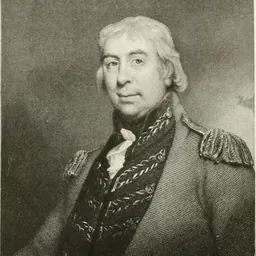
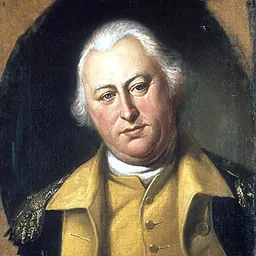

Contemporaries
People whose lives overlapped William Harcourt, 3rd Earl Harcourt's





Frequently asked questions
Who was William Harcourt, 3rd Earl Harcourt?
British Army officer
When was William Harcourt, 3rd Earl Harcourt born?
William Harcourt, 3rd Earl Harcourt was born on 20 March 1743 in Oxfordshire.
When did William Harcourt, 3rd Earl Harcourt die?
William Harcourt, 3rd Earl Harcourt died on 17 June 1830 in Berkshire.
What was William Harcourt, 3rd Earl Harcourt's occupation?
William Harcourt, 3rd Earl Harcourt was a military officer and politician.
What nationality was William Harcourt, 3rd Earl Harcourt?
William Harcourt, 3rd Earl Harcourt was British.
Sources & further reading
· Wikipedia: William Harcourt, 3rd Earl Harcourt
· DBpedia: William Harcourt, 3rd Earl Harcourt
Cite this page
APA: Biography.guide. (2026). William Harcourt, 3rd Earl Harcourt. https://biography.guide/william-harcourt-3rd-earl-harcourt/
MLA: "William Harcourt, 3rd Earl Harcourt." Biography.guide, https://biography.guide/william-harcourt-3rd-earl-harcourt/.
Chicago: "William Harcourt, 3rd Earl Harcourt." Biography.guide. https://biography.guide/william-harcourt-3rd-earl-harcourt/.
Data last updated: 2026-09-20 · Spot an error? Report a correction.
Page generated 2026-09-27 05:30 UTC