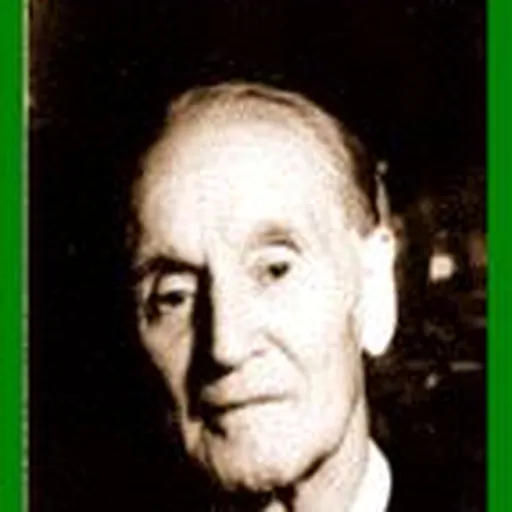
About William H. F. Brothers
Lived 1916 – 1979 (aged 62–63). William H. F. Brothers was an American catholic priest.
William Henry Francis (April 7, 1886 – July 21, 1979), also William Henry Francis Brothers with his matronymic surname added, was an Independent Old Catholic Benedictine, advocate for the immigrant, worker and the poor.
Life Brothers a native of England but lived in Waukegan, Illinois was a resident of an independent Benedictine monastery located in Waukegan and run by Father Bernard Harding, OSB, a former monk of St. Gregory's Abbey in Sacred Heart, Oklahoma. Brothers was influenced by Harding.
Fond du Lac
Protestant Episcopal Church in the United States of America (PECUSA) Bishop Charles Chapman Grafton, of Fond du Lac, a founding member of the Society of St. John the Evangelist, "had strong ideas about the importance of communities of men and their significant contributions to the church" and his "influence on the growth of the religious life", according to Rene Kollar on Project Canterbury, "extended across the Atlantic". On his return travel from Russia in 1903, Grafton visited "his old friend", Charles Wood, 2nd Viscount Halifax, where he met Aelred Carlyle and appraised Carlyle's Benedictine revival group living as guests on Halifax's estate in Painsthorpe. It is unclear what happened next but, according to Kollar, Carlyle's involvement stopped in 1904. "Apparently little or no contact existed between Carlyle's brotherhood and his American counterpart", noted Kollar.
According to Anson, Vilatte ordained Brothers and later deposed him. That William A. Brothers was added to the diocesan roster of clergy in 1912 by Grafton;
Anson wrote, in The American Benedictine Review, that after Parrish left, it "appears that his followers were replaced or displaced by a group of young men who had been formed into a Benedictine brotherhood" by Brothers in Waukegan, Illinois, located outside Grafton's Diocese of Fond du Lac and in the Episcopal Diocese of Chicago where Charles P. Anderson was bishop. Brothers was leader of this group. A monastery named "St. Dunstan's Abbey" was not listed in the Living Church Annual; only a "rented-house was named St. Dunstan's Abbey" with Grafton self-appointed as "their absentee Abbot". According to that letter, the monastic community, whose members did missionary work among the foreign population, was "thoroughly loyal" to the . Congruously, Anson and Brandreth also quote Bishop Casparus Johannes Rinkel, of Haarlem, who wrote that Tichy was never appointed or acknowledged as bishop. Ronald Sadlowski's opinion, in Polish American Studies, was that Kozlowski "seems to have consecrated" Tichy between 1904 and 1907. Anson thought "it may have been Kozlowski." Tichy was not confirmed as Kozlowski's successor by the . and after World War I, the "distanced itself more from the Mathew and those ordained and consecrated by him." While Evers wrote that Francis, "worked among the poor and often exploited industrial workers" in Chicago. It was, according to the Works Progress Administration's 1939 New York City Guide, "a rest house and city headquarters of Old Catholics, a monastic sect," located next to the St. George's Chapel on Stuyvesant Square, in Manhattan.
In 1920, Brothers moved the headquarters of the Old Catholic Church in America and the Old Catholic Benedictines to New York City. There he guided the church and Benedictines through the rough times of the depression and always maintaining his shepherd's stance. He was indeed a spiritual father to all. During the depression he joined with other religious leaders to feed the hungry. His benefactors gave him large sums of money to meet the needs of New York soup kitchens. Known to the people of the vicinity in which he worked and where as a child he came to reside with his family after their arrival from Nottingham, England, he had forsaken the opportunities of the business world to minister to the uncared for, exploited immigrants working in the steel mills. There in the midst of the despised "foreigners" his sympathetic understanding of their problems and his practical attempts to solve them made his mission bountiful in good works.
Any young man, homeless or in need of guidance or retreat, was welcome at the abbey. Haffner, the prior, made all feel welcome and displayed a true Benedictine hospitality.
Woodstock Interior of chapel on Overlook Mountain showing altar behind rood screen In 1938, Francis moved to Woodstock, New York. The next year, Francis and three members of his seven-member Mariavite group repaired an abandoned chapel on Overlook Mountain to use as "nothing more than a monastic chapel". This proposed venture was not "St. Dunstan's Church". Around the same time, another property was leased to Francis' congregation. but by the 1950s, the documented account was embellished into a story that the converted barn "was burned during the war whether by vigilantes or act of God no one knows".
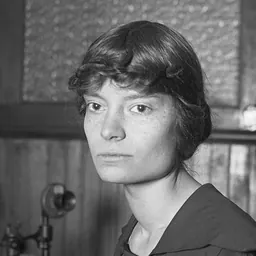
Ammon Hennacy wrote, in his 1952 Autobiography of a Catholic Anarchist, that Francis invited him to visit Woodstock. "This kindly, thin and agile old man was my match in conversation," wrote Hennacy. "He knew many old time radicals whom I had known." "As I understood it," Hennacy ascertained Francis' denomination and wrote, "these people were not radical but had meekly followed their leaders just as many others do." near Newburgh, New York, where Francis thought he would meet Dorothy Day, a founder of the Catholic Worker Movement, but she had just left for New York City. "I was not attracted to this small denomination because it did not seem to have any life," Hennacy reflected on Francis' group in Woodstock, but he was attracted to Francis "with his simplicity, kindness, and spirit of love".
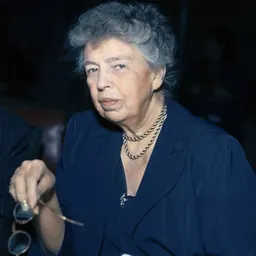
For a long time there were no postulants for the Old Catholic Benedictines and there was just Brothers and Brother Cyril. The bishop helped organize the Old Catholic Church in America and from time-to-time engaged in ecumenical services. Brothers was friend with Eleanor Roosevelt and the Hearst family and several other society families who contributed to his church in Woodstock.
Brothers helped feed and house many Woodstock Festival attendees. There are many newspaper stories of his good will and love for people.
Brothers died in 1979 while in communion with the Ukrainian National Orthodox Church in Exile, but his labors and works are still a part of the Woodstock community. He was succeeded in his work by the prior of the Community, Dom Augustine Whitfield, OSB of Mount Royal Abbey and Abbot (now Metropolitan) John (LoBue) of Holy Name Abbey.
Don’t just read it —
keep it.
Full-length biographies made to live with: read them, listen on the way to work, watch them tonight.
- E-book
- Audio
- Video
Instant download · yours to keep · every purchase keeps this site free
Important facts
People in William H. F. Brothers's life
Named in this biography and alive at the same time


Related people
Same field, nearest in time
Contemporaries
People whose lives overlapped William H. F. Brothers's



Frequently asked questions
Who was William H. F. Brothers?
American archbishop (1916-1979)
When was William H. F. Brothers born?
William H. F. Brothers was born on 3 October 1916 in Nottingham.
When did William H. F. Brothers die?
William H. F. Brothers died in 1979 in Woodstock.
What was William H. F. Brothers's occupation?
William H. F. Brothers was a catholic priest.
What nationality was William H. F. Brothers?
William H. F. Brothers was American.
Sources & further reading
· Wikipedia: William H. F. Brothers
· DBpedia: William H. F. Brothers
Cite this page
APA: Biography.guide. (2026). William H. F. Brothers. https://biography.guide/william-h-f-brothers/
MLA: "William H. F. Brothers." Biography.guide, https://biography.guide/william-h-f-brothers/.
Chicago: "William H. F. Brothers." Biography.guide. https://biography.guide/william-h-f-brothers/.
Data last updated: 2026-09-24 · Spot an error? Report a correction.
Portrait: Wikimedia Commons · author & licence
Page generated 2026-10-03 09:37 UTC