
About William Grant Still
Lived 1895 – 1978 (aged 83). William Grant Still was an American conductor, composer, oboist, film score composer, music arranger and conductor (music).
William Grant Still Jr. (May 11, 1895 – December 3, 1978) was an American composer of nearly two hundred works, including five symphonies, four ballets, nine operas, and more than thirty choral works, art songs, chamber music, and solo works. Born in Mississippi and raised in Little Rock, Arkansas, He is known primarily for his first symphony, Afro-American Symphony, which, until 1950, was the most widely performed symphony composed by an American. Still often is referred to as the "Dean of Afro-American Composers". He was able to become a leading figure in the field of American classical music as the first African-American to conduct a major American symphony orchestra, have a symphony performed by a leading orchestra, have an opera performed by a major opera company, and have an opera performed on national television. The papers of Still and his second wife, the librettist and writer Verna Arvey, are currently held by the University of Arkansas. He was the son of two teachers, Carrie Lena Fambro Still Shepperson (1872–1927) and William Grant Still Sr. His maternal grandmother, Anne Fambro,
Still showed a great interest in music and started violin lessons in Little Rock at the age of 15. He taught himself to play the clarinet, saxophone, oboe, double bass, cello, and viola. At 16 years old, he was graduated as class valedictorian from M. W. Gibbs High School in Little Rock in 1911. Still became a member of Kappa Alpha Psi fraternity. He conducted the university band, learned to play various instruments, and started to compose and to perform orchestrations. He left Wilberforce without graduation. Still worked for the school assisting the janitor and at a few small jobs outside of the school, but struggled financially.
He died in Los Angeles in 1978.
Career
In 1916, Still worked in Memphis for W.C. Handy's band.
He recorded with Fletcher Henderson's Dance Orchestra in 1921, and later played in the pit orchestra for Noble Sissle and Eubie Blake's musical, Shuffle Along Later in the 1920s, Still served as the arranger of Yamekraw, a "Negro Rhapsody", composed by the Harlem stride pianist, James P. Johnson.
In the 1930s, Still worked as an arranger of popular music, composing works for popular NBC Radio broadcasts such as Willard Robison's Deep River Hour and Paul Whiteman's Old Gold Show. As a result of his close professional relationship with Hanson, many of Still's compositions were performed for the first time in Rochester. Two years later, Still conducted the Los Angeles Philharmonic Orchestra at the Hollywood Bowl, the first African American to conduct a major American orchestra in a performance of his own works. which played continuously during the fair's run.
A decade after its original composition, his opera Troubled Island about Jean-Jacques Dessalines and Haiti, was performed in 1949 by the New York City Opera. It also is the first opera by an African American to be performed by a major company.
Still was the first African American to conduct a major orchestra in the Deep South, doing so in 1955, where he conducted the New Orleans Philharmonic Orchestra.
Legacy and honors Still received three Guggenheim Fellowships in music composition (1934, 1935, 1938), at least one Rosenwald Fellowship, In 1949, he received a citation for Outstanding Service to American Music from the National Association for American Composers and Conductors In 1977, the William Grant Still Arts Center opened in his honor. He was awarded honorary doctorates He was posthumously awarded the 1982 Mississippi Institute of Arts and Letters award for music composition for his opera A Bayou Legend.
Selected compositions Still composed almost 200 works, including nine operas, five symphonies, Many of his works are believed to be lost. Hesitating Blues (comp.W. C. Handy; arr. Still; 1916) From the Land of Dreams (1924) Levee Land (1925) And They Lynched Him on A Tree (1940) From The Delta (1945) Lyric Quartette (1960) Folk Suite No. 4 (1963)
Don’t just read it —
keep it.
Full-length biographies made to live with: read them, listen on the way to work, watch them tonight.
- E-book
- Audio
- Video
Instant download · yours to keep · every purchase keeps this site free
Important facts
People in William Grant Still's life
Named in this biography and alive at the same time


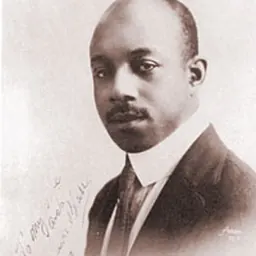
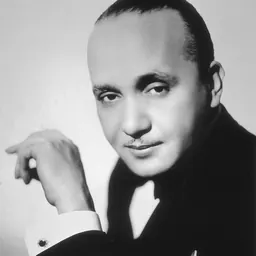
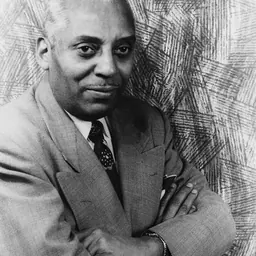

Related people
Same field, nearest in time
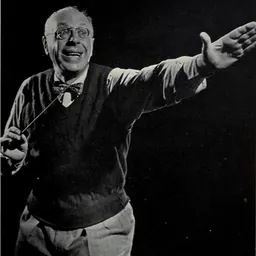



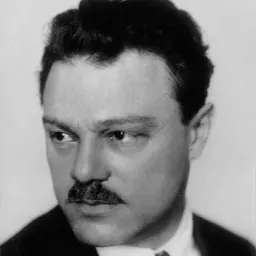
Contemporaries
People whose lives overlapped William Grant Still's

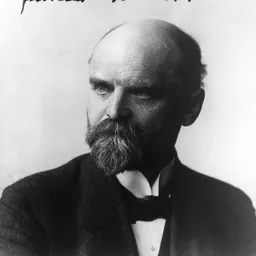
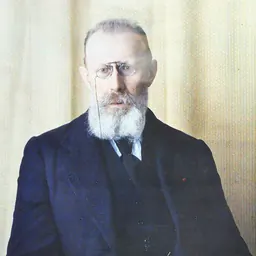
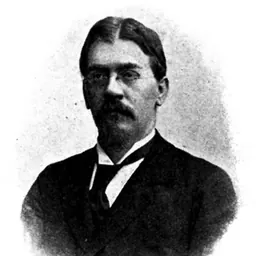

Frequently asked questions
Who was William Grant Still?
American composer (1895–1978)
When was William Grant Still born?
William Grant Still was born on 11 May 1895 in Woodville.
When did William Grant Still die?
William Grant Still died on 3 December 1978 in Los Angeles.
What was William Grant Still's occupation?
William Grant Still was a conductor, composer, oboist, film score composer, music arranger and conductor (music).
What nationality was William Grant Still?
William Grant Still was American.
Sources & further reading
· Wikipedia: William Grant Still
· DBpedia: William Grant Still
Cite this page
APA: Biography.guide. (2026). William Grant Still. https://biography.guide/william-grant-still/
MLA: "William Grant Still." Biography.guide, https://biography.guide/william-grant-still/.
Chicago: "William Grant Still." Biography.guide. https://biography.guide/william-grant-still/.
Data last updated: 2026-09-20 · Spot an error? Report a correction.
Page generated 2026-09-27 05:19 UTC