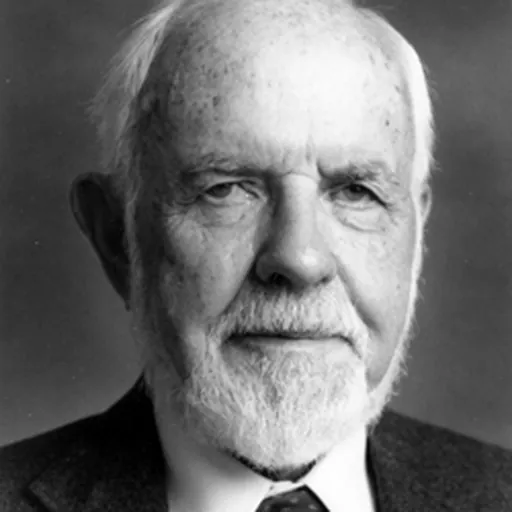
About William Gould Dow
Lived 1895 – 1999 (aged 104). William Gould Dow was an American engineer.
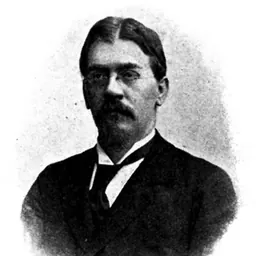
William Gould Dow (September 30, 1895 – October 17, 1999) was an American scientist, educator and inventor. He was a pioneer in a variety of fields, including electrical engineering, space research, computer engineering, and nuclear engineering. He helped develop life-saving radar jamming technology during World War II, and was a long-time professor at the University of Michigan.
Biography
Early life
Dow was born on September 30, 1895, in Faribault, Minnesota, to Dr. James J. Dow and the former Myra Brown, who had had the distinction of being the first two students to graduate from Carleton College just months before their marriage in 1874. He was the great-great-grandson of American Revolutionary War veteran Corporal Silas Gould.
He attended the University of Minnesota, obtaining his BS in 1916 and his BSE in EE in 1917. During World War I, Dow was a lieutenant in the US Army Corps of Engineers, with stints at Camp A.A. Humphreys, Virginia (now Fort Belvoir) and the National Bureau of Standards. Upon leaving the Army in 1919, he took on a variety of sales and marketing positions, mainly selling electrical equipment for the Westinghouse Electric Corporation.
Academia
In 1924, Dow married Edna Lois Sontag, and two years later he joined the faculty of the University of Michigan as an instructor in electrical engineering. He obtained his MS from Michigan in 1927. While on the faculty, he wrote what would become a classic textbook in the field, Fundamentals of Engineering Electronics, published in 1937. He was made an associate professor in 1938.
Dow obtained a contract from General Motors' Fisher Body division to develop new induction welding technologies that used higher frequency current than previous methods. Because of the skin effect of alternating current moving through a conductor, higher frequencies meant more of the current (and thus the heat required for welding) was contained in the very upper layers of the material to be welded, rather than being wasted by being distributed deeper inside. The patent Dow obtained for his method contemplates frequencies of up to 3 MHz of alternating current. Although originally intended for use in automobile manufacturing, when the US entered World War II, GM instead put his technology into production manufacturing airplanes.
In 1942, following the end of his GM contract, Dow went to work directly in support of the war effort at the Harvard Radio Research Laboratory, directed by Frederick Emmons Terman. The laboratory was dedicated to finding effective radar countermeasures, including both jamming of enemy radar signals and determining the location of enemy radar installations. His work took him to London, where he narrowly avoided a V-2 rocket attack; the V-2 would eventually play a large role in his post-war research. The radar-jamming countermeasures Dow worked on were nearly 100% effective, and were credited with saving the lives of many Allied pilots.
After returning to the University of Michigan in 1945, Dow was made a full professor. Using the connections he had made during the war, Dow began trying to bring military and government contracts to the university. In January 1946, at a conference on telemetry, he learned that the Army and Navy had begun a joint research program involving captured V-2 rockets. He arranged to attend the second meeting of the V-2 Upper Atmosphere Research Panel (later the Rocket and Satellite Research Panel or simply Rocket Research Panel),
The panel required all of its members to be actively engaged in relevant research, and as his first experiment, Dow chose to measure ion and electron temperatures in the ionosphere, under contract to the Air Force. The payload consisted of a vacuum tube and a Langmuir probe, but the launch (on August 22, 1946, at White Sands Missile Range) was unsuccessful, with the V-2 crashing only a quarter-mile away from the launch site. The experiment was successfully launched in November of the same year. Another early experiment provided increased accuracy for estimates of the neutral density of the atmosphere, which is a critical factor in the computation of atmospheric drag, and which was thus important to determine accurately before spacecraft could be designed to successfully stand the rigors of atmospheric re-entry.
Commemoration In 1980, the University of Colorado awarded him an honorary Doctorate. In 2001, the University of Michigan Department of Electrical Engineering and Computer Science established the William Gould Dow Distinguished Lectureship, the highest external honor the department bestows. It is awarded on the basis of "lifetime achievements, groundbreaking contributions to their fields, and sustained research excellence." In addition to presenting a lecture at the university, recipients receive a $5,000 honorarium.
Books
Articles
Patents Welding Method (assigned to General Motors) Large Throat Portable Welder (assigned to General Motors) High-Frequency Inductive Welding Apparatus (assigned to General Motors) Small Throat Portable Welder (assigned to General Motors) Method and Apparatus for Producing Nuclear Fusion (assigned to Consumers Power Company) Trochoidal nuclear fusion reactor (assigned to Environmental Institute of Michigan) Nuclear fusion system (assigned to Environmental Research Institute of Michigan)
Don’t just read it —
keep it.
Full-length biographies made to live with: read them, listen on the way to work, watch them tonight.
- E-book
- Audio
- Video
Instant download · yours to keep · every purchase keeps this site free
Important facts
People in William Gould Dow's life
Named in this biography and alive at the same time
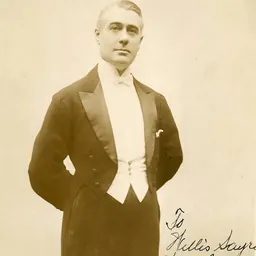
Related people
Same field, nearest in time
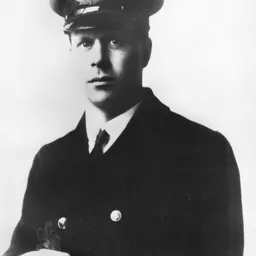


Contemporaries
People whose lives overlapped William Gould Dow's

Frequently asked questions
Who was William Gould Dow?
American engineer (1895–1999)
When was William Gould Dow born?
William Gould Dow was born on 30 September 1895 in Faribault.
When did William Gould Dow die?
William Gould Dow died on 17 October 1999 in Bellevue.
What was William Gould Dow's occupation?
William Gould Dow was an engineer.
What nationality was William Gould Dow?
William Gould Dow was American.
Sources & further reading
· Wikipedia: William Gould Dow
Cite this page
APA: Biography.guide. (2026). William Gould Dow. https://biography.guide/william-gould-dow/
MLA: "William Gould Dow." Biography.guide, https://biography.guide/william-gould-dow/.
Chicago: "William Gould Dow." Biography.guide. https://biography.guide/william-gould-dow/.
Data last updated: 2026-09-23 · Spot an error? Report a correction.
Portrait: Wikimedia Commons · author & licence
Page generated 2026-09-27 05:05 UTC