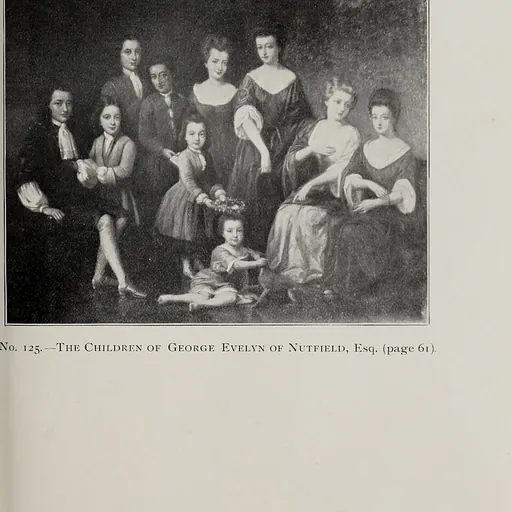
About William Glanville
Lived 1685 – 1766 (aged 80–81). William Glanville was a British politician.
William Glanville (c.1686–1766), of St Clere, Kent was a British politician who sat in the House of Commons for 38 years from 1728 to 1766.
Glanville was born William Evelyn, the fifth son of George Evelyn, MP of Nutfield, Surrey and his third wife Frances Bromehall, daughter of Andrew Bromehall of Stoke Newington, Middlesex. He married Frances Glanville daughter of William Glanville, MP in about 1718 and the took name of Glanville. She died in 1719. He married as his second wife before 1733, Bridget Raymond, daughter of Hugh Raymond of Langley, Kent.
Glanville contested Bletchingley unsuccessfully on the death of his elder brother George Evelyn in 1724. He was returned by the Duke of Dorset as Member of Parliament for Hythe at a by-election on 22 February 1728. He voted regularly with the administration, and became a member of the 1729 gaols committee of the House of Commons. In 1730 he introduced a bill for enabling civil cases to be finally decided at the assizes. He opposed a petition sponsored by Sir John Barnard for terminating the monopoly of the East India Company, describing it as 'a pickpocket petition', and he piloted through the Commons the Quakers' tithe bill, which was thrown out by the Lords. In 1731 he supported a bill for enabling unenumerated goods to come direct from the plantations to Ireland instead of via England. In 1732 he spoke in favour of the bill for voiding the sale of the Derwentwater estates. In 1733 he defended Sir Robert Sutton and unsuccessfully opposed a bill for preventing 'the pernicious practice of stock-jobbing'. In 1734 he opposed a bill for enforcing the land qualification for Members. He was returned at the 1734 British general election. In 1735, he was made a Commissioner of Irish revenue. He was returned again at the 1741. His post as Commissioner of Irish Revenue became inconsistent with a seat in Parliament under the Place Act 1742 and he surrendered it in 1747 to a friend, who paid him half the income. He was returned again as MP for Hythe at the 1747 British general election.
Glanville died on 19 October 1766. He had one daughter Frances, who married Admiral Edward Boscawen, by his first wife Frances. He had two sons and three daughters by his second wife Bridget. Their son William Evelyn was MP for Hythe. Their daughter Sarah married Chase Price. .
Don’t just read it —
keep it.
Full-length biographies made to live with: read them, listen on the way to work, watch them tonight.
- E-book
- Audio
- Video
Instant download · yours to keep · every purchase keeps this site free
Important facts
People in William Glanville's life
Named in this biography and alive at the same time
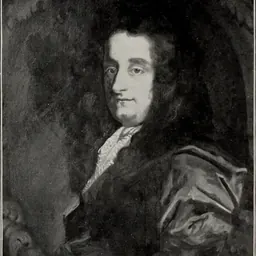




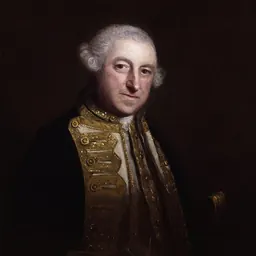
Related people
Same field, nearest in time

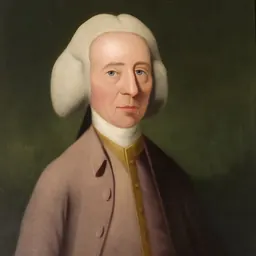


Contemporaries
People whose lives overlapped William Glanville's
Frequently asked questions
Who was William Glanville?
British Member of Parliament (died 1766)
When was William Glanville born?
William Glanville was born in 1685.
When did William Glanville die?
William Glanville died on 19 October 1766.
What was William Glanville's occupation?
William Glanville was a politician.
What nationality was William Glanville?
William Glanville was British.
Sources & further reading
· Wikipedia: William Glanville
· DBpedia: William Glanville (Hythe MP)
Cite this page
APA: Biography.guide. (2026). William Glanville. https://biography.guide/william-glanville-politician/
MLA: "William Glanville." Biography.guide, https://biography.guide/william-glanville-politician/.
Chicago: "William Glanville." Biography.guide. https://biography.guide/william-glanville-politician/.
Data last updated: 2026-09-23 · Spot an error? Report a correction.
Portrait: Wikimedia Commons · author & licence
Page generated 2026-09-27 05:05 UTC