
William Gill
Manx Merchant Navy officer, born 1795
About William Gill
Lived 1795 – 1858 (aged 62–63). William Gill was a British sea captain and captain (naval), known for River Mersey.
William Gill (1795 – 25 January 1858) was a Manx merchant navy officer who served as commanding officer of numerous Isle of Man Steam Packet Company vessels. Gill was the first recognised captain of the line, retiring with the rank of Commodore.
He is also known as the captain who first charted an approach to the (then) treacherous River Mersey, which subsequently became known as the Victoria Channel.
Early life William Gill was born in Ramsey, Isle of Man in 1795. Upon finishing his education he was apprenticed to a ship's carpenter, Captain Gill was generally regarded to have possessed a genial social nature and frank and obliging manner. This rendered him an exceedingly popular officer who proved to be a great favourite with his crew and passengers alike.
Isle of Man Steam Packet Company
Captain Gill's reputation led to his appointment as Master of the Isle of Man Steam Packet Company's new steamer Mona's Isle when service commenced in August 1830. On Wednesday, 18 August, another race took place back to Douglas which gave the same result.
The St George Company engaged in a price-cutting war, and in September withdrew the Sophia Jane and replaced her with their largest and fastest steamer, the St. George. However, Mona's Isle won the first race largely because of the astuteness of Capt. Gill. Seeing a south-westerly gale developing, he had the coal and cargo moved to the windward side of the vessel, to prevent the windward paddle lifting out of the water.
By October 1830, Mona's Isle had established herself as the principle steamer between Liverpool and Douglas.
On Friday 19 November 1830, under the command of Lieutenant John Tudor RN, the St George arrived in Douglas from Liverpool with mail and passengers. Once her passengers and mail were unloaded, the St George proceeded to take her anchorage in the vicinity of Conister Rock using the fixed chain cable which had been secured for the task.
By 1832 the Directors of the Isle of Man Steam Packet Company were becoming increasingly concerned about using the Mona's Isle in winter weather.
Whilst a channel had existed for the navigation of ships into the Port of Liverpool, this channel, the Rock Channel, was only available for use at high tides and therefore vessels could wait many hours at anchor before being able to enter the port. Illustration depicting Liverpool Bay and the approaches to the River Mersey. With the increasing commercial trade into and out of Liverpool coming with the advent of the steamship, various attempts were made to chart a safe navigable channel through the south eastern portion of Liverpool Bay and into the River Mersey at all states of the tide. According to a crew member of Capt. Gill's, John Bell, who began his service as a deck boy on the Queen of the Isle in 1836, the task was something which Capt. Gill went about in a meticulous way. and which consisted of a full-sized coffee-pot, tea pot, sugar basin and cream jug; a silver chased toast rack, four very richly-chased candlesticks, a silver butter cooler with cover and stand, 12 silver teaspoons, sugar tongs and two very elegant butter knives In addition Capt. Gill also received a purse of 100 sovereigns. On the top of the coffee and tea pots were two emblems, one representing that for the sailing vessels, being formed of a rudder, sail, and block grouped together, the other consisting of a large paddle wheel, funnel and steering-wheel. On the coffee pot was inscribed, under the figure of a yacht, the names of the sailing vessels commanded by Captain Gill, and under a steam vessel the names of the Mona's Isle, Queen of the Isle, King Orry, Ben-my-Chree and Tynwald, the steamers which had been under his charge. In addition to the silver articles there were three handsome papier mache waiters and a complete service of china in white and rich gold. The silver article, had the initials W. G. upon them, with the principal inscription "To Captain William Gill, the discoverer of the Victoria Channel into Liverpool." In this manner, therefore, did Liverpool express gratitude for the new Channel.
Retirement Captain Gill retired from the Isle of Man Steam Packet Company in 1852. Through public subscription he received a silver inscribed plate commemorating his charting of the Victoria Channel and a purse of 100 guineas. However, he sustained the loss of a large proportion of his wealth following the failure of Joint Stock Bank and the Bank of Messrs Holmes, but is recorded as still having retired in a comfortable manner.
Having only recently retired he was enticed back to sea the following year to assist in the establishment of a small shipping line in his native Ramsey. The company had built a steamer which they called the Manx Fairy and Capt. Gill, at the special request of the shareholders, took command of her on her first trip "in order that her steaming and sailing qualifications might be fairly tried under a commander of such great experience of coasting steam navigation." This was to be Capt. Gill's last triumph, the Manx Fairy steaming out of Liverpool at the same time as the Isle of Man Steam Packet's new flag ship Mona's Queen, which she beat to Douglas by 8 minutes in a passage time of 5 hours 30 minutes.
Death Capt. Gill's grave, Kirk Braddan Cemetery, Isle of Man.It was said that for the last two years of his life Capt. Gill was constantly indoors, and although it is said that he continued to enjoy the company of close friends he avoided local society. He also was said to have been badly affected by the loss of his wife, Elizabeth, which was then followed by the loss of his only child, a daughter, Margaret.
Captain William Gill died aged 63 at his home in Harris Terrace, Douglas, on 25 January 1858. His body was interred with that of his wife and daughter at Braddan Parish Cemetery. In 1930 when the Isle of Man Steam Packet Company celebrated its centenary his grave was reconditioned by the Company.
Don’t just read it —
keep it.
Full-length biographies made to live with: read them, listen on the way to work, watch them tonight.
- E-book
- Audio
- Video
Instant download · yours to keep · every purchase keeps this site free
Important facts
People in William Gill's life
Named in this biography and alive at the same time

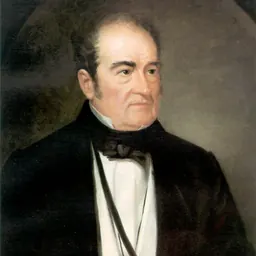
Related people
Same field, nearest in time




Contemporaries
People whose lives overlapped William Gill's





Frequently asked questions
Who was William Gill?
Manx Merchant Navy officer, born 1795
When was William Gill born?
William Gill was born in 1795 in Ramsey.
When did William Gill die?
William Gill died on 25 January 1858 in Douglas.
What was William Gill's occupation?
William Gill was a sea captain and captain (naval).
What was William Gill known for?
William Gill was known for River Mersey.
What nationality was William Gill?
William Gill was British.
Sources & further reading
· DBpedia: William Gill (sea captain)
Cite this page
APA: Biography.guide. (2026). William Gill. https://biography.guide/william-gill-sea-captain/
MLA: "William Gill." Biography.guide, https://biography.guide/william-gill-sea-captain/.
Chicago: "William Gill." Biography.guide. https://biography.guide/william-gill-sea-captain/.
Data last updated: 2026-09-24 · Spot an error? Report a correction.
Page generated 2026-09-27 05:05 UTC