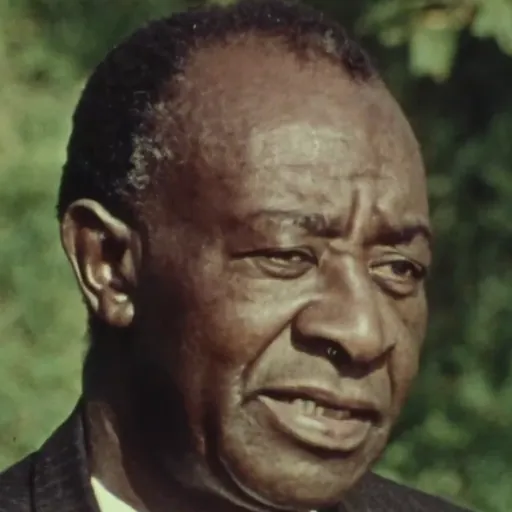
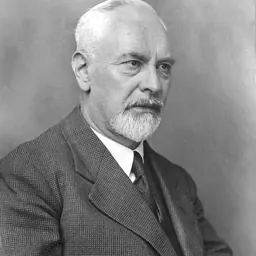
William Frederick Nkomo
South African medical doctor, community leader and political activist
About William Frederick Nkomo
Lived 1915 – 1972 (aged 56–57). William Frederick Nkomo was a physician.
William Frederick Nkomo (1915–1972) was a South African medical doctor, community leader, political activist and teacher from Pretoria. He was the founding chairman of the African National Congress Youth League. While at the University of the Witwatersrand, Nkomo was the first black student to serve on the Students Representative Committee.
After graduation, he practiced as a teacher and medical doctor in various parts of Pretoria. He was later also involved in the Moral Re-Armament Movement. He was also elected president of the South African Institute of Race Relations, and was a steward of the Methodist Church and Trustee of the Bantu Welfare Trust.
Early life and education William Frederick Nkomo was born in Makapanstad, Transvaal in 1915. He was the son of a Methodist Minister, Reverend Abraham Nkomo. Nkomo attended primary school in Mahikeng and Klerksdorp, studied for his secondary education at St Peter's School in Rosettenville and matriculated at Healdtown Institute in the Eastern Cape.
Nkomo studied at the South African Native College (University of Fort Hare) and obtained a BA degree from the University of South Africa. He studied medicine on a scholarship at the University of the Witwatersrand in 1941 and did his internship at McCords Hospital in Durban. He practiced in Lady Selborne and Atteridgeville in Pretoria.
Political activism Nkomo joined the African National Congress in the early 1940s. In 1944, he helped found the ANC Youth League with Nelson Mandela, Anton Lembede, Ashley Peter Mda, Walter Sisulu and Oliver Tambo. He later relinquished his position as provisional chairman of the league to complete his medical studies. In 1956, due to his militance, he was summarily expelled by the party. In the 1960s he became associated with the Black Consciousness Movement.
As documented in Frank Buchman's Legacy, the Seeds of Change for Africa the authors Peter Hannon and Suzan Burrell write that, "WF Nkomo had been labelled a communist and he in turn viewed whites as Fascists”. However Nkomo's activism was in search for equality within South Africa and believed that a future bloodbath within his country be avoided.
Nkomo heard George Daneel, a former Springbok, Dutch Reformed Church priest and anti-apartheid activist, speak positively about change at a Moral Re-Armament multiracial conference in Lusaka. Daneel spoke publicly "That it was the feelings of racial superiority in white men like himself that were creating the conditions for producing bloody revolution. He said that he had been wrong and that he was giving his life to work for a South Africa where all had a full and equal part". In response Nkomo stated: "I have always been a revolutionary, and I have spent much of my life in the struggle for the liberation of my people. Here I see white men change, and black men change, and I myself have decided to change. I realise that I cannot love my people unless I am prepared to fight for them in a new dimension, free of bitterness and hate".
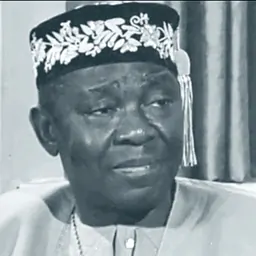
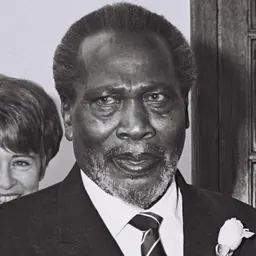
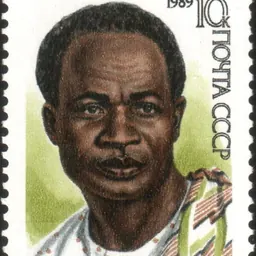
In pursuance of the strategy of non-violence he became a member of the Moral Re-Armament movement after attending its conference in Caux, Switzerland in 1953. To promote peace, he featured in two films (one on him, called A Man For All People ) and another with leaders like Kwame Nkrumah, Nnamdi Azikiwe, Jomo Kenyatta and Manase Moerane.
Following the Sharpeville massacre in 1961, Nkomo was a mediator between the government and the victims. He was one of the leaders who discussed the political situation in South Africa with Dag Hammarskjöld who was Secretary General of the United Nations during his visit to this country in January 1961.
14 August 1968, Nkomo was invited to speak at the University of Cape Town's Day of Affirmation of Academic and Human Freedom. His address, The Courage to Think followed in a series after that of Robert Kennedy's Ripple of Hope speech in June 1966. In his speech he said, "The idea of a common patriotism and nationalism was always recognised by all. It was only in recent times with the emergence of apartheid theoreticians that the country definitely deviated from the path of a common nationalism."
"Some of the youth are courageous enough to look at everything with a crucially critical mind, and there are those who follow the path of least resistance, that of merely accepting things from their forebears without questioning. If it does not appear to be the case in our country it has at any rate manifested itself in other parts of the world.A quick look at the recent events affecting the students in Berkeley, U.S.A.; in Columbia, U.S.A.; at the Sorbonne, Paris; in Rome; in Prague; and elsewhere will clearly indicate that the youth as represented by the students have become impatient with systems where they are merely on the receiving end; they are beginning to question things in a dynamic and revolutionary miner. They are coming to a realisation that the youth and the students especially constitute an important social factor in the promotion of social change.
Death
Nkomo died in 1972, following cardiac arrest at HF Verwoerd Hospital, now Steve Biko Academic Hospital. He is buried alongside his wife, Susan who predeceased him at the Rebecca Street Cemetery in Pretoria.
Don’t just read it —
keep it.
Full-length biographies made to live with: read them, listen on the way to work, watch them tonight.
- E-book
- Audio
- Video
Instant download · yours to keep · every purchase keeps this site free
Important facts
People in William Frederick Nkomo's life
Named in this biography and alive at the same time





Related people
Same field, nearest in time

Contemporaries
People whose lives overlapped William Frederick Nkomo's



Frequently asked questions
Who was William Frederick Nkomo?
South African medical doctor, community leader and political activist
When was William Frederick Nkomo born?
William Frederick Nkomo was born in 1915 in Makapanstad.
When did William Frederick Nkomo die?
William Frederick Nkomo died on 26 March 1972 in Pretoria, Transvaal (province).
What was William Frederick Nkomo's occupation?
William Frederick Nkomo was a physician.
Sources & further reading
· Wikipedia: William Frederick Nkomo
· DBpedia: William Frederick Nkomo
Cite this page
APA: Biography.guide. (2026). William Frederick Nkomo. https://biography.guide/william-frederick-nkomo/
MLA: "William Frederick Nkomo." Biography.guide, https://biography.guide/william-frederick-nkomo/.
Chicago: "William Frederick Nkomo." Biography.guide. https://biography.guide/william-frederick-nkomo/.
Data last updated: 2026-09-22 · Spot an error? Report a correction.
Portrait: Wikimedia Commons · author & licence
Page generated 2026-09-27 05:04 UTC