
About William Francis Gray Swann
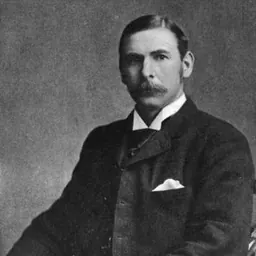
Lived 1884 – 1962 (aged 77). William Francis Gray Swann was an American physicist.
W.F.G. Swann (August 29, 1884 – January 29, 1962) was an English physicist.
Education He was educated at Brighton Technical College and the Royal College of Science, from which he obtained a B.Sc. in 1905. He worked as an assistant lecturer at the University of Sheffield while simultaneously pursuing a doctorate at University College London, from which he received a D.Sc. in 1910.
Career Swann left Sheffield in 1913, when he went to the United States to join the Carnegie Institute, becoming head of the Physical Division of the Department of Terrestrial Magnetism. He later became a professor at the University of Minnesota, then at the University of Chicago and Yale University, where he was appointed the director of the Yale University Sloane Laboratory. E. O. Lawrence, the 1939 Nobel Laureate in Physics, was one of Swann's graduate students at the University of Minnesota and followed his professor to Chicago and then New Haven.
In 1924, Swann was an Invited Speaker of the International Congress of Mathematicians in Toronto. In 1927, at the age of 43, he became the first director of the Bartol Research Foundation of the Franklin Institute. Among his first acts as director was to arrange a contract to locate the foundation at Swarthmore College, which is fairly close to Philadelphia. He continued as director of the foundation until his retirement in 1959, when he was replaced by Martin A. Pomerantz.
He is particularly noted for his research into cosmic rays, high-energy particle physics and Quantum mechanics.
Joseph Valasek, one of his graduate students at the University of Minnesota, discovered hysteretic charge-voltage behavior in Rochelle salt, which led to the establishment of ferroelectricity as a field of study.
Recognition Swann was awarded the Elliott Cresson Gold Medal by the Franklin Institute in 1960. Swann was Nominated for the Nobel Prize in Physics in 1951, 1952 and 1953 by Victor Francis Hess.
Other interests In addition to being a physicist, Swann was also an accomplished cellist, having studied under Diran Alexanian, a collaborator of Pablo Casals. Swann founded the Swarthmore Symphony Orchestra. He was also the president of the American Physical Society from 1931 to 1933, and was a member of the American Philosophical Society. He retired in 1959.
Death W..F.G. Swann died in 1962 in Swarthmore, Pennsylvania. He is buried at Chebeague Island Cemetery on Chebeague Island, Maine.
Don’t just read it —
keep it.
Full-length biographies made to live with: read them, listen on the way to work, watch them tonight.
- E-book
- Audio
- Video
Instant download · yours to keep · every purchase keeps this site free
Important facts
People in William Francis Gray Swann's life
Named in this biography and alive at the same time
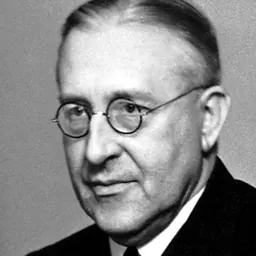
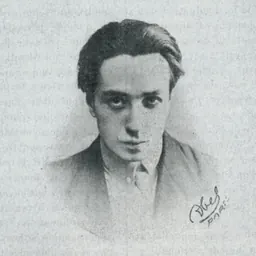

Related people
Same field, nearest in time

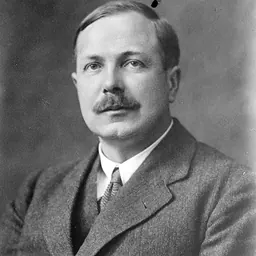

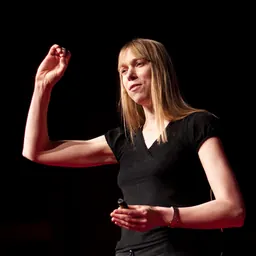
Contemporaries
People whose lives overlapped William Francis Gray Swann's

Frequently asked questions
Who was William Francis Gray Swann?
American physicist (1884–1962)
When was William Francis Gray Swann born?
William Francis Gray Swann was born on 29 August 1884 in England.
When did William Francis Gray Swann die?
William Francis Gray Swann died on 29 January 1962.
What was William Francis Gray Swann's occupation?
William Francis Gray Swann was a physicist.
What nationality was William Francis Gray Swann?
William Francis Gray Swann was American.
Sources & further reading
· Wikipedia: William Francis Gray Swann
· DBpedia: William Francis Gray Swann
Cite this page
APA: Biography.guide. (2026). William Francis Gray Swann. https://biography.guide/william-francis-gray-swann/
MLA: "William Francis Gray Swann." Biography.guide, https://biography.guide/william-francis-gray-swann/.
Chicago: "William Francis Gray Swann." Biography.guide. https://biography.guide/william-francis-gray-swann/.
Data last updated: 2026-09-20 · Spot an error? Report a correction.
Page generated 2026-09-27 04:58 UTC