
About William Forster
Lived 1627 – 1673 (aged 45–46). William Forster was an English mathematician.
William Forster (fl. 1630–1673) was an English mathematician living in London, a pupil of the celebrated mathematician and astronomer clergyman William Oughtred (1574-1660). He is best known for his book, a translation and edition of Oughtred's treatise entitled The Circles of Proportion. Oughtred invented horizontal and circular forms of the slide rule, and Forster persuaded his master to let him translate his writings about their form and use, and to publish them. The publication resulted in a controversy, because another student of Oughtred's, Richard Delamain the elder, during the two years (1630-32) in which Forster was preparing the book, brought out two treatises on the same subject claiming the inventions as his own, and addressing himself to royal patronage. Forster's work was dedicated to that eminent intellectual, Sir Kenelm Digby (1603-1665), and the account of Oughtred's claim is found in Forster's Preface, or Letter of Dedication. Following the invention or discovery of logarithms by John Napier, in his Mirifici Logarithmorum Canonis Descriptio of 1614, the translation of that work by Edward Wright (1561-1615), and Henry Briggs's Arithmetica Logarithmica of 1624, the development of the slide rule had an important impact on the teaching of mathematics.
The Circles of Proportion Forster, of whose life little is known, stated in 1632 that he owed his initiation and whole progress in the mathematical sciences to his worthy friend and teacher, Mr. William Oughtred.
Oughtred's admonition to Forster Oughtred replied:"That the true way of Art is not by Instruments, but by Demonstration: and that it is a preposterous course of vulgar Teachers, to begin with Instruments, and not with the Sciences, and so in-stead of Artists, to make their Schollers only doers of tricks, and as it were Iuglers: to the despite of Art, losse of precious time, and betraying of willing and industrious wits, unto ignorance, and idlenesse. That the use of Instruments is indeed excellent, if a man be an Artist: but contemptible, being set and opposed to Art. And lastly, that he meant to commend to me, the skill of Instruments, but first he would have me well instructed in the Sciences."
Richard Delamaine's claim This project (Forster also noted), while he was carefully working on it (1630-1632), "another to whom the Author in a loving confidence discovered this intent, using more hast then good speed, went about to preocupate [i.e., anticipate]; of which untimely birth, and preventing (if not circumventing) forwardnesse, I say no more: but advise the studious Reader, onely so farre to trust, as he shal be sure doth agree to truth and Art."
The anticipatative works were Delamain's Grammelogia, or, The mathematical ring extracted from the logarythmes, and projected circular (printed 1631, dedicated to King Charles I), and his The Making, Description, and Use of a small portable Instrument called a Horizontall Quadrant (printed 1632, dedicated to the Lord Brudenell, Baron of Stonton). According to Oughtred, Delamain was bringing him the printed sheets of his works as they were being prepared, and disregarded Oughtred's criticisms of them.
Oughtred responded at length in his Just Apologie (c. 1634), setting forth his own biography to show his precedence in the matter, and noting "Onely I will soberly tell you that William Forster, whom you call a Parrat speaking he cannot tell what, is a farre more grounded Artist in all parts of the Mathematicks then is R. D: and better knoweth what belongeth to demonstration then R. D. doth: as may soone bee tryed."
Biographical notices Following the dedicatory epistle to The Circles of Proportion was printed a short notice: "Thos that desire farther instructions in the use of thes Instruments or other parts of the Mathematiques may repaire to W Forster at the Red bull ouer against St Clements Church yard with out Temple bar"; from which it is inferred that he lived and taught mathematics there. This work shows Forster using the Rule of Multiplication based upon the symbol "X", said to have been introduced by Oughtred. A new edition by Henry Coley appeared in 1686; this suggests that Forster died between the publication of the second and third editions.
Don’t just read it —
keep it.
Full-length biographies made to live with: read them, listen on the way to work, watch them tonight.
- E-book
- Audio
- Video
Instant download · yours to keep · every purchase keeps this site free
Important facts
People in William Forster's life
Named in this biography and alive at the same time
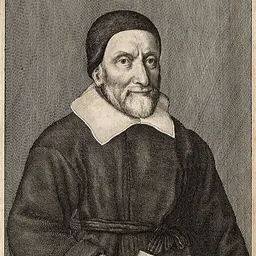


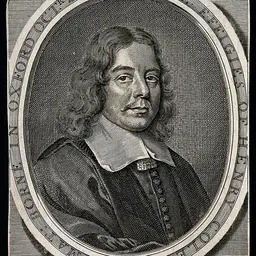

Related people
Same field, nearest in time
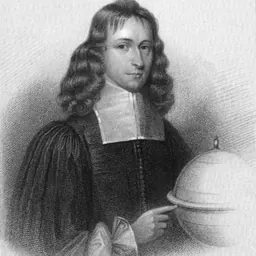

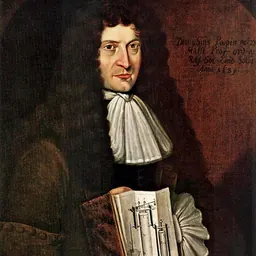
Contemporaries
People whose lives overlapped William Forster's





Frequently asked questions
Who was William Forster?
English mathematician
When was William Forster born?
William Forster was born in 1627.
When did William Forster die?
William Forster died in 1673.
What was William Forster's occupation?
William Forster was a mathematician.
What nationality was William Forster?
William Forster was English.
Sources & further reading
· DBpedia: William Forster (mathematician)
Cite this page
APA: Biography.guide. (2026). William Forster. https://biography.guide/william-forster-mathematician/
MLA: "William Forster." Biography.guide, https://biography.guide/william-forster-mathematician/.
Chicago: "William Forster." Biography.guide. https://biography.guide/william-forster-mathematician/.
Data last updated: 2026-09-20 · Spot an error? Report a correction.
Page generated 2026-09-27 05:25 UTC