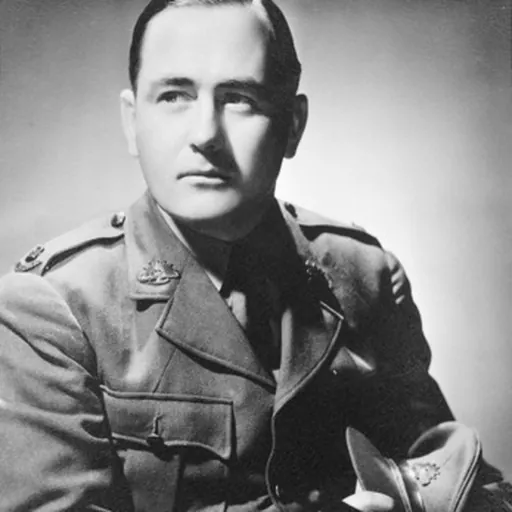
William Edward Hanley Stanner
Australian anthropologist
About William Edward Hanley Stanner
Lived 1905 – 1981 (aged 75). William Edward Hanley Stanner was an Australian anthropologist, university teacher and anthropology.
William Edward Hanley Stanner CMG (24 November 19058 October 1981), often cited as W.E.H. Stanner, was an Australian anthropologist who worked extensively with Indigenous Australians. Stanner had a varied career that also included journalism in the 1930s, military service in World War II, and political advice on colonial policy in Africa and the South Pacific in the post-war period.
He was the Commanding Officer of the 2/1st North Australia Observer Unit (NAOU) during World War II, also known as the "Nackeroos" and "Curtin's Cowboys". The NAOU was the military predecessor to the modern Norforce. Formed in March 1942 and disbanded March 1945, they patrolled northern Australia for signs of enemy activity.
Stanner was an influential figure prior to the successful 1967 referendum on Aboriginal affairs which removed provisions in the Australian Constitution which discriminated against Indigenous Australians. In 1967, the Prime Minister Harold Holt invited Stanner to join Herbert Coombs and Barrie Dexter to form the Commonwealth Council for Aboriginal Affairs and advise on national policy. He subsequently played an important role in establishing the Australian Institute of Aboriginal and Torres Strait Islander Studies.
Stanner is known for coining and popularising the term "the Great Australian Silence" in his 1968 Boyer Lectures entitled After the Dreaming, which reflected on the silence on Indigenous Australians in Australian history after European settlement. Stanner profoundly changed the way Australians thought about themselves, their country and Aboriginal culture.
Biography A number of biographical references exist, the most detailed being by Diane Barwick, Jeremy Beckett and Marie Reay which was largely completed before his death in 1981.
Early career Stanner was born at Watsons Bay, Sydney on 24 November 1905, the second son of Andrew Edwin Stanner and Mary Catherine Stanner (née Hanley). He was three years old when his father died. He was educated at state schools and won a bursary to Parramatta High School (1919–21), but was unable to stay on after the Intermediate Certificate for financial reasons. Stanner worked for two years in a bank and matriculated by private study. He worked as a journalist while studying at the University of Sydney, initially for the Cumberland Argus. In 1927 Stanner obtained full-time work as a reporter for the Sydney Daily Guardian for Frank Packer, the first of a number of posts in journalism which financed his studies in Australia and England.
In 1933 Stanner took up a temporary position on the personal staff of Bertram Stevens, the Premier of New South Wales, for whom he drafted parliamentary and public speeches and prepared reports. At that time he met Herbert Coombs and formed an enduring friendship with William Wentworth with whom he worked in later life. 1932–36 Department of Anthropology, University of Sydney. 1932, 1934–35 Field research in north and central Australia (for the Australian National Research Council). 1936–38 Research Assistant, London School of Economics. 1937 Personal staff of Commonwealth Treasurer, Lord Casey at the Imperial Conference in London. 1938–39 University of Oxford Expedition to Kenya (Oxford Social Sciences Research Committee).
Under the auspices of Oxford University he did field research in Kenya in 1938–39 as part of the Oxford Expedition to Kenya and East Africa for the Oxford Social Studies Research Committee. This field research was discontinued at the outbreak of World War II when Stanner returned to Australia. He obtained employment at the Department of Information and subsequently acted as adviser to successive Ministers for the Army, Percy Spender and Frank Forde who subsequently became prime minister.
Promoted to the rank of lieutenant colonel (Lt Col) in 1943, on being appointed as assistant director of DORCA. A developer of post-war colonial policy for DORCA, Stanner presented papers to numerous wartime authorities, and finally was appointed Senior Civil Affairs Officer for the British Borneo Civil Affairs Unit (BBCAU) until the conclusion of the war.
Stanner brought to this policy package an anthropologist's sensitivity to the importance of ceremony and ritual. In particular, at the handover of the first native title grant to the Gurindji people at Wattie Creek in the Northern Territory in 1975, Stanner recommended Prime Minister Gough Whitlam should perform the memorable symbolic act of pouring earth through the hands of Gurindji leader, Vincent Lingiari.
Boyer Lectures in 1968 In 1968 Stanner presented the Boyer Lectures, which he titled "After the Dreaming". The Boyer Lectures, an annual series of lectures delivered by prominent Australians on Radio National since 1959, have stimulated thought, discussion and debate in Australia on a wide range of subjects. Stanner's lectures, in which he most notably coined the phrase "the great Australian silence" (referring to the erasure from history of the violent colonial encounters with Aboriginal Australians, and Indigenous history in general), have since been reprinted a number of times.
The Great Australian Silence Stanner was most famous for coining the term "the Great Australian Silence " in his 1968 Boyer Lecture. Stanner stated that there was a "cult of disremembering" which had reduced Aboriginal and Torres Strait Islander people to little more than a "melancholy footnote" in Australia's history. He frequently spoke and wrote about the erasure from history of the violent colonial encounters "invasion, massacres, ethnic cleansing and resistance" between European settlers and the Indigenous population meant that there was "a cult of forgetfulness practised on a national scale". Stanner's Boyer Lectures in 1968 called historians to ensure this pervasive forgetfulness of the Indigenous population ceased, a process that Beasley notes was already under way to a small degree when the lectures were delivered. Beasley has stated that "Ultimately Indigenous Australians moved from being a ‘melancholy footnote’ in Australian history, to occupying a central place in the historiography."
Family Stanner married Patricia Williams (1 March 1931 – 17 May 2019), a diplomat who resigned on marriage due to the marriage bar, in 1962. The couple had two sons: Andrew Stanner and John Stanner. Keith Windschuttle described this in Quadrant magazine as "an uncommon honour for an Australian academic who died 24 years earlier in 1981."
Speakers at the conference were as follows: 1953, South Seas in Transition 1960, On Aboriginal Religion 1967, Industrial Justice in the Never-Never, the Presidential Address delivered to the Canberra Sociology Society, 24 March 1966 1968, After the Dreaming 1975, Australian Aboriginal Mythology: Essays in Honour of W. E. H. Stanner 1979, White Man Got No Dreaming: Essays 1938–1973 1985, Metaphors of Interpretation: Essays in Honour of W.E.H. Stanner 2005, W. E. H. Stanner: Anthropologist and Public Intellectual 2008, An Appreciation of Difference: WEH Stanner, Aboriginal Australia and Anthropology
Honours and tributes Honours, named in honour of, or tributes to W.E.H. Stanner: Sir Raphael Cilento Medallist in 1971, established in 1935 by the Australian Institute of Anatomy. Donated by Sir Raphael Cilento, a prominent Queensland medical man. Awarded biennially to the scientist who has advanced native welfare or advanced tropical medicine in Australia or the Pacific area. Honorary Doctorate of Literature, Australian National University in 1972 Made Companion of the Order of St Michael and St George (CMG) in 1972 Honoured in the list of the "200 Australians who have contributed most to making Australia what it is today", the book published by the Australian Bicentennial Authority as part of the Australian Bicentenary celebrations in 1988. The Stanner Award, established in AIATSIS in 1985 "in recognition of the significant contribution of the late Emeritus Professor W.E.H. (Bill) Stanner to the establishment and development of the Institute". The WEH Stanner Building at the Australian National University The Stanner Room at University House at the Australian National University Stanner Circuit (under construction) at Bonner, Australian Capital Territory in Canberra The Stanner Club in Darwin, formerly the Norforce soldiers club, since renamed.
Don’t just read it —
keep it.
Full-length biographies made to live with: read them, listen on the way to work, watch them tonight.
- E-book
- Audio
- Video
Instant download · yours to keep · every purchase keeps this site free
Important facts
People in William Edward Hanley Stanner's life
Named in this biography and alive at the same time




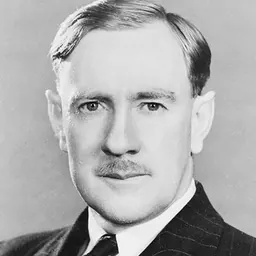
Related people
Same field, nearest in time

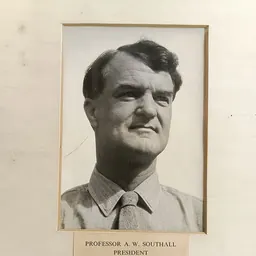
Contemporaries
People whose lives overlapped William Edward Hanley Stanner's





Frequently asked questions
Who was William Edward Hanley Stanner?
Australian anthropologist (1905–1981)
When was William Edward Hanley Stanner born?
William Edward Hanley Stanner was born on 25 November 1905 in Watsons Bay.
When did William Edward Hanley Stanner die?
William Edward Hanley Stanner died on 8 October 1981 in Canberra.
What was William Edward Hanley Stanner's occupation?
William Edward Hanley Stanner was an anthropologist, university teacher and anthropology.
What nationality was William Edward Hanley Stanner?
William Edward Hanley Stanner was Australian.
Sources & further reading
· Wikipedia: William Edward Hanley Stanner
· DBpedia: William Edward Hanley Stanner
Cite this page
APA: Biography.guide. (2026). William Edward Hanley Stanner. https://biography.guide/william-edward-hanley-stanner/
MLA: "William Edward Hanley Stanner." Biography.guide, https://biography.guide/william-edward-hanley-stanner/.
Chicago: "William Edward Hanley Stanner." Biography.guide. https://biography.guide/william-edward-hanley-stanner/.
Data last updated: 2026-09-22 · Spot an error? Report a correction.
Page generated 2026-09-27 05:10 UTC