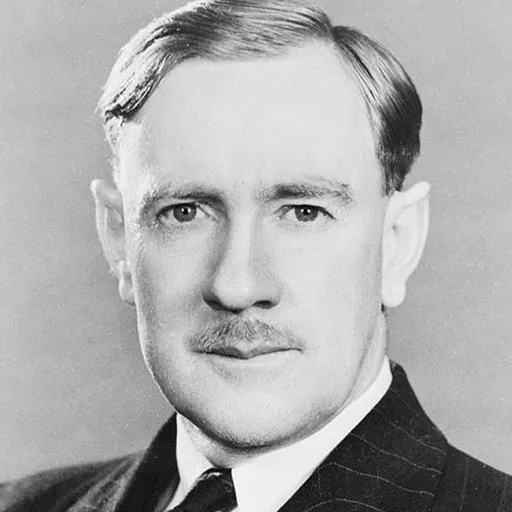
About Percy Spender
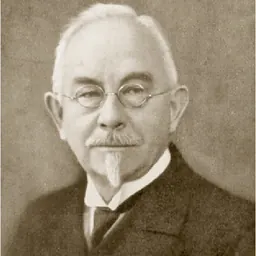
Lived 1897 – 1985 (aged 87). Percy Spender was an Australian politician, diplomat, jurist, judge and lawyer.
Sir Percy Claude Spender (5 October 18973 May 1985) was an Australian politician, diplomat, and judge. He served in the House of Representatives from 1937 to 1951, including as a cabinet minister under Robert Menzies and Arthur Fadden. He was later Ambassador to the United States (1951–1958) and a member of the International Court of Justice (1958–1967), including as president of the court from 1964 to 1967.
Early life Spender was born on 5 October 1897 in Darlinghurst, New South Wales. He was the fifth of six children born to Mary and Frank Henry Spender; his father was a locksmith originally from South Australia. Spender's mother died in 1902 and his father remarried, giving him a stepsister and later two half-siblings. He began his education at Darlinghurst Public School, and later attended Fort Street High School. After failing his matriculation exam, he found work as a clerk with the Sydney City Council. Spender eventually passed the entrance exam to the University of Sydney, where he graduated Bachelor of Arts in 1918.
He enlisted in the Australian Imperial Force in September 1918, but did not see active service before the war ended a few months later. Spender subsequently completed a Bachelor of Laws, graduating in 1922 with first-class honours and the University Medal in law. He was admitted to the bar in 1923 and made a King's Counsel in 1935.
Entry into politics Spender entered politics at the 1937 election when he was elected to the House of Representatives as member for Warringah. He ran as an "independent UAP" candidate, unexpectedly defeating the sitting member, Sir Archdale Parkhill. On 20 October 1938, Spender announced that he would join the UAP, but that he would "continue to stand for independent expression of thought and action and against the principle of preselection of candidates".
World War II Treasurer Robert Menzies became prime minister in April 1939 and appointed himself as Treasurer, as was common at the time. Spender was promoted to cabinet as a minister without portfolio, but effectively ran the Department of the Treasury in Menzies' stead. He was initially given the title "Minister without portfolio assisting the Treasurer", and then in November 1939 was named Acting Treasurer. He was a member of two subcommittees within cabinet – the Economic Cabinet and War Cabinet – and in January 1940 was additionally made Vice-President of the Executive Council. According to political historian John Hawkins, Spender was "the most academically qualified economist among pre-WWII treasurers". He promoted interventionist Keynesian policies, such as borrowing money and raising taxes to spend on defence-related projects and thereby reduce unemployment.
Later activities After the 1940 federal election, Arthur Fadden was elected leader of the Country Party, the UAP's coalition partner, and demanded the position of Treasurer. Spender was instead made Minister for the Army, which he would hold until the government's defeat on a confidence motion in October 1941. Billy Hughes was expelled in similar circumstances two months later.
Spender sat as an independent after being expelled from the UAP. He was approached to join the Liberal Democratic Party, a small UAP breakaway, but declined. In May 1945, Spender became a financial member of the Mosman branch of the Liberal Party of Australia. However, he was not admitted to the parliamentary Liberal Party until 13 September 1945, when the Advisory War Council was abolished. Hughes was also re-admitted at that point.
Post-war politics
Upon Menzies' return to power in 1949, Spender was made Minister for External Affairs (19 December 194926 April 1951) and Minister for External Territories. Spender's greatest influence on Australian politics occurred during this period. He led Australian delegations to the British Commonwealth Conference in Colombo, Ceylon and to the Fifth Session of the United Nations General Assembly (of which he was the vice-president). and the Treaty of San Francisco (Japanese Peace Treaty; 1951).
Spender expressed more desire to secure alliances with 'great powers' than contribute to collective security, stating that international organisations like the UN may "contain those who are at work to disrupt the order we believe in". In this sense Spender was more akin to the realist tradition of Australian foreign politics linked to former Prime Minister Sir Robert Menzies.
Diplomatic and judicial posts
On leaving politics, Spender was appointed Australia's Ambassador to the United States (1951–58).
Spender's appointment as Ambassador to the United States was seen as a possible motive by Menzies to remove a potential rival in Spender from Parliament and notwithstanding Spender had unsuccessfully stood against Menzies for the UAP leadership in 1943.
However Spender said in 1968 that Menzies only made the ambassador's offer after Spender informed Menzies that he (Spender) was leaving politics.
Spender was the first Australian appointed to the International Court of Justice in The Hague (1958–1964) and was the Court's President 1964–67. Spender died in May 1985, aged 87.
Don’t just read it —
keep it.
Full-length biographies made to live with: read them, listen on the way to work, watch them tonight.
- E-book
- Audio
- Video
Instant download · yours to keep · every purchase keeps this site free
Important facts
Family & relationships
People in Percy Spender's life
Named in this biography and alive at the same time






Related people
Same field, nearest in time




Contemporaries
People whose lives overlapped Percy Spender's


Frequently asked questions
Who was Percy Spender?
Australian politician (1897–1985)
When was Percy Spender born?
Percy Spender was born on 5 October 1897 in Sydney.
When did Percy Spender die?
Percy Spender died on 3 May 1985 in Sydney.
What was Percy Spender's occupation?
Percy Spender was a politician, diplomat, jurist, judge and lawyer.
What nationality was Percy Spender?
Percy Spender was Australian.
Sources & further reading
Cite this page
APA: Biography.guide. (2026). Percy Spender. https://biography.guide/percy-spender/
MLA: "Percy Spender." Biography.guide, https://biography.guide/percy-spender/.
Chicago: "Percy Spender." Biography.guide. https://biography.guide/percy-spender/.
Data last updated: 2026-09-23 · Spot an error? Report a correction.
Portrait: Wikimedia Commons · author & licence
Page generated 2026-09-27 05:04 UTC