
About William Edgar Easton
Lived 1861 – 1936 (aged 74). William Edgar Easton was an American writer, journalist and playwright.
William Edgar Easton (March 19, 1861 – January 10, 1936) was an American playwright, journalist, and political activist. He wrote two plays about the Haitian Revolution and its aftermath: Dessalines, a historical drama about Jean-Jacques Dessalines; and Christophe (1911), a drama about Henri Christophe, King of Haiti following the Revolution.
Life Early years (1861–1883) Easton was born on March 19, 1861, in New York City, to Marie Antoinette Leggett-Easton and Charles F. Easton. His mother was a native French speaker whose family had immigrated to New Orleans from France; the Eastons spoke both English and French at home. Marie Antoinette Leggett-Easton was descended from a participant in the Haitian Revolution.
On his father's side, he was a descendant of Moses Easton, the brother of James Easton. James was a veteran of the Revolutionary War—he planned the fortification of Dorchester Heights Another source claims he attended "St. Caesar's College, Canada". This appears to be a reference to Collège Saint-Césaire, in Saint-Césaire, Quebec, which founded in 1869 by a member of the Congregation of Holy Cross.
Texas (1883–1901) Easton moved to Texas at age 22. Price notes that was a momentous and somewhat unusual decision for Easton to have made, given that he was "a young man just out of a Canadian Catholic seminary".
He married Mary Elizabeth Easton in 1888 in Austin. He worked as a teacher from roughly 1882 to 1885.
While in Texas, Easton edited at least three newspapers: the Citizen, and the Globe. He later served as the inaugural president of the Colored State Press Association.
He also held a number of positions with the state Republican Party, beginning an activist career that would last long after he departed Texas.
California (1901–1936) Easton appears to have moved to California sometime in 1901: in July 1924, he recorded in a biographical sketch he completed for the California State Library that he been in California for 23 years. He wrote: "he ruthless murder of Dr. Washington (call it by its proper name, for that was what was intended) would not only have been the crowning misfortune of the colored race, but a dreadful menace to the state—to the whole nation, the nation that is at this time so seriously endeavoring to solve a most problem".
During World War I, he was picked by Emmett Jay Scott to serve as a member of the Speakers Bureau of the Department of War. After the war ended, he was "designated by the California Historical Survey Commission as chairman of a sub-committee of the California War History Committee to gather and preserve material and information regarding the activities of the colored race in California in connection with their part in helping to win the war".
Easton died on January 10, 1936, at his home in Los Angeles.
In 1893, he delivered a lecture on "The Catholic Church and the Negro Race" at St. Joseph's Hall in New Orleans.
Works Henrietta Vinton Davis, star and producer of Dessalines and Christophe. Advertisement for Dessalines in the Indianapolis Freeman, 1893. Easton wrote two plays that received wide notice at the time, both about prominent figures in the Haitian Revolution: Dessalines (1893) and Christophe (1911). Henrietta Vinton Davis produced and starred in both. He also wrote two other short plays, Is She a Lady in the Underworld? and Misery in Bohemia, which do not seem to have been staged.
Dessalines Hill and Hatch describe Dessalines as a "romantic melodrama written in blank verse". The titular character and male lead of Dessalines is Jean-Jacques Dessalines, a key figure in Haiti's early military and political history. The plot concerns Dessalines's exploits and his relationship with Clarisse, a (probably) mythical figure who converts him to Christianity. Byrd and Twa note that the play glosses over Dessalines's "massacres" and "despotism" in favor of a focus on religious and romantic themes.
Byrd argues that Dessalines should be interpreted in light of late 19th-century views of Black masculinity in America. The ideology of white supremacy painted Black people—and in, particular, Black men—as weak, uncivilized, and incapable of running their own affairs. In the view of a number of contemporary Black intellectuals, the example of Haiti and its revolution provided a counterpoint to this ideological fiction: Haiti was an independent republic, like the United States, which had expelled its colonial governors and created a new nation.
In his preface to Dessalines, Easton lamented what he saw as a failure to properly memorialize the heroic deeds of Black people:The Negro alone fails to immortalize his distinguished dead, and leaves to the prejudiced pen of other races, the office, which, by a proper conception of duty to posterity, very properly becomes his duty. … … the author of this work hopes to see a happier era inaugurated by the constant production of legitimate drama, written exclusively for Negro players and meeting, he hopes, with the full endorsement of the brother in white. For the reasons, as above enumerated, has the author presumed to lay on the altar of race pride the dramatic tale of the heroic Dessalines.The Chicago premiere of Dessalines was at Freiburg's Opera House, on 22nd Street, in September 1893. It featured "a complete cast of colored characters". The Freeman later offered its readers a copy of Dessalines as part of a holiday promotion.
Albion W. Tourgée reportedly stated at the time that Dessalines was "the highest evidence of literary culture thus far produced by an American negro".
ChristopheChristophe'', reportedly written for Davis, was staged in New York and Los Angeles in spring 1912. In New York, it opened at the Lenox Casino in Harlem, at 102 West 116th Street and Lenox Avenue (now known as Malcolm X Boulevard).
Besides Davis, cast members included R. Henri Strange, Lawrence Chenault, Frederick Douglass Hogan, Otis Sherman, and Blanche DeForrest.
Proceeds from the New York staging went to a provisional Black regiment of the New York National Guard commanded by Charles W. Fillmore.
Don’t just read it —
keep it.
Full-length biographies made to live with: read them, listen on the way to work, watch them tonight.
- E-book
- Audio
- Video
Instant download · yours to keep · every purchase keeps this site free
Important facts
People in William Edgar Easton's life
Named in this biography and alive at the same time


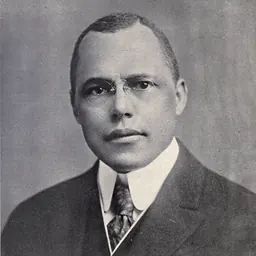

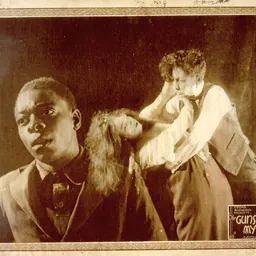

Related people
Same field, nearest in time


Contemporaries
People whose lives overlapped William Edgar Easton's


Frequently asked questions
Who was William Edgar Easton?
American playwright and journalist
When was William Edgar Easton born?
William Edgar Easton was born on 19 March 1861 in New York City.
When did William Edgar Easton die?
William Edgar Easton died on 10 January 1936 in Los Angeles.
What was William Edgar Easton's occupation?
William Edgar Easton was a writer, journalist and playwright.
What nationality was William Edgar Easton?
William Edgar Easton was American.
Sources & further reading
· Wikipedia: William Edgar Easton
· DBpedia: William Edgar Easton
Cite this page
APA: Biography.guide. (2026). William Edgar Easton. https://biography.guide/william-edgar-easton/
MLA: "William Edgar Easton." Biography.guide, https://biography.guide/william-edgar-easton/.
Chicago: "William Edgar Easton." Biography.guide. https://biography.guide/william-edgar-easton/.
Data last updated: 2026-09-25 · Spot an error? Report a correction.
Page generated 2026-09-27 05:12 UTC