
About William E. Schevill
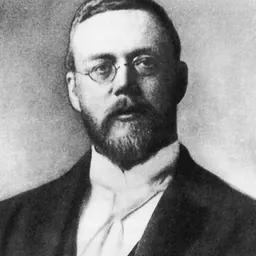
Lived 1906 – 1994 (aged 88). William E. Schevill was an American paleontologist.
William Edward "Bill" Schevill (July 2, 1906 – July 25, 1994) was an American paleontologist famous for his part in dynamiting out the nodules of the most complete skeleton of the short-necked pliosaur Kronosaurus queenslandicus discovered in Hughenden in Queensland, Australia, in 1932. He later became known as an authority on the sounds of whales. Schevill had the title of scientist emeritus at the Woods Hole Oceanographic Institution, where he had begun working in 1943, technically retiring in 1985.
Early Education Born July 2, 1906 in Brooklyn, New York, William E. Schevill grew up in Manhattan, New York, and St Louis, Missouri. Graduating from Harvard College in 1927, he saw the rejuvenation of the Harvard Museum of Comparative Zoology (MCZ) as initiated by the new director Thomas Barbour and, in 1929 Bill Schevill earned an A.M. with and was made the assistant of Percy Raymond, MCZ Professor and Curator of Invertebrate Palaeontology. Soon promoted to Associate Curator, Schevill traveled with Professor Raymond on "significant fossil-collecting expeditions to the Burgess Shale, British Columbia (1930) and to Estonia, Norway and Sweden (1934)." The Harvard Australian Expedition (1931–1932), as it became known, was a six-man venture led by Harvard Professor William Morton Wheeler, with the others being P. Jackson Darlington, Jr. (a renowned coleopterist), Glover Morrill Allen and his student Ralph Nicholson Ellis, medical officer Ira M. Dixon, and William E. Schevill. MCZ director Thomas Barbour said at the time "We shall hope for specimens' of the kangaroo, the wombat, the Tasmanian devil and Tasmanian wolf," and the mission was a success with over a hundred mammals and thousands of insect specimens returning to the United States. The rocks were limestone nodules containing the most complete skeleton of a Kronosaurus ever discovered. After dynamiting the nodules out of the ground (and into smaller pieces weighing approximately four tons ) with the aid of a British migrant trained in the use of explosives, Scheville had the fossils shipped back to Harvard for examination and preparation. The skull—which matched the holotype jaw fragment of K. queenslandicus—was prepared right away, but time and budget constraints put off restoration of the nearly complete skeleton - most of the bones of which remained unexcavated within the limestone blocks - for 20 years.
Following his return from the expedition, William E. Schevill was made a librarian of the MCZ from 1935 to 1943,
Cetology After he became an Associate in Physical Oceanography at Woods Hole Oceanographic Institution (WHOI) in Massachusetts in 1943, Bill Schevill's first work was under US Naval auspices investigating echolocation of U-boats. Indeed, he had been rejected for military service because of chronic iritis, but he joined a small group that worked with Allied submariners on monitoring the temperature of the ocean's upper levels so as to exploit it for stealth when dealing with enemy sonar. Such maritime work inspired him and, leaving palaeontology behind, led William E. Schevill to become "one of the world's most innovative whale biologists and an undisputed pioneer in the field of whale sounds," However, it is worthy of note that his wife Barbara Lawrence, by now the MCZ's Curator of Mammals, often co-wrote these documents with him.
Don’t just read it —
keep it.
Full-length biographies made to live with: read them, listen on the way to work, watch them tonight.
- E-book
- Audio
- Video
Instant download · yours to keep · every purchase keeps this site free
Important facts
Family & relationships
People in William E. Schevill's life
Named in this biography and alive at the same time



Related people
Same field, nearest in time


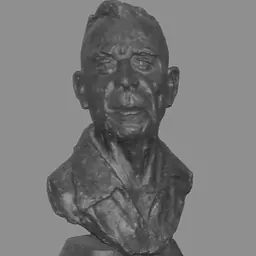

Contemporaries
People whose lives overlapped William E. Schevill's


Frequently asked questions
Who was William E. Schevill?
U.S. paleontologist (1906–1994)
When was William E. Schevill born?
William E. Schevill was born on 2 July 1906 in Brooklyn.
When did William E. Schevill die?
William E. Schevill died on 25 July 1994 in Concord, Massachusetts.
What was William E. Schevill's occupation?
William E. Schevill was a paleontologist.
What nationality was William E. Schevill?
William E. Schevill was American.
Sources & further reading
· Wikipedia: William E. Schevill
· DBpedia: William E. Schevill
Cite this page
APA: Biography.guide. (2026). William E. Schevill. https://biography.guide/william-e-schevill/
MLA: "William E. Schevill." Biography.guide, https://biography.guide/william-e-schevill/.
Chicago: "William E. Schevill." Biography.guide. https://biography.guide/william-e-schevill/.
Data last updated: 2026-09-20 · Spot an error? Report a correction.
Page generated 2026-09-27 05:06 UTC