
About William Day
Lived 1712 – 1797 (aged 84–85). William Day was an American military officer.
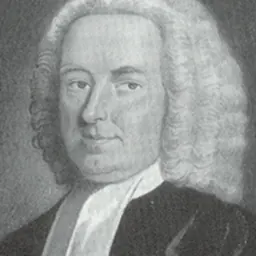
William Day (October 23, 1715 in Springfield, Massachusetts – March 22, 1797 in Sheffield) was a Springfield, Massachusetts (United States), sea captain who acted against America's enemies in both the French and Indian War and the American Revolutionary War. In 1777 he received the first gun salute to an American fighting vessel in a European port.
Life before 1776 Little is known of the life of Revolutionary War sea captain William Day, beyond what was learned by those he captured in 1777. The birth and death dates assigned to him for this article are based on a claim he made then: that during the French and Indian War (the long American conflict which spread to Europe as the Seven Years' War) he served as a privateer on behalf of the British and their American colonists against French shipping. The family of William Day (1715–97) still possesses a portrait of him celebrating his triumph against a French convoy in that conflict, strongly implying that he is indeed the 1777 William Day.
In August 1756, Day was hired by George Campbell, a merchant of Liverpool, England, to command a 14-gun privateer brigantine named Brave Blakeney. Sailing into the Atlantic Ocean, he met with another British privateer, the Hawke of Exeter, and they agreed to co-operate. On 6 October, they sighted a small convoy of four French merchant ships off the Spanish coast near Cape Finisterre; these were the Robuste (14 guns), the Juste (22 guns, 10 of which turned out to be fakes), La Gloire (armament uncertain) and Victoire (10 guns). The French ships formed a battle line, but Blakeney got in among them and after a two-hour battle forced the surrender of the Juste. Meanwhile, Hawke'''s crew boarded and captured the Robuste. When these two ships were secured with prize crews, the British privateers chased the others. La Gloire threw guns and other equipment overboard to gain speed, but was caught by Blakeney; Victoire managed to elude Hawke long enough to escape in the night.
Following that success, in August 1757 William Day was hired to command another Liverpool-based privateer, the 20-gun Prussian Hero. He sailed to the West Indies, and in March 1758 he met with five French privateers off Martinique. They fired at him, but he managed to escape. Shortly afterwards, off the east end of Jamaica, he was attacked by a well-manned 16-gun French privateer, which managed to tangle its jib-boom with Prussian Hero's rigging, potentially allowing many men to board. The French superiority of numbers meant that, although the initial boarding was repulsed with heavy losses ("the deck ran with blood"), Day had to cut the ropes holding the two ships together and retreat, for the loss of only a single crew member.
At the start of the American Revolution he seems to have been a successful merchant captain, with a home in the historic port of Charlestown, Massachusetts. In June 1775, during the "Battle of Bunker Hill", much of Charlestown was destroyed, including Day's home, as (according to what he told his 1777 captives) he discovered when he returned from a voyage to the West Indies. Family narratives of William Day (1715–97), whose main home then was far inland at Sheffield, Massachusetts, make no mention of this.
Return to action After the British forces evacuated Boston in March 1776, the port became an important centre for activities against British shipping. The business house of Philip Moore & Co. financed a number of privateers, including Day. A 370-ton British merchant vessel, the Isaac of Liverpool, which had been captured on the way home from the West Indies by John Philips in the privateer sloop Warren, and taken to Salem, Massachusetts, Two days before this period expired, Day captured a British cargo vessel bound from London to New York, laden with salt, sherry, dried fruit and bark- which, having safely arrived at an American-controlled port on 25 June, was also found to be carrying an interesting letter from a London merchant firm to business partners in New York, observing that "we have no doubt (supposing the present campaign to be as ineffectual as the last) that the colonies will remain independent," and pondering future business prospects. Some of the privateers, without the escort vessels, then continued along the main New York- London shipping lane to cruise in British waters. Nearing Ireland, they were separated by bad weather (probably shortly after 24 June, when Day captured the Rebecca and Polly, which had left Cork in a convoy bound for New York two days earlier). The first "official" salute of an American naval vessel thus ensued seven months later with the arrival of the USS Ranger in France, 14 February 1778.
Day finished his "repairs" about the end of July, but his next destination (according to Lambert Wickes, who was also doing "repair" work at St. Malo) was to be another French port, L'Orient. He was allowed in, and at the beginning of September he was still there (or at least, in the neighbouring harbour of Port Louis) when a French acquaintance offered to deliver a report of his cruise to Benjamin Franklin at Versailles, which the Captain happily provided. but when the General Mifflin'' set out from America on another cruise in March 1778 (by which time France had signed treaties of alliance with America), the captain was Daniel McNeill. So there, until further information can be found, William Day's story ends.
Principal source Bradbury, David "Captain John Paul who? America vs. my town, 1774-78" Whitehaven UK, PastPresented (2007)
Don’t just read it —
keep it.
Full-length biographies made to live with: read them, listen on the way to work, watch them tonight.
- E-book
- Audio
- Video
Instant download · yours to keep · every purchase keeps this site free
Important facts
People in William Day's life
Named in this biography and alive at the same time



Related people
Same field, nearest in time


Contemporaries
People whose lives overlapped William Day's




Frequently asked questions
Who was William Day?
American sea captain
When was William Day born?
William Day was born in 1712.
When did William Day die?
William Day died on 22 March 1797.
What was William Day's occupation?
William Day was a military officer.
What nationality was William Day?
William Day was American.
Sources & further reading
· DBpedia: William Day (sea captain)
Cite this page
APA: Biography.guide. (2026). William Day. https://biography.guide/william-day/
MLA: "William Day." Biography.guide, https://biography.guide/william-day/.
Chicago: "William Day." Biography.guide. https://biography.guide/william-day/.
Data last updated: 2026-09-20 · Spot an error? Report a correction.
Page generated 2026-09-27 05:15 UTC