
About William Dawes
Lived 1762 – 1836 (aged 73–74). William Dawes was a British explorer, astronomer and abolitionist.
William Nicolas Dawes (1762–1836) was an officer of the British Marines, an astronomer, engineer, botanist, surveyor, explorer, abolitionist, and colonial administrator. He traveled to New South Wales with the First Fleet on board .
Early life William Dawes was born at Portsmouth, Hampshire, in early 1762, the eldest child of Benjamin and Elizabeth (Sinnatt) Dawes. He was christened there on 17 March 1762. His father was a clerk of works in the Ordnance Office at Portsmouth.
He joined the marines as a Second Lieutenant on 2 September 1779. He was wounded in action against the French Navy under the Comte de Grasse at the Battle of the Chesapeake in 1781.
Dawes volunteered for service with the New South Wales Marine Corps, which accompanied the First Fleet. Because he was known as a competent astronomer, he was asked to establish an observatory and make astronomical observations on the voyage and in New South Wales.
New South Wales From March 1788 Dawes was employed in the settlement as an engineer and surveyor, and built the first Sydney Observatory on what is now Dawes Point, under the southern approach to Sydney Harbour Bridge. In his several roles, Dawes made astronomical observations, constructed batteries on the points at the entrance to Sydney Cove, laid out the government farm and first streets and allotments in Sydney and Parramatta. Dawes took part in several explorations to the mountains west of Sydney, beyond the Nepean River and the Cowpastures; the first attempt to cross the Blue Mountains. Dawes' skill in computing distances and map making were invaluable in the new colony.
Dawes was also interested in studying the local Eora people. He developed a close relationship with a fifteen-year-old native girl, Patyegarang (Grey Kangaroo). She stayed in his hut acting as his language teacher, servant, and perhaps lover. During his time in Australia he became an authority on Aboriginal language. Patyegarang is known to have praised his linguistic abilities, referring to him as "Mr. Dawes budyiri karaga" ("Mr. Dawes pronounces well" or "Mr. Dawes good mouth"). He was finally persuaded to take part by the chaplain, Rev. Johnson. Afterwards, he stated publicly that he regretted being "persuaded to comply with the order". Phillip was incensed by what he viewed as a further act of insubordination.
Governor of Sierra Leone Dawes was given a letter of introduction by Rev. Johnson to William Wilberforce, whose acquaintance he made in early 1792. Wilberforce was impressed with Dawes, remarking that he was "an avowed friend of religion and order." Likely due to the influence of Wilberforce, Dawes was accepted into the Evangelical Clapham Sect. Just a few months later, in August 1792, he was then chosen to join John Clarkson in Sierra Leone, a colony founded as a home for Black Loyalists, African Americans who had been promised their freedom if the served for the Britain in the American War of Independence. Clarkson was serving as governor there.
Dawes' first term as governor wasn't without problems. He upset many colonists when he insisted, on orders from England, that the colonists abandon the lots they currently occupied and move to new lots allocated to them by Dawes. This was only one of several of Clarkson's actions that he was forced to countermand.
According to an account by one colonist, Anna Maria Falconbridge, Dawes became frustrated by the colonists' refusal to follow his orders and declared that he would return to England. The colonists responded by shouting "Go! Go! Go!". The colonists blamed him for the decisions made by his employers. One of the Methodist ministers, Henry Beverhout, referred to Dawes as "Pharaoh", invoking the story of Moses to encourage the people of Sierra Leone to resist his governance. At one point the colonists actually staged a false raid in an effort to obtain guns that Dawes believed they intended to use against members of the colonial government.
Dawes was motivated by the desire to help the people of Sierra Leone, but his religious zeal, his opposition to the local Methodist ministers, and what they considered his overbearing nature alienated him from many of the colonists and even from other colonial officials such as Thomas Clarkson.
His health suffering from both stress and the intolerable climate, he returned to England in March 1794. Within a few months of returning he wed Judith Rutter at Portsea, Hampshire, on 29 May 1794. They had three children, a daughter and two sons, before Judith's death.
In spite of his earlier difficulties with the colonists, Dawes was sent back to serve a second term as governor of Sierra Leone in January 1795, remaining until March 1796. She would prove to be a devoted helpmate in his future work.
William was encouraged by the great parliamentarian and abolitionist, William Wilberforce, to continue his work against the slave trade in Antigua. The work would be arduous and unpaid, but he agreed to undertake it, and in 1813 he traveled to Antigua with his wife and daughter Judith. and named for her mother. She married in Antigua and is known to have had at least two sons. He was buried at Portsea, 26 May 1798.
William Rutter Dawes, was born on 19 March 1799 at Christ's Hospital then in the City of London (it moved to Horsham, West Sussex in 1902). Trained as a clergyman, he became an astronomer of note. He was said to have done all he could to bring comfort to his father and stepmother's declining years.
John Macaulay Dawes, baptised 29 June, 1800, City of London, named in honor of William's friend Zachary Macaulay, died in infancy.
Don’t just read it —
keep it.
Full-length biographies made to live with: read them, listen on the way to work, watch them tonight.
- E-book
- Audio
- Video
Instant download · yours to keep · every purchase keeps this site free
Important facts
People in William Dawes's life
Named in this biography and alive at the same time


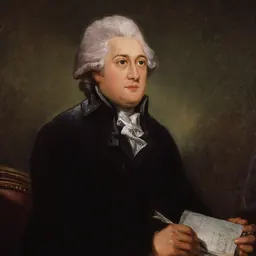
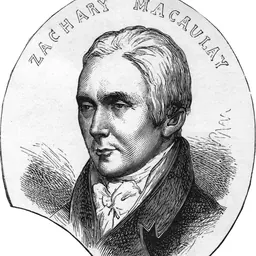

Related people
Same field, nearest in time


Contemporaries
People whose lives overlapped William Dawes's




Frequently asked questions
Who was William Dawes?
British colonial administrator
When was William Dawes born?
William Dawes was born in 1762 in Portsmouth.
When did William Dawes die?
William Dawes died in 1836 in Antigua.
What was William Dawes's occupation?
William Dawes was an explorer, astronomer and abolitionist.
What nationality was William Dawes?
William Dawes was British.
Sources & further reading
· DBpedia: William Dawes (British Marines officer)
Cite this page
APA: Biography.guide. (2026). William Dawes. https://biography.guide/william-dawes/
MLA: "William Dawes." Biography.guide, https://biography.guide/william-dawes/.
Chicago: "William Dawes." Biography.guide. https://biography.guide/william-dawes/.
Data last updated: 2026-09-20 · Spot an error? Report a correction.
Page generated 2026-09-27 05:24 UTC