
About William Clerihew
Lived 1811 – 1870 (aged 58–59). William Clerihew was a British artist and architect.
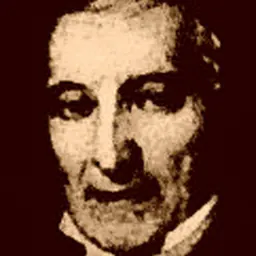
William Clerihew (1811 – 6 March 1870) was a Scottish architect, artist, coffee planter and inventor. He painted and measured the comet with the longest tail recorded, and invented the "Clerihew Store", a device for drying coffee beans, for which he received the Isis Gold Medal.
Biography Clerihew was born in Aberdeen, to George Clerihew, builder and guild burgess of the city and his wife, Margaret (nee Richardsom). Edmund Clerihew Bentley, the inventor of the Clerihew, the form of poetry, was his nephew. He went to Marischal College, to which his father bequeathed a bursary later.
He became an apprentice architect in 1836 and joined the Royal Institute of British Architects (RIBA) in London as an associate member in 1839. He apparently worked for Charles Parry as a draughtsman on the design of the new houses of Parliament. In 1842 Indian business magnate Dwarkanath Tagore headhunted him to teach Astronomy and Physics to a college of native youth in Bengal.
Clerihew boarded the Justina, bound for Calcutta. In middle of the Indian Ocean, about 600 miles (1000 km) off Ceylon (now Sri Lanka), he observed an extremely bright comet (now identified as “C1843D1”), with the longest tail – estimated at 200-300 million miles (300-500m km) – ever recorded. Clerihew made four drawings of it and measured its altitude and azimuth. He also spotted the comet’s second tail and measured the angle it made with the first. He sent his observations to the astronomer Sir John Frederick William Herschel. The paintings he made of the comet were later presented to the Royal Astronomical Society.
On arrival in Calcutta, he began painting buildings and landscapes. In late 1843 he sailed up the Ganges River to Delhi, painting all the way.
In 1851 he accompanied Cameron to Europe, painting scenes in the Middle East on the way. He attended the Great Exhibition, where the Clerihew Store was an exhibit. In 1853, Prince Albert presented him with the Isis Medal for his invention.
He retired to Aberdeen. In 1856, he married Emily Foottit, the 18-year old daughter of the late Rev. James Foottit, of Newark, Nottinghamshire, and had seven children.
Don’t just read it —
keep it.
Full-length biographies made to live with: read them, listen on the way to work, watch them tonight.
- E-book
- Audio
- Video
Instant download · yours to keep · every purchase keeps this site free
Important facts
People in William Clerihew's life
Named in this biography and alive at the same time

Related people
Same field, nearest in time



Contemporaries
People whose lives overlapped William Clerihew's





Frequently asked questions
Who was William Clerihew?
Scottish painter and architect
When was William Clerihew born?
William Clerihew was born in 1811.
When did William Clerihew die?
William Clerihew died on 6 March 1870.
What was William Clerihew's occupation?
William Clerihew was an artist and architect.
What nationality was William Clerihew?
William Clerihew was British.
Sources & further reading
Cite this page
APA: Biography.guide. (2026). William Clerihew. https://biography.guide/william-clerihew/
MLA: "William Clerihew." Biography.guide, https://biography.guide/william-clerihew/.
Chicago: "William Clerihew." Biography.guide. https://biography.guide/william-clerihew/.
Data last updated: 2026-09-20 · Spot an error? Report a correction.
Page generated 2026-09-27 05:32 UTC