
About William Church
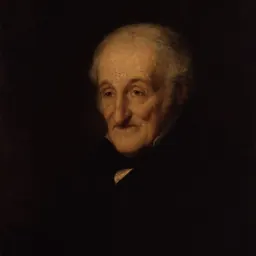
Lived 1778 – 1863 (aged 84–85). William Church was an American and British inventor.
At some time after this, he moved to Bordesley Green near Birmingham in England, presumably to promote his patent. He was a prolific inventor, taking out numerous patents for methods of button making, nail making, metal working, smelting iron, spinning and other branches of engineering. In 1824 he patented a printing machine which positioned the paper sheets more accurately.
He turned his attention to steam engines, with a patent in 1829 for marine engines and associated equipment, and another in 1830 for an improved furnace. He patented his first steam carriage in 1832. This does not appear to have been built, but a further patent in 1835 led to the formation of the London and Birmingham Steam Carriage Company. The company prospectus describes their vehicle of 60 hp, capable of carrying a load of 15 tons at a rate of 15 miles an hour.
The Science Museum has an engraving by Josiah Allen which shows it as a large three-wheeled vehicle with passenger compartments front and rear similar to conventional stagecoach bodies, with seating on top, and the driver mounted high at the front operating a tiller for steering. The central part contained the mechanism. It would seem however that this was not the vehicle which was eventually built. Although some accounts suggest that it operated on a daily basis between London and Birmingham, Prosser suggests that it never in fact completed a journey, and the company was wound up.
Although a number of steam powered coaches were tried between 1820 and 1840, they did not succeed. Operating on roads limited the weight of vehicles and required them to overcome poor surfaces and go up and down hills. Impediments from excessive tolls on the turnpikes to virtual sabotage were thrown in their way and prospective passengers were unnerved by being so close to the boiler. In the end, horse omnibuses won in towns and the railway, with its smooth running track, for greater distances.
In 1838 Church built a steam locomotive which had various names but was most notorious as the "Surprise" which was tried unsuccessfully in the early days of the Lickey Incline in England.
Don’t just read it —
keep it.
Full-length biographies made to live with: read them, listen on the way to work, watch them tonight.
- E-book
- Audio
- Video
Instant download · yours to keep · every purchase keeps this site free
Important facts
Related people
Same field, nearest in time

Contemporaries
People whose lives overlapped William Church's





Frequently asked questions
Who was William Church?
American inventor; also active in Birmingham, England
When was William Church born?
William Church was born in 1778 in Vermont.
When did William Church die?
William Church died in 1863 in Birmingham.
What was William Church's occupation?
William Church was an inventor.
What nationality was William Church?
William Church was American and British.
Sources & further reading
· DBpedia: William Church (inventor)
Cite this page
APA: Biography.guide. (2026). William Church. https://biography.guide/william-church/
MLA: "William Church." Biography.guide, https://biography.guide/william-church/.
Chicago: "William Church." Biography.guide. https://biography.guide/william-church/.
Data last updated: 2026-09-20 · Spot an error? Report a correction.
Page generated 2026-09-27 05:11 UTC