
About William C. Sullivan
Lived 1912 – 1977 (aged 65). William C. Sullivan was an American writer and federal Bureau of Investigation, known for COINTELPRO and CPUSA.
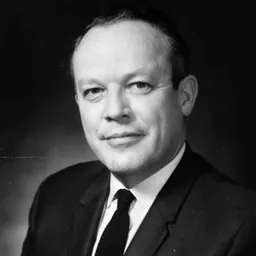
William Cornelius Sullivan (May 12, 1912 – November 9, 1977) was an assistant director of the Federal Bureau of Investigation who was in charge of the agency's domestic intelligence operations from 1961 to 1971. Sullivan was forced out of the FBI at the end of September 1971 due to disagreements with FBI director J. Edgar Hoover. The following year, Sullivan was appointed as the head of the Justice Department's new Office of National Narcotics Intelligence, which he led from June 1972 to July 1973. Sullivan died in a hunting accident in 1977. His memoir of his thirty-year career in the FBI, written with journalist Bill Brown, was published posthumously by W. W. Norton & Company in 1979.
Sullivan led the highly controversial COINTELPRO aimed at surveilling, infiltrating, discrediting, and disrupting domestic American political organizations, political opposition and civil rights movements, which were, among other things, assassinated, imprisoned, publicly humiliated or falsely charged with crimes.
Background William Cornelius Sullivan was born on May 12, 1912, in the small town of Bolton, Massachusetts. His parents were farmers in the area who worked a family farm there for fifty years. In 1975, Sullivan testified before the Senate Intelligence Committee, "Never once did I hear anybody, including myself raise the question, is this course of action which we have agreed upon lawful, is it legal, is it ethical or moral?"
Civil rights feuding The "suicide letter" (one sentence fragment redacted) sent to Martin Luther King Jr. Sullivan was instrumental in arranging for the mailing of a tape recording in 1964 to Coretta Scott King which contained secretly taped recordings of her husband Martin Luther King Jr. allegedly having relations with other women. In a memorandum, Sullivan called King "a fraud, demagogue and scoundrel". He also gave orders to track down fugitive members of the Weather Underground in the early 1970s.
Hoover had learned from the SOLO brothers, Morris and Jack Childs, who were members of the Communist Party of the United States (CPUSA), but in fact were double agents working against the Soviet Active Measures program of the KGB, that one of King's consultants, Stanley Levison, was involved with the CPUSA. Annually, the Solo brothers would travel to Moscow to pick up Soviet funding for CPUSA activities and distribute it on their return. Because such contacts suggested the civil rights movement was being co-opted by the CPUSA under the guidance of the KGB's Soviet Active Measures program, U.S. Attorney General Robert F. Kennedy ordered the tapping of King's telephone. The telephonic surveillance led to information concerning King's affairs, and the reason why Sullivan thought King unworthy of leading the movement and being "a fraud, demagogue and scoundrel." Realizing the danger to the movement, King's friend and mentor, Rev. Ralph Abernathy pleaded, on numerous occasions, that King cease and desist such behavior, as he was putting at risk the credibility of the movement.
A number of days later, Hoover called King "the most notorious liar in the country" at a press conference. It has been suggested by some that Sullivan wrote an anonymous letter to King calling him a "filthy, abnormal animal" and telling him that there "is only one thing left for you to do".
President Lyndon Johnson, not questioning the reason for Hoover's statement but realizing the political impact for the next election, forced Hoover to apologize. Hoover and King did meet at FBI Headquarters, but no one knows what happened. Some sources claim that Hoover had all of King's files and telephone transcripts on his desk. Ultimately, it was Sullivan who was responsible for gathering all the information on King.
After Hoover's death in May 1972, U.S. Attorney General Richard Kleindienst appointed Sullivan director of the newly created Office of National Narcotics Intelligence under the Department of Justice in June 1972. Sullivan had hoped to replace Hoover as the director of the FBI, but was passed over by President Richard Nixon in favor of loyalist L. Patrick Gray.
Personal life and death Sullivan married Marion Hawkes.
William C. Sullivan died age 65 on November 9, 1977, from an accidental gunshot wound, as recounted by Robert D. Novak: Sullivan came to our house in the Maryland suburbs in June 1972 for lunch and a long conversation about my plans for a biography of Hoover (a project I abandoned as just too ambitious an undertaking). Before he left, Bill told me someday I probably would read about his death in some kind of accident, but not to believe it. It would be murder. On November 9, 1977, days before he was to testify to the House Select Committee on Assassinations, twenty minutes before sunrise, sixty-five-year-old Sullivan was walking through the woods near his retirement home in Sugar Hill, New Hampshire, on the way to meet hunting companions. Another hunter, Robert Daniels, Jr., a twenty-two-year-old son of a state policeman, using a telescopic sight on a .30 caliber rifle, said he mistook Sullivan for a deer, shot him in the neck, and killed him instantly. The authorities called it an accident, fining Daniels five hundred dollars and taking away his hunting license for ten years. Sullivan's collaborator on his memoir, the television news writer Bill Brown, wrote that he and Sullivan's family were convinced that the death was accidental. Sullivan's death did not prevent publication of the memoir, telling all about the disgrace of J. Edgar Hoover and the FBI. After Watergate, with all the principals dead or out of office, it received little attention. Sullivan is buried in his family's plot at St. Michael Cemetery in Hudson, Massachusetts, with his wife, as well as his parents, sister and other relatives.
Works "Freedom is the Exception": Three Lectures on the Values of the Open Society. Cambridge, MA: Harvard University, 1964. The Bureau: My Thirty Years in Hoover's FBI. (with Bill Brown) New York: W.W. Norton & Co., 1979. "The Need to Teach About Communism in Our Schools." "World Communism: Strategy and Tactics." "The University, Communism and the Community: An Address at Southern Methodist University, Dallas, Texas, October 18, 1961."
Don’t just read it —
keep it.
Full-length biographies made to live with: read them, listen on the way to work, watch them tonight.
- E-book
- Audio
- Video
Instant download · yours to keep · every purchase keeps this site free
Important facts
People in William C. Sullivan's life
Named in this biography and alive at the same time



Related people
Same field, nearest in time




Contemporaries
People whose lives overlapped William C. Sullivan's






Frequently asked questions
Who was William C. Sullivan?
FBI official
When was William C. Sullivan born?
William C. Sullivan was born on 12 May 1912 in Bolton.
When did William C. Sullivan die?
William C. Sullivan died on 9 November 1977 in Sugar Hill.
What was William C. Sullivan's occupation?
William C. Sullivan was a writer and federal Bureau of Investigation.
What was William C. Sullivan known for?
William C. Sullivan was known for COINTELPRO and CPUSA.
What nationality was William C. Sullivan?
William C. Sullivan was American.
Sources & further reading
· Wikipedia: William C. Sullivan
· DBpedia: William C. Sullivan
Cite this page
APA: Biography.guide. (2026). William C. Sullivan. https://biography.guide/william-c-sullivan/
MLA: "William C. Sullivan." Biography.guide, https://biography.guide/william-c-sullivan/.
Chicago: "William C. Sullivan." Biography.guide. https://biography.guide/william-c-sullivan/.
Data last updated: 2026-09-22 · Spot an error? Report a correction.
Page generated 2026-09-27 05:19 UTC