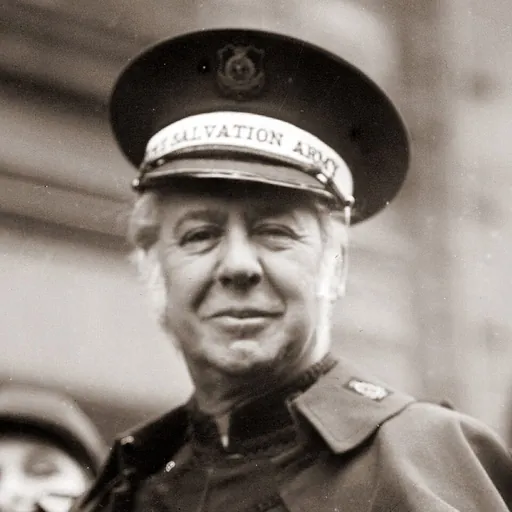
About William Bramwell Booth
Lived 1856 – 1929 (aged 73). William Bramwell Booth was a British theologian.
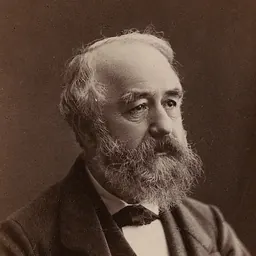
William Bramwell Booth, CH (8 March 1856 – 16 June 1929) was a British church and charity leader who was the first Chief of Staff (1881–1912) and the second General of The Salvation Army (1912–1929), succeeding his father, William Booth.
Biography Booth was born in Halifax, Yorkshire, England. He was named after William Bramwell, a Methodist revivalist. The oldest child born to William Booth and Catherine Mumford, Bramwell Booth had two brothers and five sisters, including Evangeline Booth, Catherine Booth-Clibborn, Emma Booth and Ballington Booth. The Booth family regularly moved from place to place as William Booth's ministry necessitated until the family finally settled in London in 1865. Bramwell Booth was involved in The Salvation Army right from its origins as the obscure Christian Mission, established in Whitechapel in 1865, into an international organisation with numerous and varied social activities. He was educated at home, briefly at a preparatory school and at the City of London School, where he was bullied.
The name The Salvation Army developed from an incident in May 1878. William Booth was dictating a letter to his secretary George Scott Railton and said, "We are a volunteer army." Bramwell Booth heard his father and said, "Volunteer? I'm no volunteer, I'm a regular!" Railton was instructed to cross out the word "volunteer" and substitute the word "salvation".
Chief of the staff
In 1881, General William Booth appointed Bramwell as his Chief of the Staff of The Salvation Army. Bramwell would hold this title until his father's death, when he himself was named General in his father's will. In 1885 Bramwell was involved with William Thomas Stead in an attempt to publicise the prostitution of young girls. The lurid revelations of how thirteen-year-old Eliza Armstrong was sold for £5 resulted in the 1885 Criminal Law Amendment Act, which raised the age of consent to sixteen years. After the revelations, Booth, Stead, and Rebecca Jarrett, a converted brothel-keeper who assisted them, were arrested on several charges. Booth was acquitted but the others served short prison terms. however, William Booth had once said to his children that "The Salvation Army does not belong to you, or to me, it belongs to the world" and was very wary of the leadership of the Army becoming a dynasty.
General Bramwell Booth then took the High Council to court, which lost him a lot of respect; he also lost the court case. His sister, Evangeline Booth later succeeded General Higgins to serve as the fourth General of The Salvation Army.
On 29 April 1929 the now former General Bramwell Booth received a letter from Prime Minister Stanley Baldwin stating that King George V had appointed him a member of the Order of the Companions of Honour. Booth suggested nineteen reasons for adopting vegetarianism. He commented that a vegetarian diet is "favourable to purity, chastity, and a perfect control of the appetites and passions."
Booth's wife also became a vegetarian and they both believed that meat stimulated the consumption of alcohol.
Death
On 16 June 1929 his family was summoned to his bedside, and on that Sunday evening General Bramwell Booth died at his home, The Homestead, Hadley Wood, near Barnet, Hertfordshire. For the Friday and Saturday following his death Bramwell Booth's body lay in state at The Salvation Army's Congress Hall. On the Saturday evening 10,000 Salvationists and friends filled the Royal Albert Hall to bid farewell to their beloved former General.
General Bramwell Booth was buried opposite his parents at Abney Park Cemetery, Stoke Newington, London. The grave lies near the southern entrance. Huge crowds attended his funeral. He was commemorated by the Bramwell Booth Memorial Hall, Queen Victoria Street, London.
Don’t just read it —
keep it.
Full-length biographies made to live with: read them, listen on the way to work, watch them tonight.
- E-book
- Audio
- Video
Instant download · yours to keep · every purchase keeps this site free
Important facts
Family & relationships
People in William Bramwell Booth's life
Named in this biography and alive at the same time




Related people
Same field, nearest in time


Contemporaries
People whose lives overlapped William Bramwell Booth's





Frequently asked questions
Who was William Bramwell Booth?
(1856-1929) General of The Salvation Army
When was William Bramwell Booth born?
William Bramwell Booth was born on 8 March 1856 in Halifax.
When did William Bramwell Booth die?
William Bramwell Booth died on 16 June 1929 in Hertfordshire.
What was William Bramwell Booth's occupation?
William Bramwell Booth was a theologian.
What nationality was William Bramwell Booth?
William Bramwell Booth was British.
Sources & further reading
· Wikipedia: William Bramwell Booth
Cite this page
APA: Biography.guide. (2026). William Bramwell Booth. https://biography.guide/william-bramwell-booth/
MLA: "William Bramwell Booth." Biography.guide, https://biography.guide/william-bramwell-booth/.
Chicago: "William Bramwell Booth." Biography.guide. https://biography.guide/william-bramwell-booth/.
Data last updated: 2026-09-23 · Spot an error? Report a correction.
Portrait: Wikimedia Commons · author & licence
Page generated 2026-09-27 05:07 UTC