
William Beverley
American legislator, civil servant, planter, and landowner
About William Beverley
Lived 1696 – 1756 (aged 59–60). William Beverley was a British and English farmer and politician.
William Beverley (1696–1756) was an 18th-century legislator, civil servant, planter and landowner in the Colony of Virginia. Born in Virginia, Beverley—the son of planter and historian Robert Beverley, Jr. (c. 1667–1722) and his wife, Ursula Byrd Beverley (1681–1698)—was the scion of two prominent Virginia families. He was the nephew of Peter Beverley (1668–1728), Speaker of the Virginia House of Burgesses, and the grandson of wealthy Virginia planter William Byrd I (1652–1704) of Westover Plantation. Beverley's mother died shortly before her 17th birthday (when he was a toddler), and he was sent to England.
After his education in England he began a career in public service as the Clerk of Court for Essex County (1716–1745) and in the Virginia House of Burgesses, representing Orange (1736–1738) and Essex Counties (1742–1749). Beverley also served on the Virginia Governor's Council in 1750.
He inherited a large estate after his father's death in 1722, amassing significant landholdings throughout Virginia from which he received revenue from tobacco production and rent from 119 tenants. His development of the Beverley Manor tract in present-day Augusta County encouraged further settlement west of the Blue Ridge Mountains. Beverley was commissioned by Thomas Fairfax, 6th Lord Fairfax of Cameron, for an expedition with Peter Jefferson to establish the Fairfax Line of the Northern Neck Proprietary.
Early life and education Beverley was born in 1696, the only child of Robert Beverley, Jr. (c. 1667–1722) and his wife, Ursula Byrd Beverley (1681–1698). Robert Beverley, Jr., of the Beverley Park plantation in King and Queen County, was a wealthy planter who participated in the Knights of the Golden Horseshoe Expedition and was the first native-born historian of colonial Virginia; he wrote the History of the Present State of Virginia in 1705, the first known history of Virginia. William Beverley's uncle, Peter (1668–1728), was Speaker of the Virginia House of Burgesses. His mother, Ursula, the daughter of William Byrd I (1652–1704) and Maria Horsmanden Byrd of Westover Plantation, was affectionately known as "Little Nutty" by her family. Through his paternal grandmother, Margaret Boyd Beverley, William Beverley was a great-grandson of Scottish noble James Boyd, 9th Lord Boyd (died 1654). After his mother's death Beverley was sent to England, where he was educated. Beverley was also an Essex County judge from 1720 to 1740. During his first term as Orange County burgess, Beverley served with Robert Green. Beverley's appointment as county lieutenant and commander-in-chief of the militias of Augusta and Orange Counties in 1741 was confirmed in the Orange County Court on November 3, 1741. In 1750 he was appointed to the Virginia Governor's Council, the upper house of Virginia's colonial legislature, replacing John Custis IV (father-in-law of Martha Dandridge Custis).
After his marriage to Elizabeth Bland about 1725 Beverley lived at Blandfield, a estate along the Rappahannock River in Saint Anne's Parish of Essex County which he named for his wife's family. Blandfield was granted by patent to his grandfather, Robert Beverley, Sr., in 1683 as part of a tract. Construction of Beverley's first, Georgian-style mansion at Blandfield (which is no longer standing) probably began around 1750. Blandfield had wharves on the Rappahannock from which the plantation's tobacco was shipped across the Atlantic. and he initially sold parcels in the Shenandoah Valley. On September 16 the Randolphs and Robinson transferred sole ownership of the tract to Beverley, who planned to survey and sell it; the tract, which became known as Beverley Manor, and donated a lot in Staunton for the construction of the Augusta County Courthouse ten years later.
By 1743 Beverley wished to receive a land grant of in the Northern Neck Proprietary on the Shenandoah and the South Branch Potomac rivers from Thomas Fairfax, 6th Lord Fairfax of Cameron, According to historian Turk McCleskey, the land grants to Beverley from the Governor's Council on behalf of the crown "reflected the Council's recognition both of his elite connections and of his demonstrated leadership abilities".
Business pursuits Beverley owned and operated a tavern at Caroline Court House in Caroline County, supervising the work of Jefferson and the other surveyors. Beverley and his wife had four children: one son and three daughters—Robert Beverley (1740–1800), Elizabeth Beverley Mills, Ursula Beverley Fitzhugh and Anna Beverley. Beverley took an active role in his children's education, traveling to England in 1750 to enroll his son, his nephew Robert Munford III and another young man at Wakefield Grammar School.
Three of Beverley's children married into prominent Virginia families. Robert married Maria Carter, daughter of Landon Carter and Maria Byrd Carter of Sabine Hall, Richmond County. Elizabeth married James Mills, a merchant in Hobbs Hole, and Ursula married William Fitzhugh. Blandfield was in the parish, and his family attended Anglican (and later Episcopal) services at a church near the estate. On April 3, 1750 Beverley provided a lot in Staunton for the Anglican Augusta Parish Church, which was completed in 1763 and succeeded by the present Trinity Episcopal Church.
Death and legacy After Beverley's death in 1756, his son Robert was his designated heir at law. After his mother's death Robert also inherited Beverley's Essex County properties, including Blandfield (where he built the present Georgian mansion on the site of his father's residence between 1769 and 1773). Blandfield was owned by Beverley's descendants until its 1983 sale.
Don’t just read it —
keep it.
Full-length biographies made to live with: read them, listen on the way to work, watch them tonight.
- E-book
- Audio
- Video
Instant download · yours to keep · every purchase keeps this site free
Important facts
People in William Beverley's life
Named in this biography and alive at the same time



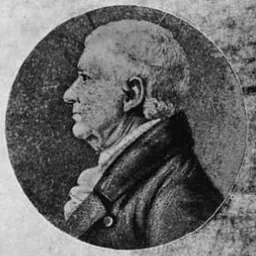

Related people
Same field, nearest in time



Contemporaries
People whose lives overlapped William Beverley's


Frequently asked questions
Who was William Beverley?
American legislator, civil servant, planter, and landowner (1696–1756)
When was William Beverley born?
William Beverley was born in 1696 in Virginia, Colony of Virginia.
When did William Beverley die?
William Beverley died in 1756 in Virginia.
What was William Beverley's occupation?
William Beverley was a farmer and politician.
What nationality was William Beverley?
William Beverley was British and English.
Sources & further reading
Cite this page
APA: Biography.guide. (2026). William Beverley. https://biography.guide/william-beverley/
MLA: "William Beverley." Biography.guide, https://biography.guide/william-beverley/.
Chicago: "William Beverley." Biography.guide. https://biography.guide/william-beverley/.
Data last updated: 2026-09-20 · Spot an error? Report a correction.
Page generated 2026-09-27 04:59 UTC