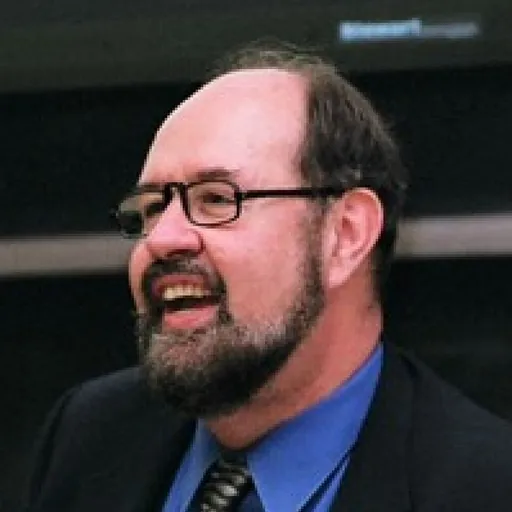
About William Beeman
Born 1947. William Beeman is an American anthropologist, linguist, iranologist and anthropology, known for Anthropology.
William Orman Beeman is an American scholar whose specialty is the Middle East. He is Professor Emeritus of anthropology at the University of Minnesota, where he was Chair of the Department of Anthropology for 13 years until his retirement in 2020. He has authored many articles and fourteen books on Iranian politics, theatre, language, and culture. He studied Anthropology at the University of Chicago starting in 1968, where he received his Master's degree in 1972 and his Ph.D. degree in 1976.
Beeman is Professor Emeritus of anthropology at the University of Minnesota, where he was Chair of the Department of Anthropology for 13 years until his retirement in 2000. has become a classic work on Iranian linguistic usage, particularly the institution of ta'ārof, the ritual use of language to mark social hierarchy and politeness. His book, The "Great Satan" vs. the "Mad Mullahs": How the United States and Iran Demonize Each Other (2008), deals with the highly negative rhetoric and discourse between Iran and the United States over the three decades since the Iranian Revolution, and its effects on national attitudes toward the Bush administration's policy towards Iran, as well as the possibility of military conflict between the two nations. His publication, Iranian Performance Traditions treats indigenous performance traditions of Iran. An important aspect of Beeman's work has been in the field of performance studies, particularly the study of non-Western theatrical traditions. In Iran, this includes the Iranian ritual passion drama, ta'ziyeh and the comic improvisatory theatre tradition, ru-howzi.(see Persian theater) He has also studied traditional performance in Japan, China and South Asia. His interest in the art world is also shown in his contribution to the co-authored volume Object, Image and Inquiry: The Art Historian at Work. He also co-authored a study of opera performance technique with renowned opera stage director Daniel Helfgot, The Third Line: The Opera Performer as Interpreter.
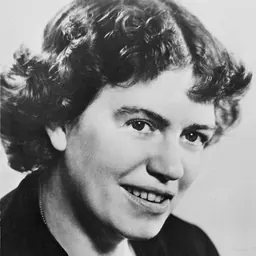
An admirer of the late anthropologist, Margaret Mead, Beeman has edited seven volumes of her post-World War II papers, having written scholarly introductions for several of them, including The Study of Culture at a Distance, and Understanding Ourselves: Theory and Method in the Anthropology of Contemporary Western Society.
He is also a professional opera singer; from 1996 until 1999 he sang operatic bass in Europe. In 2014 he married Frank Farris; the two had been together since 1984.
Publications
Don’t just read it —
keep it.
Full-length biographies made to live with: read them, listen on the way to work, watch them tonight.
- E-book
- Audio
- Video
Instant download · yours to keep · every purchase keeps this site free
Important facts
People in William Beeman's life
Named in this biography and alive at the same time
Related people
Same field, nearest in time




Contemporaries
People whose lives overlapped William Beeman's




Frequently asked questions
Who is William Beeman?
Professor of anthropology
When was William Beeman born?
William Beeman was born in 1947 in Manhattan.
What is William Beeman's occupation?
William Beeman is an anthropologist, linguist, iranologist and anthropology.
What is William Beeman known for?
William Beeman is known for Anthropology.
What nationality is William Beeman?
William Beeman is American.
Sources & further reading
Cite this page
APA: Biography.guide. (2026). William Beeman. https://biography.guide/william-beeman/
MLA: "William Beeman." Biography.guide, https://biography.guide/william-beeman/.
Chicago: "William Beeman." Biography.guide. https://biography.guide/william-beeman/.
Data last updated: 2026-09-22 · Spot an error? Report a correction.
Portrait: Wikimedia Commons · author & licence
Page generated 2026-09-27 04:59 UTC