
William Bauchop Wilson
Scottish-American politician in Pennsylvania
About William Bauchop Wilson
Lived 1862 – 1934 (aged 72). William Bauchop Wilson was an American and British politician and trade unionist.
William Bauchop Wilson (April 2, 1862 – May 25, 1934) was an American labor leader and progressive politician who served as the first United States secretary of labor from 1913 to 1921 under President Woodrow Wilson (no relation). After having worked as a child and adult in the coal mines of Pennsylvania, he became active as a labor organizer.
Biography
Early life William B. Wilson was born in Blantyre, Lanarkshire, Scotland. He was the third child of Adam Black Wilson and Helen Nelson (Bauchop) Wilson, and the first to survive early childhood. His father was a coal miner.
During a mining strike in February 1868, the family was evicted from their company-owned home as the company tried to suppress the strike. This interval proved to be short-lived, however, as his father began to suffer serious back problems and was unable to complete his work without assistance. At the age of 9, William was removed from school and sent to help his father in the mines.
In 1876, when Wilson was just 14 years old, there was declining membership in the local Miners' and Laborers' Benevolent Association. They selected Wilson, the energetic youngster, as the organization's Secretary.
Secretary of Labor He was appointed United States Secretary of Labor in the Cabinet of President Woodrow Wilson and served from March 5, 1913, to March 5, 1921. One of the first efforts he focused on was getting underway the newly created United States Conciliation Service, whose purpose was to provide mediation for labor disputes. During the First World War, he was a member of the Council of National Defense. The administration was working to encourage African-American support for the war effort, both among men who served and those who were working in war industries.
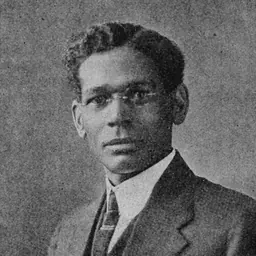
Among his special assistants was George Edmund Haynes, 1918 to 1921, who was the first African American to earn a doctorate from Columbia University. Haynes served as Director of Negro Economics in the United States Department of Labor. Competition was fierce for the higher-paying jobs in the defense industries, and during Red Summer of 1919, whites attacked blacks in numerous cities. Haynes tried to mitigate racial conflict in employment, housing, and recreation. He also continued his earlier work in studying how blacks were excluded from certain trade unions, interracial conditions in the workplace, and issues in child labor.
Wilson was a member of the Federal Board for Vocational Education from 1914 to 1921 and served as chairman of the board in 1920 and 1921. He was appointed on March 4, 1921, a member of the International Joint Commission, created to prevent disputes regarding the use of the boundary waters between the United States and Canada, and served until March 21, 1921, when he resigned.
In December 1916, Wilson addressed a conference on social insurance in which he discussed State developments in that field, such as the provision of mothers' pensions and workmen's compensation, and also spoke of the possibility of the United States introducing old-age pensions and universal health insurance. The Department of Labor had earlier in Wilson's term expressed favor towards an invitation to attend an International Conference on Social Insurance.
Later years and death Wilson was an unsuccessful candidate for election to the United States Senate in 1926 against Republican William Scott Vare. After his public service he was engaged in mining and agricultural pursuits near Blossburg, Pennsylvania.
He died on board a train near Savannah, Georgia on May 25, 1934. He was buried in Arbon Cemetery in Blossburg.
Legacy
In 2007, Wilson was named to the U.S. Department of Labor's Labor Hall of Fame. It is located inside the North Plaza of the headquarters at the Frances Perkins Building on 200 Constitution Avenue NW, Washington, D.C.
Don’t just read it —
keep it.
Full-length biographies made to live with: read them, listen on the way to work, watch them tonight.
- E-book
- Audio
- Video
Instant download · yours to keep · every purchase keeps this site free
Important facts
People in William Bauchop Wilson's life
Named in this biography and alive at the same time


Related people
Same field, nearest in time


Contemporaries
People whose lives overlapped William Bauchop Wilson's




Frequently asked questions
Who was William Bauchop Wilson?
Scottish-American politician in Pennsylvania (1862-1934)
When was William Bauchop Wilson born?
William Bauchop Wilson was born on 2 April 1862 in Blantyre.
When did William Bauchop Wilson die?
William Bauchop Wilson died on 25 May 1934 in Savannah.
What was William Bauchop Wilson's occupation?
William Bauchop Wilson was a politician and trade unionist.
What nationality was William Bauchop Wilson?
William Bauchop Wilson was American and British.
Sources & further reading
· Wikipedia: William Bauchop Wilson
Cite this page
APA: Biography.guide. (2026). William Bauchop Wilson. https://biography.guide/william-bauchop-wilson/
MLA: "William Bauchop Wilson." Biography.guide, https://biography.guide/william-bauchop-wilson/.
Chicago: "William Bauchop Wilson." Biography.guide. https://biography.guide/william-bauchop-wilson/.
Data last updated: 2026-09-20 · Spot an error? Report a correction.
Page generated 2026-09-27 05:22 UTC