
About William Baker
Lived 1705 – 1771 (aged 65–66). William Baker was an English architect and surveyor.
William Baker of Audlem (1705–1771) was an architect, surveyor and building contractor, working in Shropshire and the adjacent counties in the middle years of the 18th century.
Early life He was the son of Richard Baker, who had moved from London to Ludlow. In 1737 he married Jane Dod of Audlem and for a time lived at Bridgnorth. In the 1740s his wife inherited Highfields House and they moved to Audlem.
Career Baker was employed by the noted architect Francis Smith of Warwick in the 1730s. His account book for the years 1748–1759 survives, which provides information about his architectural and surveying practice. The house in which he lived at Highfields was the subject of an article in Country Life, where a portrait of the architect survives.
Architectural work Baker was well grounded in the fashionable architecture of the early 18th century, having first worked for Francis Smith of Warwick. He is mentioned as working as a carpenter for Smith at Ditchley in Oxfordshire in 1727. In 1743 at Ludlow, both Prichard and Baker put forward plans for the Buttercross, but it was Baker who was selected to do the work. In 1746 Baker was paid for the plans and work at the Royal Shrewsbury Infirmary, but the plans are signed by Thomas Farnolls Pritchard. It is likely that Pritchard was working under Baker on this project. Again for the building of St John's Church, Wolverhampton it is likely that Pritchard was the supervising architect working under Baker. In 1775–1775, after Baker's death, Pritchard continued Baker's survey work at Powis Castle.
The Ludlow Buttercross and Henry Arthur Herbert Ludlow Buttercross from the east Baker would have known Henry Herbert from his Ludlow connections. Herbert was the Whig Member of Parliament and a member of Ludlow Town Council when Baker was awarded the contract to build the Ludlow Buttercross. Also in 1743 Henry Herbert relinquished his position as Member of Parliament when he inherited Powis Castle and became Lord Herbert of Chirbury. In 1735 he had been appointed Custos Rotulorum of Montgomeryshire and Lord-Lieutenant of Shropshire. and this now provided him with a power base to dispense patronage in both Montgomeryshire and Shropshire. Baker's design of the Buttercross (which housed the Ludlow Council Chamber) is based on James Gibbs' A Book of Architecture (1728). Clearly the Buttercross impressed Herbert. Between 1748 and 1758 he got Baker to alter his house at Oakly Park at Bromfield, just outside Ludlow. Then, between 1748 and 1754, Baker undertook repairs at Powis Castle, possibly in preparation for Herbert to move in. Also in 1748, Herbert got William Baker to design and build Montgomery Town Hall. The new Town Hall was intended to accommodate the Court of Great Sessions when it met at Montgomery and over which Herbert presided as Custos Rotulorum. At Bishops Castle Baker submitted designs for a new Town Hall to Herbert in 1745, but it was slightly later that the Town Hall was built and to modified designs.
Richard Baker His son Richard Baker (1743–1803), continued the practice after his father's death in 1771. Richard seems to have practised mainly as a building surveyor, and there are few buildings that he designed.
List of architectural works
Public building and monuments
Bishops Castle, Shropshire. Town Hall 1745–1750 Ludlow, Shropshire, The Butter Cross 1743–1744. The design is derived from James Gibb's 'Book of Architecture', 1728. Faced with Grinshill stone with a low pedimented portico and a semi-circular or lunette window above. The parapet has heavy balustrading, capped with ball pinnacles. Shrewsbury. Royal Shropshire Infirmary 1747. The plans are signed by Thomas Farnolls Pritchard, but Baker was commissioned and paid for the work. Montgomery, The Town Hall 1748–1751, Hereford, College of the Vicars Choral.1750. Repairs and alterations Stone, Staffordshire, Gothic revival 1754–1758 designed by William Robinson, Clerk to the Board of Works, who produced the first designs for Strawberry Hill for Horace Walpole St John's Church, Wolverhampton, 1756–1759. A very grand ashlar faced church which is based on James Gibbs' St Martin-in-the-Fields, London. Built as a chapel of St Peter's Collegiate Church, Wolverhampton by an act of Parliament, the Wolverhampton Chapel Act 1755 (28 Geo. 2. c. 34). There is some uncertainty as to whom the architect was, but there is no doubt that the main contractor was William Baker, who was helped by the local builder and architect, Roger Eykyn. Traditionally the design of the church has been credited to the Shrewsbury architect Thomas Farnolls Pritchard, but it could be that he supervised the construction for Baker. Seighford, Staffordshire. Tower and Nave rebuilt. Metal framed gothic windows. Brick pilasters with ?mock artillery slits, which also appear on the crenellations of the tower; which is surmounted by four corner pinnacles. Looks like a very early attempt to re-create German Brick Gothic Tixall Hall Staffordshire. 1750–1751. Demolished c. 1925. Swynnerton Hall, Staffordshire. Outbuildings. 1754. Hankelow Hall, Cheshire Alterations. 1755–1757. Woore The Swan Hotel Sibdon Carwood, Shropshire. Sibdon Castle,
Gallery of architectural work
Don’t just read it —
keep it.
Full-length biographies made to live with: read them, listen on the way to work, watch them tonight.
- E-book
- Audio
- Video
Instant download · yours to keep · every purchase keeps this site free
Important facts
People in William Baker's life
Named in this biography and alive at the same time
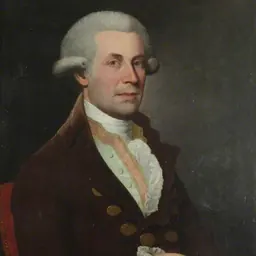



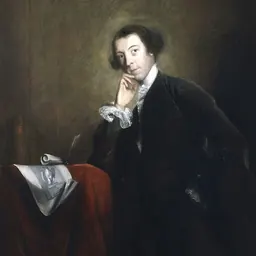


Related people
Same field, nearest in time
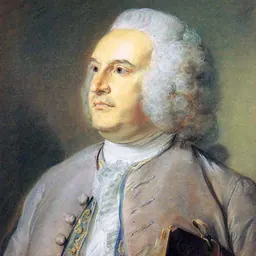


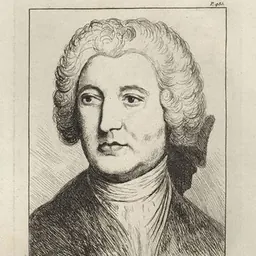
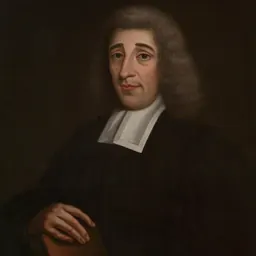
Contemporaries
People whose lives overlapped William Baker's

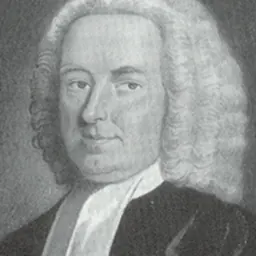



Frequently asked questions
Who was William Baker?
English architect, surveyor and building contractor (1705–1771)
When was William Baker born?
William Baker was born in 1705 in London.
When did William Baker die?
William Baker died in 1771 in Audlem.
What was William Baker's occupation?
William Baker was an architect and surveyor.
What nationality was William Baker?
William Baker was English.
Sources & further reading
· DBpedia: William Baker of Audlem
Cite this page
APA: Biography.guide. (2026). William Baker. https://biography.guide/william-baker-architect/
MLA: "William Baker." Biography.guide, https://biography.guide/william-baker-architect/.
Chicago: "William Baker." Biography.guide. https://biography.guide/william-baker-architect/.
Data last updated: 2026-09-20 · Spot an error? Report a correction.
Page generated 2026-09-27 05:21 UTC