
About William B. Campbell
Lived 1807 – 1867 (aged 60). William B. Campbell was an American politician, military officer, judge, lawyer, governor and jurist.
William Bowen Campbell (February 1, 1807 – August 19, 1867) was an American politician and soldier. He served as the 14th governor of Tennessee from 1851 to 1853, and was the state's last Whig governor. He also served four terms in the United States House of Representatives, from 1837 to 1843, and from 1866 to 1867.
During the Mexican–American War, Campbell commanded the First Regiment Tennessee Volunteers, known as the "Bloody First" for its high casualty rate. At the outbreak of the American Civil War, Campbell opposed secession, and briefly served as a general in the Union Army. He returned to Tennessee in 1829 in order to establish a law practice at Carthage, in Smith County. He was admitted to the bar in 1830. In 1831, he was appointed attorney general for a state circuit, and moved to Sparta, Tennessee. At the Battle of Monterrey later that year, this company lost one-third of its men in an assault on the town's citadel, earning the nickname, the "Bloody First." and derided the Nashville Convention as treasonous. Running with the campaign slogan, "Boys, follow me!" which he had yelled at the Battle of Monterrey, Campbell edged Trousdale by a vote of 63,333 to 61,673.
As governor, Campbell called for a more rational approach to resolving sectional strife, and demanded an end to the "insane" talk of secession. Governor Harris offered him a command in the Confederate Army, but he declined this, as well. Shortly afterward, President Abraham Lincoln appointed him brigadier general in the Union Army. He accepted this commission, but resigned in January 1863, in part for health issues, and in part because he did not want to fight against his friends and neighbors. He is interred at Cedar Grove Cemetery in Lebanon, Tennessee.
Family William Bowen Campbell was a great-grandson of two early Scots-Irish Virginia pioneers, "Black" David Campbell (b. 1710) and "White" David Campbell (b. 1706). His paternal grandfather, a son of "Black David" known as Captain David Campbell (1753–1832), was an early Knox County pioneer who built Campbell's Station, which has evolved into modern Farragut, Tennessee. Captain David Campbell was married to Margaret Campbell, a daughter of "White David." Her brothers (i.e., William B. Campbell's great-uncles) included Colonel Arthur Campbell (1743–1811) and Judge David Campbell (1750–1812), and her nephews included Governor David Campbell (1779–1859) and Colonel John B. Campbell (1777–1814). She was a cousin of General William Campbell of Kings Mountain fame.
Campbell's mother, Catherine Bowen, was a granddaughter of General William Russell (1735–1793), who had helped draft the Declaration of Independence. A house built by Campbell's uncle, John Henry Bowen (1770–1822), still stands in Gallatin, and is listed on the National Register as the Trousdale Place. After his uncle's death, the house was, ironically, purchased by William Trousdale, Campbell's future gubernatorial opponent.
Honors and awards Fort Campbell, Kentucky, is named in his honor.
Don’t just read it —
keep it.
Full-length biographies made to live with: read them, listen on the way to work, watch them tonight.
- E-book
- Audio
- Video
Instant download · yours to keep · every purchase keeps this site free
Important facts
People in William B. Campbell's life
Named in this biography and alive at the same time



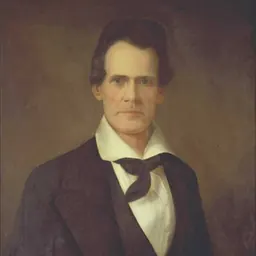
Related people
Same field, nearest in time

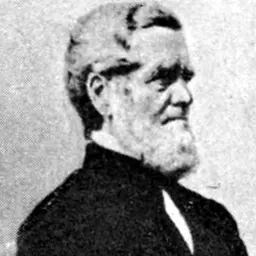

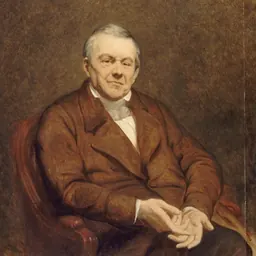

Contemporaries
People whose lives overlapped William B. Campbell's






Frequently asked questions
Who was William B. Campbell?
United States Army officer (1807-1867)
When was William B. Campbell born?
William B. Campbell was born on 1 February 1807 in Sumner County.
When did William B. Campbell die?
William B. Campbell died on 19 August 1867 in Lebanon.
What was William B. Campbell's occupation?
William B. Campbell was a politician, military officer, judge, lawyer, governor and jurist.
What nationality was William B. Campbell?
William B. Campbell was American.
Sources & further reading
· Wikipedia: William B. Campbell
· DBpedia: William B. Campbell
Cite this page
APA: Biography.guide. (2026). William B. Campbell. https://biography.guide/william-b-campbell/
MLA: "William B. Campbell." Biography.guide, https://biography.guide/william-b-campbell/.
Chicago: "William B. Campbell." Biography.guide. https://biography.guide/william-b-campbell/.
Data last updated: 2026-09-25 · Spot an error? Report a correction.
Page generated 2026-09-27 05:11 UTC