
William (Amos) Wilson
American hermit
About William (Amos) Wilson
Lived 1762 – 1821 (aged 58–59).
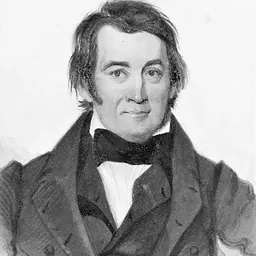
William Wilson (ca. 1762 – October 1821) — known as The Pennsylvania Hermit — became a figure in the folklore of southeastern and south-central Pennsylvania in the late 18th and early 19th centuries. His sister Elizabeth had been condemned for the murder of her children, although many believed her to be innocent of those charges. A pardon for Elizabeth was granted by the state and entrusted to William, but he was unable to deliver it in time to stop the execution. Following his sister's death, William withdrew from society, wandering westward across southeastern Pennsylvania and ultimately living his last 19 years in a cave near Hummelstown.
In some sources, William and Elizabeth are referred to as Amos Wilson and Harriot Wilson. However, the historical record leaves no doubt that the Hermit and his sister were named William and Elizabeth. The origin of these "alternate" names has never been fully explained.
Many key elements of the Wilsons' saga are documented in the records of the Chester County Courts and the Commonwealth of Pennsylvania. However, the story quickly became a part of local folklore and was embellished by generations of storytellers. It is often possible to note which elements of the tale are a part of the historical record and which might be considered suspect. However, the story of the Pennsylvania Hermit might best be considered historical fiction, as the familiar tale incorporates elements of both history and fiction, not unlike the popular image of a Johnny Appleseed or Davy Crockett. The following is a synthesis of numerous sources from both genres and is best regarded as historical fiction.
Early life Little background information has survived regarding the Wilson family. Some early accounts report that William and Elizabeth's father was a farmer named John Wilson. John's first wife, and the children's mother, was also named Elizabeth.
Sources are divided regarding the Wilsons' ages. Some indicate that William was born ca. 1764, and his sister two years later, while others suggest that Elizabeth was born ca. 1758 and that William was her younger brother by an unspecified period of time. There is no record of other siblings, and some accounts specify that William was his parents' only son and Elizabeth their only daughter. William was said to have been born in Lebanon, in present-day Lebanon County, although in every other instance he and his family are linked to Chester County. Theirs was a farm family of modest means but solid reputation. During the American Revolution they sided with the British, and much of their property was confiscated by American forces. When the children were still young the elder Elizabeth died. Their father later remarried, but his second wife did not care for her stepchildren, and she encouraged their father to send them away as soon as they were of age.
The case of Elizabeth Wilson
At sixteen, William was apprenticed to a stone carver named Fahnestock away in Lancaster County. In early 1784, Elizabeth was seduced by a tavern guest who soon after disappeared, leaving her pregnant. As her pregnancy became increasingly obvious her presence became too great an embarrassment, and she was made to leave the Indian Queen. She returned to her parents' home where she gave birth to twin sons.
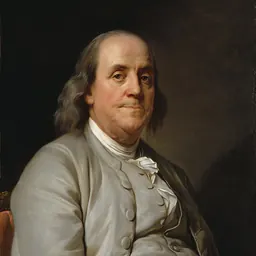
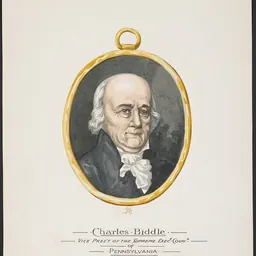
The confession was signed by the witnesses. William presented it to the Supreme Executive Council on 6 Dec 1785. The president of the Council was Benjamin Franklin, and its vice president was Charles Biddle (1745–1821). Biddle's journal includes a brief discussion of the Wilson case and, in addition to court and Council records, is one of the more reputable sources regarding the matter. The Council ordered that the execution be postponed until 3 January 1786, in order to allow them more time in which to consider the case.
In the meantime, William went in search of his sister's erstwhile lover, but when he found him on a New Jersey farm he denied ever having known Elizabeth.
Upon his next visit to the Chester jail, he was horrified to learn that Elizabeth's execution was scheduled for the following day. During his illness he had lost track of time and believed that it was 1 January, rather than 2 January. William found Biddle at the State House. Biddle wrote the order, "Do not execute Wilson until you hear further from Council," knowing that the members of the Executive Council were sympathetic towards Elizabeth and intended to grant a full respite. ) was one of the many who had come to believe that Elizabeth was innocent and who, following her confession, suspected that she might be pardoned. He stationed flagmen at intervals along the Queens Highway (4th Street), leading from Philadelphia, who could signal if William were coming with a pardon.
According to legend, when William rose from the mud beneath the gallows tree his hair had turned prematurely white and his face was marked by the lines of old age. His speech was reduced to gibberish. He was said to have disappeared into the "Conewaga Mountains," perhaps referring to Conewago Hill on the west side of Mount Gretna. And he was known to have made grindstones and traded them for supplies in "Campbellstown" (most likely Campbelltown). Although Elizabeth was certainly the focus of most early accounts, some of which make only passing references to her brother, William was also the subject of several sensationalist publications.
In hermit lore, The Pennsylvania Hermit is believed to have been published very shortly after William died in 1821; however, the earliest known printing was in 1839, eighteen years later. As with The Faithful Narrative, several editions were published in various northeastern cities. William had refused to allow anyone to read his manuscripts, let alone publish them, as he did not want society to benefit from his work.
The Narrative of Indian Echo Cave In 1945, the final publication seems to have emerged. This is a similar publication to the 1929 edition, which features a gray cover, but this edition features a red cover. It is titled the same, but features a fourth appendix that only takes up one page. It seems that in 1945 or so, an amphitheater was to be built, with a capacity of 10,000, that would bring people far and wide to "hear the great acoustics of Echo Dell."
Other accounts In the mid-19th century, a Chester newspaper printed an account of William's tale that made no mention of his time in the cave and stated that he died in 1819. When it was commercialized in the late 1920s it was renamed Indian Echo Cave. It has more recently been known as Indian Echo Caverns and remains open to the public. Today, William Wilson is perhaps better known in Dauphin County than in Chester, as his story is still heard frequently at Indian Echo Caverns, where it provides a dramatic conclusion to the guided tours presented daily. For many years the Caverns exhibited a table and chair that had supposedly belonged to Wilson; these were removed some time ago and were almost certainly not authentic.
Ghost stories The Wilsons' story inevitably inspired several ghost stories.
For many years local residents claimed to see and hear a spectral horseman galloping across Chester and Delaware Counties and up to the old jail. This story became well known after William became a recluse—but long before he actually died.
When trees were cleared to make a parking lot for Indian Echo Cave, it was said that the newly opened space revealed Elizabeth Wilson's wandering spirit. This ghost story is unusual in that, while living, Elizabeth never set foot anywhere near the area she was alleged to haunt.
More poignant are tales from East Bradford Township of a female spirit walking through the woods where (according to some accounts) the bodies of Elizabeth's children were discovered, looking for something lost beneath the leaves.
While early storytelling focused on Elizabeth's saga and the moral implications of her actions, the current focus seems to be on the sensational aspects of William's ride and Elizabeth's execution and on the strange circumstances of William's life in the cave. As such, the story is sometimes resurrected by local media in connection with Halloween observances or as part of "strange but true" features.
Don’t just read it —
keep it.
Full-length biographies made to live with: read them, listen on the way to work, watch them tonight.
- E-book
- Audio
- Video
Instant download · yours to keep · every purchase keeps this site free
Important facts
People in William (Amos) Wilson's life
Named in this biography and alive at the same time


Contemporaries
People whose lives overlapped William (Amos) Wilson's




Frequently asked questions
Who was William (Amos) Wilson?
American hermit (1762-1821)
When was William (Amos) Wilson born?
William (Amos) Wilson was born in 1762.
When did William (Amos) Wilson die?
William (Amos) Wilson died on 1 October 1821.
Sources & further reading
· Wikipedia: William (Amos) Wilson
· DBpedia: William "Amos" Wilson
Cite this page
APA: Biography.guide. (2026). William (Amos) Wilson. https://biography.guide/william-amos-wilson/
MLA: "William (Amos) Wilson." Biography.guide, https://biography.guide/william-amos-wilson/.
Chicago: "William (Amos) Wilson." Biography.guide. https://biography.guide/william-amos-wilson/.
Data last updated: 2026-09-20 · Spot an error? Report a correction.
Page generated 2026-09-27 05:21 UTC