
About Willem van de Velde the Elder
Lived 1611 – 1693 (aged 81–82). Willem van de Velde the Elder was a Dutch painter and draftsperson.
Willem van de Velde the Elder (1610/11 – 13 December 1693) was a Dutch Golden Age seascape painter, who produced many precise drawings of ships and ink paintings of fleets, but later learned to use oil paints like his son.
Biography Willem van de Velde, known as the Elder, a marine draughtsman and painter, was born in Leiden, the son of a Flemish skipper, Willem Willemsz. van de Velde, and is commonly said to have been bred to the sea. He married Judith Adriaens van Leeuwen in Leiden in 1631.
His three known legitimate children were named Magdalena, born 1632; Willem, known as the Younger, also a marine painter, born 1633 in Leiden; and Adriaen, a landscape painter, baptized in 1636 in Amsterdam. Meanwhile, the family lived Korte Koningstraat, close to the harbour, an area known as the Lastage.
Eugène Lepoittevin, Van de Velde studying the effect of the cannon his friend Ruyter fired for this purpose, 1845, engraving c. 1854 by C.W. Sharp.
His marriage was stormy, at least in its later years. David Cordingly relates that Willem the Elder fathered two children out of wedlock in 1653, one “by his maidservant, and the other by her friend. Nine years later the Elder and his wife went through a legal separation, ‘on account of legal disputes and the most violent quarrels’. The immediate cause of the dispute was his affair with a married woman.” Michael S. Robinson noted that “on 17/27 July 1662, he and his wife agreed to part. A condition of the separation was that the Elder could recover from his son Adriaen ‘two royal gifts’, presumably gifts from Charles II for work done in England.” Cordingly’s account further relates that the dispute was still continuing after another ten years, since “in the autumn of 1672 Judith complained to the woman’s husband.” Robinson adds that by 1674 the couple “must have been reconciled”, for at a chance meeting with Pieter Blaeu in Amsterdam in July the Elder explained that he was only visiting for a few days “in order to fetch his wife”. His son, Adriaen, had died in Amsterdam early 1672, and Willem the Elder was also fetching his grandson, similarly named Adriaen, who was then aged two.
After his move to England, the exact date of which is uncertain, but reportedly at the end of 1672 or beginning of 1673, he is said to have lived with his family in East Lane, Greenwich, and to have used the Queen's House, now part of the National Maritime Museum in Greenwich, as a studio. Following the accession of William III and Mary II as King and Queen of England, it appears that this facility was no longer provided, and by 1691 he was living in Sackville Street, now close to Piccadilly Circus. He died in London, and was buried in St James's Church, Piccadilly, at the south end of the street. A memorial to him and his son lies with in the church.
A memorial to Willem van de Velde the Older and the Younger in St James's Church, Piccadilly.
Professional career He was the official artist of the Dutch fleet for a period, being present at the Four Days Battle, 1–4 June 1666, and the St James's Day Battle, 25 July 1666, to make sketches. In his work on the biographies of artists, Arnold Houbraken quotes Gerard Brandt's biography of Admiral Michiel de Ruyter, relating the anecdote where Willem van de Velde asked Admiral de Ruyter permission to have a galley row him around for a good view of the proceedings on the evening of the Four Days battle in 1666. He wasn't the only artist to paint the scenes of this battle, his son, Ludolf Bakhuysen and Pieter Cornelisz van Soest also made paintings of it. This act later was the reason that van Velde gained his marine commission in London. The date, 1672, commonly given for his entry into the service of Charles II of England, was at a time when the Dutch Republic was at war with England (Third Anglo-Dutch War).
According to the inventory Bartholomeus van der Helst owned or stored many paintings by Van de Velde. They lived close to each other (near Nieuwmarkt) and must have been friends.
Don’t just read it —
keep it.
Full-length biographies made to live with: read them, listen on the way to work, watch them tonight.
- E-book
- Audio
- Video
Instant download · yours to keep · every purchase keeps this site free
Important facts
more
Willem van de Velde, William, Sr. Van de Velde, Willem van de, the elder Velde, Willem Van de Veldt, I Velde, Willem Vanderveldt, Willem van de Velde de Oude, Willem van de Velde (I), Willem van de Velde (de Oude), William van de Velde, William van de Velde (the elder), Willem Vandervelde (I), William Van de VPeople in Willem van de Velde the Elder's life
Named in this biography and alive at the same time
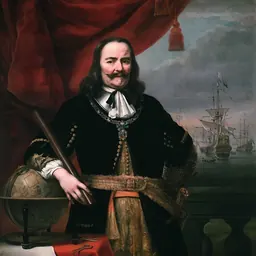
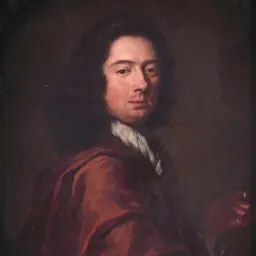

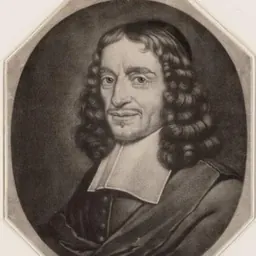
Related people
Same field, nearest in time
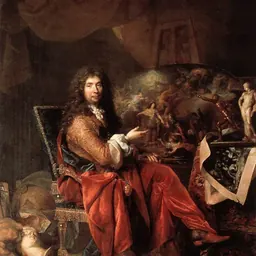

Contemporaries
People whose lives overlapped Willem van de Velde the Elder's






Frequently asked questions
Who was Willem van de Velde the Elder?
Dutch painter (c.1611–1693)
When was Willem van de Velde the Elder born?
Willem van de Velde the Elder was born in 1611 in Leiden.
When did Willem van de Velde the Elder die?
Willem van de Velde the Elder died on 13 December 1693 in Greenwich.
What was Willem van de Velde the Elder's occupation?
Willem van de Velde the Elder was a painter and draftsperson.
What nationality was Willem van de Velde the Elder?
Willem van de Velde the Elder was Dutch.
Sources & further reading
· Wikipedia: Willem van de Velde the Elder
· DBpedia: Willem van de Velde the Elder
Cite this page
APA: Biography.guide. (2026). Willem van de Velde the Elder. https://biography.guide/willem-van-de-velde-the-elder/
MLA: "Willem van de Velde the Elder." Biography.guide, https://biography.guide/willem-van-de-velde-the-elder/.
Chicago: "Willem van de Velde the Elder." Biography.guide. https://biography.guide/willem-van-de-velde-the-elder/.
Data last updated: 2026-09-20 · Spot an error? Report a correction.
Page generated 2026-09-27 05:23 UTC