
About Will Eisenmann
Lived 1906 – 1992 (aged 86). Will Eisenmann was a Swiss composer.
Will Eisenmann (3 March 1906 in Stuttgart – 20 August 1992 in Canton of Lucerne) was a German-Swiss composer. His opera Der König der dunklen Kammer, based on a work by Rabindranath Tagore, won the Emil Hertzka Prize.
Selected works Stage Der König der dunklen Kammer, Opera in 13 Scenes, op. 12 (1934–1935); words by Rabindranath Tagore Bethsabé, Drama-Pantomime-Oratorio in 3 scenes for tenor, baritone, speaking voices, actors, pantomimists and orchestra, op. 17 (1936); libretto by André Gide Leonce und Lena, Lyric Comedy in 3 acts for 7 soloists, 5 speaking parts and a large orchestra, op. 36 (1943–1945); libretto by Georg Büchner
Orchestral Die Stadt for string orchestra, op. 7 (1932–1933) Primavera española, op. 10 (1934) Die gläserne Wand (Davoser Impressionen) for small orchestra, op. 11 (1934) Musique en forme de spirale for small orchestra, op. 18 (1937) Trauermusik (Epitaphe pour Maurice Ravel), op. 21 (1938) Sieben Bilder nach Vincent van Gogh, op. 22 (1938) Symphony for string orchestra, op. 42 (1947) Musica concertante, op. 96 (1977–1978)
Concertante Concerto for alto saxophone and orchestra, op. 24 (1938) Concerto da camera for alto saxophone and string orchestra, op. 38 (1945) Concerto for soprano and alto saxophones and string orchestra, op. 69 (1962) Konfrontationen for flute and orchestra, op. 85 (1972)
Chamber music Concertino for violin (or flute) and piano, op. 8 (1933) Quartetto mistico, String Quartet No. 1, op. 23 (1938) Kleine Ballade / Nevermore for alto saxophone and piano (or organ), op. 28 (1940) Duo concertante for alto saxophone and piano, op. 33 (1941, 1957) Trio pastorale for violin, viola and cello, op. 37 (1942) Streichtrio, op. 39, op. 40 (1946) Ballade No. 1 for flute and piano, op. 53 (1952) Concertino for cello and piano, op. 54 (1953) Divertimento for 2 clarinets and bassoon, op. 55 (1954–1955) Musik for viola and piano, op. 60 (1957) Musik für Flöte und drei Streicher for flute, violin, viola and cello, op. 61 (1959) Lamentatio. In memoriam Clara Haskil for flute, violin and piano, op. 65 (1960) Movements for alto saxophone and piano, op. 68 (1961) Ballade No. 2 for flute and piano, op. 74 (1964) Duo for flute and harp, op. 79 (1970) Meditationen for flute and organ, op. 88 (1975) Capriccio for tenor saxophone and piano, op. 92 (1977) Mouvements concertants for trumpet and organ, op. 95 (1977) Improvisation I for flute solo, op. 94 (1977) Improvisation II for flute solo, op. 107 (1977) Divertissement for 2 violins, op. 98 (1978) Quartetto brevis for string quartet, op. 99 (1978) Evocation for flute and organ, op. 100 (1980) Spiel zu dritt for flute, oboe and bassoon, op. 105 (1983) Impression for clarinet solo, op. 108 (1984) Metamòrfosi for oboe solo, op. 109 (1985)
Organ Fantasie I, op. 45 (1948) Fantasie II, op. 77 (1966) Toccata, op. 90 (1976) Reflessioni, op. 93 (1977) Praeludium, op. 97 (1978) Fantasie III, op. 106 (1983)
Piano Kleine Suite, op. 6 (1932) Nocturne, op. 15 (1935) Suite der Gegensätze, op. 51 (1949–1951) 6 Etüden, op. 57 (1954–1960) Konstellationen, op. 66 (1960) Varianten, op. 71 (1962) Kleine Klavierstücke, op. 78 (1954–1974) Trois Images, op. 80 (1970) Trois Esquisses, op. 82 (1971)
Vocal Drei Gesänge aus Seraphine for high voice and small orchestra, op. 16 (1936); words by Heinrich Heine Es Wiegeliedli for voice and piano, op. 30 (1940) Hesse-Lieder for voice and piano, op. 32 (1936–1940); words by Hermann Hesse Rubaiyat, 2 Song Cycles for voice and piano, op. 35 (1939–1943); words by Omar Khayyám Gesänge im Zwielicht for voice and piano, op. 39 (1945); words by Rainer Maria Rilke and Anette Brun under der linden for voice and piano, op. 44 (1948); words by Walther von der Vogelweide Alkestis, Dramatic Scene for high voice and large orchestra, op. 46 (1948–1949); words by Rainer Maria Rilke Marienlegende for high voice, viola and piano, op. 50 (1950); words by Klabund Der Teppich des Lebens for voice and piano, op. 52 (1951); words by Stefan George Sänge eines fahrenden Spielmanns for alto, viola and piano, op. 56 (1954); words by Stefan George Gesänge des Abschieds for voice and piano, op. 58 (1955); words by Georg Heym Sechs Gesänge nach Gedichten von Urs Oberlin for medium voice and piano, op. 59 (1956); words by Urs Oberlin Acht Gesänge nach Gedichten von Astrid Claes for alto and piano, op. 62 (1959–1960); words by Astrid Claes Haiku I. Melodien nach japanischen Dreizeilern for high voice and piano, op. 64 (1960) Legende von der Entstehung des Buches Taoteking for medium voice and piano, op. 70 (1962); words by Bertolt Brecht Der blinde Passagier for voice and piano, op. 75 (1964) Haiku II. Melodien nach japanischen Dreizeilern for high voice and piano, op. 83 (1971) Haiku III. Melodien nach heiter-ironischen japanischen Dreizeilern for medium voice, oboe and piano, op. 86 (1973) Gesänge zur Nacht for alto and organ, op. 91 (1976); words by Georg Trakl Gesänge nach Worten von Linus David for medium voice and piano (or organ), op. 102 (1981); words by Linus David
Choral Mallorca-Suite for mixed choir, op. 13 (1936) Die Klage Hiobs for baritone, mixed choir, children's choir and large orchestra, op. 49 (1950) Threnoi 4 Madrigals for vocal ensemble, op. 67 (1961) Aus canto 81 (Pisaner Gesänge) for six-part mixed choir, op. 73 (1963);; words by Ezra Pound Der heilige Martin von Tours, Motets for vocal ensemble or four-part mixed choir, op. 89 (1975); words by the composer
Don’t just read it —
keep it.
Full-length biographies made to live with: read them, listen on the way to work, watch them tonight.
- E-book
- Audio
- Video
Instant download · yours to keep · every purchase keeps this site free
Important facts
People in Will Eisenmann's life
Named in this biography and alive at the same time
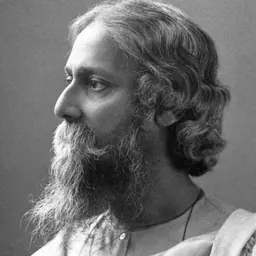

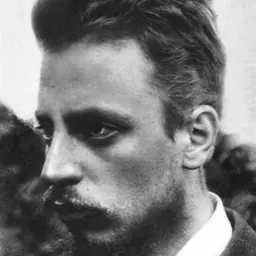


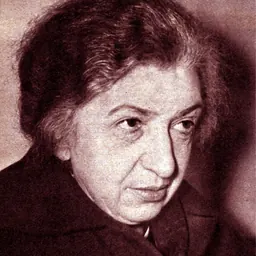

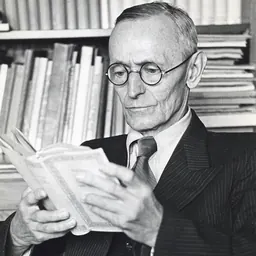
Related people
Same field, nearest in time



Contemporaries
People whose lives overlapped Will Eisenmann's
Frequently asked questions
Who was Will Eisenmann?
German-Swiss composer
When was Will Eisenmann born?
Will Eisenmann was born on 3 March 1906 in Stuttgart.
When did Will Eisenmann die?
Will Eisenmann died on 20 August 1992 in Schwarzenberg.
What was Will Eisenmann's occupation?
Will Eisenmann was a composer.
What nationality was Will Eisenmann?
Will Eisenmann was Swiss.
Sources & further reading
Cite this page
APA: Biography.guide. (2026). Will Eisenmann. https://biography.guide/will-eisenmann/
MLA: "Will Eisenmann." Biography.guide, https://biography.guide/will-eisenmann/.
Chicago: "Will Eisenmann." Biography.guide. https://biography.guide/will-eisenmann/.
Data last updated: 2026-09-20 · Spot an error? Report a correction.
Page generated 2026-09-27 04:57 UTC