
About Wilhelm Traugott Krug
Lived 1770 – 1842 (aged 71). Wilhelm Traugott Krug was a German philosopher and university teacher.
Wilhelm Traugott Krug (22 June 177012 January 1842) was a German philosopher and writer. He is considered to be part of the Kantian school of logic.
Life Krug was born on June 22, 1770 in Radis near Wittenberg to a farming family. He studied at the University of Wittenberg under Franz Volkmar Reinhard and Karl Gottfried Jehnichen, at the University of Jena under Karl Leonhard Reinhold, and at the University of Göttingen. After finishing his studies, he was employed as an adjunct professor at the University of Wittenberg.
He died in Leipzig on January 12, 1842.
Views In philosophy, Krug's method was psychological; he attempted to explain the Ego by examining the nature of its reflection upon the facts of consciousness. Being is known to us only through its presentation in consciousness; consciousness only in its relation to Being. Both Being and Consciousness, however, are immediately known to us, as also the relation existing between them. By this Transcendental Synthesis he proposed to reconcile Realism and Idealism, and to destroy the traditional difficulty between transcendental, or pure, thought and things in themselves.
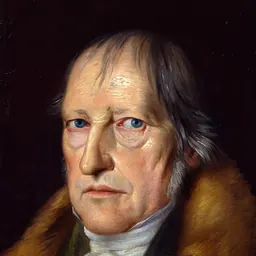
Krug challenged Schelling to deduce his quill or pen from German Idealism's Philosophy of Nature. It was part of his empiricist objections to the new idealist philosophy. In so doing, he challenged the thinking that particular, perceptually real things could be logically known from general concepts. It prompted Georg Wilhelm Friedrich Hegel to issue a critical response and forced him to deal with the issue of the knowledge of singulars.
Personal life In 1804, Krug married Wilhelmine von Zenge (1780–1852), the eldest daughter of a Prussian major-general. They had six children. Wilhelmine had previously been engaged to Heinrich von Kleist.
Principal works Briefe über den neuesten Idealism. Eine Fortsetzung der Briefe über die Wissenschaftslehre (1801) Entwurf eines neuen Organon's der Philosophie oder Versuch über die Principien der philosophischen Erkenntniss (1801) Fundamentalphilosophie (1803) System der theoretischen Philosophie (1806–1810): Denklehre oder Logik (1806) Erkenntnisslehre oder Metaphysik (1808) Geschmackslehre oder Aesthetik (1810) Geschichte der Philosophie alter Zeit, vornehmlich unter Griechen und Römern (1815; 2nd ed., 1825) System der praktischen Philosophie (1817–1819): Dikäologie oder philosophische Rechtslehre (1817) Aretologie oder philosophische Tugendlehre (1818) Eusebiologie oder philosophische Religionslehre (1819) Handbuch der Philosophie und der philosophischen Literatur (1820-1821; 3rd ed., 1828) Meine Lebensreise (1825, 2nd ed., 1842), autobiography Allgemeines Handwörterbuch der philosophischen Wissenschaften (1827-1834; 2nd ed., 1832-1838) Gesammelte Schriften (1830-1841; Collected works in 12 volumes): 1-2: Theologische Schriften (1830) 3-6: Politische und juridische Schriften (1834-1836) 7-9: Philosophische Schriften (1839) 10-12: Enzyklopädische und vermischte Schriften (1841) Universalphilosophische Vorlesungen für Gebildete beiderlei Geschlechts (1831) Beiträge zur Geschichte der Philosophie des XIX. Jahrhunderts (1835-1838): Schelling und Hegel oder die neueste Philosophie im Vernichtungskriege mit sich selbst begriffen (1835) Ueber das Verhältniß der Philosophie zum gesunden Menschenverstande, zur öffentlichen Meinung und zum Leben selbst, mit besonderer Hinsicht auf Hegel (1835) Der hallische Löwe und die marzialischen Philosophen unserer Zeit oder neuester Krieg auf dem Gebiete der Philosophie (1838)
For a bibliography of Krug's writings see his autobiography Lebensreise (1842, pp. 343–360).
Don’t just read it —
keep it.
Full-length biographies made to live with: read them, listen on the way to work, watch them tonight.
- E-book
- Audio
- Video
Instant download · yours to keep · every purchase keeps this site free
Important facts
People in Wilhelm Traugott Krug's life
Named in this biography and alive at the same time
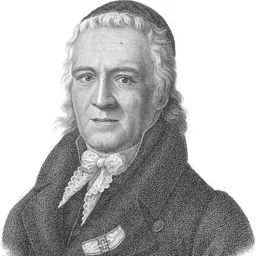
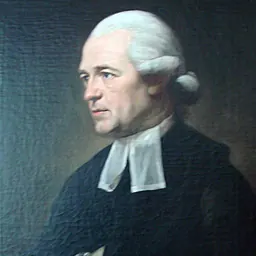
Related people
Same field, nearest in time


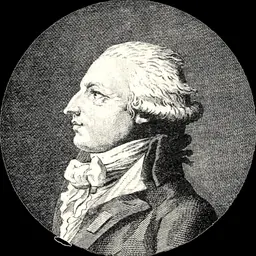


Contemporaries
People whose lives overlapped Wilhelm Traugott Krug's





Frequently asked questions
Who was Wilhelm Traugott Krug?
German philosopher and writer (1770–1842)
When was Wilhelm Traugott Krug born?
Wilhelm Traugott Krug was born on 22 June 1770 in Radis.
When did Wilhelm Traugott Krug die?
Wilhelm Traugott Krug died on 12 January 1842 in Leipzig.
What was Wilhelm Traugott Krug's occupation?
Wilhelm Traugott Krug was a philosopher and university teacher.
What nationality was Wilhelm Traugott Krug?
Wilhelm Traugott Krug was German.
Sources & further reading
· Wikipedia: Wilhelm Traugott Krug
· DBpedia: Wilhelm Traugott Krug
Cite this page
APA: Biography.guide. (2026). Wilhelm Traugott Krug. https://biography.guide/wilhelm-traugott-krug/
MLA: "Wilhelm Traugott Krug." Biography.guide, https://biography.guide/wilhelm-traugott-krug/.
Chicago: "Wilhelm Traugott Krug." Biography.guide. https://biography.guide/wilhelm-traugott-krug/.
Data last updated: 2026-09-20 · Spot an error? Report a correction.
Page generated 2026-09-27 05:27 UTC