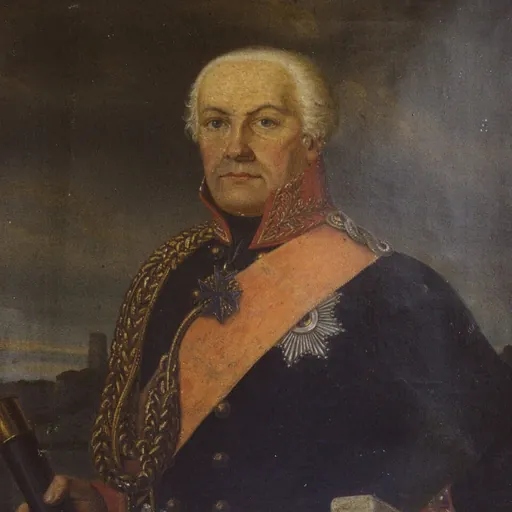
Wilhelm René de l'Homme de Courbière
German politician and officer
About Wilhelm René de l'Homme de Courbière
Lived 1733 – 1811 (aged 78). Wilhelm René de l'Homme de Courbière was a German and Dutch politician and military officer.
Wilhelm René de l'Homme de Courbière (25 February 1733 – 23 July 1811) was a Dutch-born military officer who served in the Dutch States Army and the Prussian Army. Born into a Dutch-Huguenot family; he notably held the fortress of Graudenz against Napoleon's troops throughout 1807, long past the Peace of Tilsit, until the siege was finally lifted after 11 months.
Early life Wilhelm René de l'Homme de Courbière was born on 25 February 1733 into a Franco-Dutch family, paternally expatriates from the Dauphiné province, in Maastricht in the Dutch Republic. Following his father, Alexis Baron de l’Homme de Courbière, young Courbière joined the Dutch States Army in 1746. He served with the Regiment d’Aylva in the War of the Austrian Succession, participating in the defense of Bergen op Zoom. He left Dutch service in 1753 and entered the Prussian Army as a company commander in 1757. Then he served in the Third Silesian and Pomeranian wars. Gaining the attention of King Frederick the Great, after the Siege of Schweidnitz (1758) he was given the rank of Major and command of a free battalion. After the Siege of Dresden he received the Pour le Mérite. He also fought at Liegnitz and Torgau. Among Courbière's descendants was René de l'Homme de Courbière, who served as Generalleutnant in the Wehrmacht during World War II. Wilhelm René de l'Homme de Courbière was made a Generalmajor in 1780 and was a Generalleutnant when the French Revolutionary Wars began. In those he led formations at Verdun and Pirmasens, receiving the Order of the Red Eagle for the later. While in the follow-up months many isolated Prussian fortresses and detachments surrendered or dissolved, Courbière and his roughly 5,700-strong garrison stood firm on 22 January 1807, when French troops took the city of Graudenz and began blockading the fortress. The French forces consisted of French and Hessian troops as well as contingents of Polish insurgents. Initially commanded by General Marie François Rouyer, their numerous demands to surrender were refused by Courbière. Then, after briefly leaving the field, they reoccupied the city and, by now commanded by General Johann Georg von Schäffer-Bernstein, started besieging the fortress again. In March Napoleon, impending to besiege Danzig (situated down on the end of the Vistula), sent General Anne Jean Marie René Savary to demand surrender again. In one of his depeches Savary argued that there was no King of Prussia anymore as he had left his lands in French hands. However, in reference to King Frederick William Courbière refused to surrender and verbally answered "While there may be no King of Prussia anymore there still is a King of Graudenz.", though the exact wording or meaning is somewhat disputed. In the following months the siege was intensified, the French got more reinforcements and after Danzig fell command was briefly given to Claude Victor-Perrin, Duc de Belluno before Rouyer took over again.
Graudenz was still in Prussian hands when the Peace of Tilsit was signed on 9 July, however Courbière did not receive confirmation of this until 27 July. Enclosed in the official dispatch was a royal commission promoting him to Generalfeldmarschall. Meanwhile, the French, against the statutes of the signed treaty, upheld their blockade of the fortress and continued to occupy the area; their troops now consisted mainly of Saxons under General Georg Friedrich August von Polenz. After the borders between Prussia and the new Duchy of Warsaw were finally set, with Graudenz remaining Prussian territory, on 12 December the blockade was lifted and the last French troops left the city. The siege had ended after 313 days with some 3,140 men remaining in the garrison.
Later life and legacy
Afterwards Courbière was named governor general of West Prussia and kept his official residence in Graudenz. He died there on 23 July 1811 and was laid to rest in the garden of the fortress headquarters.
The general was the namesake of two regiments; the 58th Infantry Regiment "von Courbière", which eventually became the 7th (2nd West Prussian) Grenadier Regiment "King William I", and decades later the 19th (2nd Posen) Infantry Regiment "von Courbière". Likewise the fortress he defended carried his name from 1893 until it became a Polish possession in 1920 after World War I. His monument there was removed in the same year. He also was the namesake of streets in Emden and Berlin as well as a square in the latter.
Don’t just read it —
keep it.
Full-length biographies made to live with: read them, listen on the way to work, watch them tonight.
- E-book
- Audio
- Video
Instant download · yours to keep · every purchase keeps this site free
Important facts
People in Wilhelm René de l'Homme de Courbière's life
Named in this biography and alive at the same time
Related people
Same field, nearest in time
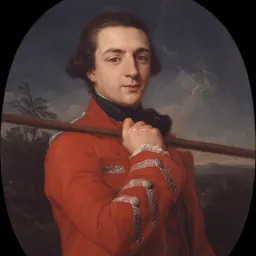
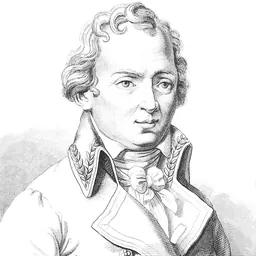
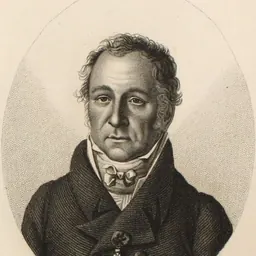
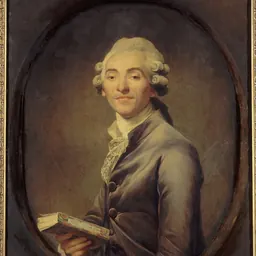

Contemporaries
People whose lives overlapped Wilhelm René de l'Homme de Courbière's





Frequently asked questions
Who was Wilhelm René de l'Homme de Courbière?
German politician and officer (1733-1811)
When was Wilhelm René de l'Homme de Courbière born?
Wilhelm René de l'Homme de Courbière was born on 25 February 1733 in Maastricht.
When did Wilhelm René de l'Homme de Courbière die?
Wilhelm René de l'Homme de Courbière died on 23 July 1811 in Grudziądz.
What was Wilhelm René de l'Homme de Courbière's occupation?
Wilhelm René de l'Homme de Courbière was a politician and military officer.
What nationality was Wilhelm René de l'Homme de Courbière?
Wilhelm René de l'Homme de Courbière was German and Dutch.
Sources & further reading
· Wikipedia: Wilhelm René de l'Homme de Courbière
· DBpedia: Wilhelm René de l'Homme de Courbière
Cite this page
APA: Biography.guide. (2026). Wilhelm René de l'Homme de Courbière. https://biography.guide/wilhelm-rene-de-l-homme-de-courbiere/
MLA: "Wilhelm René de l'Homme de Courbière." Biography.guide, https://biography.guide/wilhelm-rene-de-l-homme-de-courbiere/.
Chicago: "Wilhelm René de l'Homme de Courbière." Biography.guide. https://biography.guide/wilhelm-rene-de-l-homme-de-courbiere/.
Data last updated: 2026-09-29 · Spot an error? Report a correction.
Portrait: Wikimedia Commons · author & licence
Page generated 2026-10-04 14:00 UTC