
Wilhelm Mier
Major general in the Crown Army of the Polish–Lithuanian Commonwealth
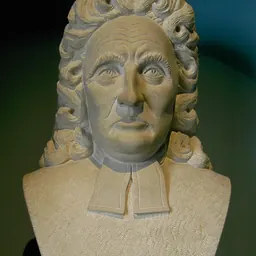
About Wilhelm Mier
Lived 1680 – 1758 (aged 77–78). Wilhelm Mier was a Polish civil servant.
Wilhelm Mier (c. 1680 – 13 February 1758) was a military officer, statesman, and nobleman. He was the Governor of Kraków and Sandomierz from 1715 to 1724, and the member of the Senate of the Polish–Lithuanian Commonwealth, as the Castellan of Słońsk, from 1746 to 1758. He was also a major general in the Crown Army of the Polish–Lithuanian Commonwealth, and the commanding officer of the Crown Horse Guard Regiment.
Biography 18th-century painting by Zygmunt Vogel depicting the Mier Barracks. The Crown Horse Guard Regiment, which was commanded by Wilhelm Mier, was stationed there. Wilhelm Mier was born around 1680. He was the son of Jan Mier and Anna Ross. He was of Scottish descent, and related to the Clan Muir. His father was a major general in the Imperial Army of the Holy Roman Empire, and the commander of the Petrovaradin Fortress.
He served in the Crown Army of the Polish–Lithuanian Commonwealth, with the rank of colonel from 1706 to 1720, and major general from 1721 to 1738. In 1717, he organized Crown Horse Guard Regiment, and was its commanding officer until 1740. The unit was informally called Mier Guard after him.
Wilhelm Mier was the alderman (starosta) of Lubcza in 1712, and Trzcinica in 1721. From 1 January 1715 to 31 December 1724, he was the Governor of Kraków and Sandomierz, administrating the crown land. In 1726, for his service to the country, the Seym of the Polish–Lithuanian Commonwealth granted him the indygenat, which was the recognition of his noble status. From 1746 to 1758, he was the castellan of Słońsk, which made him a member of the Senate of Poland.
The Church of the Visitation of the Blessed Virgin Mary in Wożuczyn, Poland, whose construction was founded by Mier, and in which he was buried.
In 1730s, he bought the village of Wożuczyn. There, he developed the local castle, and founded the construction of the Church of the Visitation of the Blessed Virgin Mary between 1742 and 1750.
According to most sources, Wilhelm Mier died on 13 February 1758.
Private life Wilhelm Mier was married to Katarzyna Barbara Geshaw, with whom he had three children; two sons and one daughter. They were: Józef Mier, Jan Mier, and Marianna Karłowska.
Commemoration and legacy The Crown Horse Guard Regiment, of which Wilhelm Mier was the commanding officer, was informally called the Mier Guard. In 1903, particially in place of the barracks were opened two market hall, which were named the Mier Halls. Formerly in the area was also Mirowska Street (Polish: ulica Mirowska; lit. Mier Street), named after the barracks, and located between Jana Pawła II and Zimna Street.
The neighbourhood in Warsaw, Poland, in which the Mier Barracks and the Mier Halls were located, was named Mirów after them and Wilhelm Mier.
Don’t just read it —
keep it.
Full-length biographies made to live with: read them, listen on the way to work, watch them tonight.
- E-book
- Audio
- Video
Instant download · yours to keep · every purchase keeps this site free
Important facts
Related people
Same field, nearest in time


Contemporaries
People whose lives overlapped Wilhelm Mier's




Frequently asked questions
Who was Wilhelm Mier?
major general in the Crown Army of the Polish–Lithuanian Commonwealth
When was Wilhelm Mier born?
Wilhelm Mier was born in 1680.
When did Wilhelm Mier die?
Wilhelm Mier died on 10 February 1758.
What was Wilhelm Mier's occupation?
Wilhelm Mier was a civil servant.
What nationality was Wilhelm Mier?
Wilhelm Mier was Polish.
Sources & further reading
Cite this page
APA: Biography.guide. (2026). Wilhelm Mier. https://biography.guide/wilhelm-mier/
MLA: "Wilhelm Mier." Biography.guide, https://biography.guide/wilhelm-mier/.
Chicago: "Wilhelm Mier." Biography.guide. https://biography.guide/wilhelm-mier/.
Data last updated: 2026-09-20 · Spot an error? Report a correction.
Page generated 2026-09-27 05:14 UTC