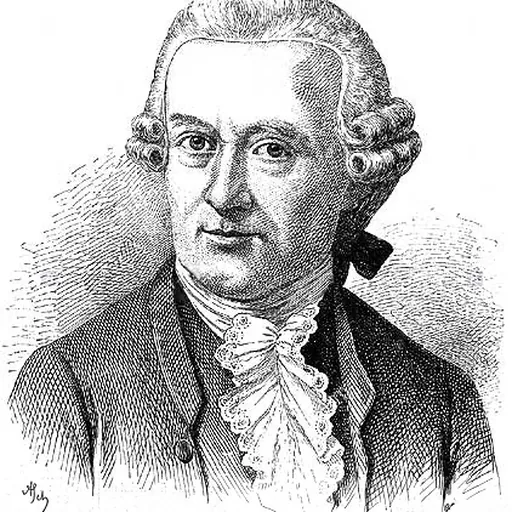
About Wilhelm Friedemann Bach
Lived 1710 – 1784 (aged 73). Wilhelm Friedemann Bach was a German composer, organist, pianist, musician, music arranger and independent publisher.
Wilhelm Friedemann Bach (22 November 17101 July 1784) was a German composer, organist and harpsichordist. He was the second child and eldest son of Johann Sebastian Bach and Maria Barbara Bach. Despite his acknowledged genius as an improviser and composer, his income and employment were unstable, and he died in poverty.
Life
Wilhelm Friedemann (hereafter Friedemann) was born in Weimar, where his father was employed as organist and chamber musician to the Duke of Saxe-Weimar. In July 1720, when Friedemann was nine, his mother Maria Barbara Bach died suddenly; Johann Sebastian Bach remarried in December 1721. J. S. Bach supervised Friedemann's musical education and career with great attention. The graded course of keyboard studies and composition that J. S. Bach provided is documented in the Clavier-Büchlein vor Wilhelm Friedemann Bach (modern spelling: Klavierbüchlein für Wilhelm Friedemann Bach), with entries by both father and son. This education also included (parts of) the French Suites, (Two-Part) Inventions, (Three-Part) Sinfonias (popularly known as "Inventions"), the first volume of The Well-Tempered Clavier, and the six Trio Sonatas for organ. At the age of 16 he went to Merseburg to learn the violin with his teacher Johann Gottlieb Graun.
In addition to his musical training, Friedemann received formal schooling beginning in Weimar. When J. S. Bach took the post of Cantor of the St. Thomas Church in Leipzig (in 1723), he enrolled Friedemann in the associated Thomasschule. (J. S. Bach—who had himself been orphaned at the age of 10—said that he took the position in Leipzig partly because of the educational opportunities it afforded his children). On graduating in 1729, Friedemann enrolled as a law student in Leipzig University, a renowned institution at the time, but later moved on to study law and mathematics at the University of Halle. He maintained a lifelong interest in mathematics, and continued to study it privately during his first job in Dresden.
Friedemann was appointed in 1733 to the position of organist of the St. Sophia's Church at Dresden. In competing for the post he played a new version of his father's Prelude and Fugue in G Major, BWV 541. The judge described Friedemann as clearly superior to the other two candidates. He remained a renowned organist throughout his life. Among his many pupils in Dresden was Johann Gottlieb Goldberg, the keyboardist whose name is erroneously enshrined in the popular nickname given to J. S. Bach's 1742 publication, "Aria with Diverse Variations"—that is, "The Goldberg Variations." The scholar Peter Williams has discredited the story which links the work to Goldberg stating that J. S. Bach wrote the work for the Russian Ambassador Count Hermann Carl von Keyserlingk, who would ask his employee, Goldberg, to play the variations to entertain him during sleepless nights. Williams instead has argued that J. S. Bach wrote the variations to provide a display piece for Friedemann.
In 1746 Friedemann became organist of the Liebfrauenkirche at Halle.
Friedemann was deeply unhappy in Halle almost from the beginning of his tenure. In 1749 he was involved in a conflict with the Cantor of the Liebfrauenkirche, Gottfried Mittag, who had misappropriated funds that were due to Friedemann. In 1750 the church authorities reprimanded Friedemann for overstaying a leave of absence (he was in Leipzig settling his father's estate). In 1753 he made his first documented attempt to find another post, and thereafter made several others. All these attempts failed. Bach had at least two pupils, Friedrich Wilhelm Rust and Johann Samuel Petri.
In 1762, he negotiated for the post of Kapellmeister to the court of Darmstadt; although he protracted the negotiations for reasons that are opaque to historians and did not actively take the post, he nevertheless was appointed Hofkapellmeister of Hessen-Darmstadt, a title he used in the dedication of his Harpsichord Concerto in E minor.
In June 1764, Friedemann left the job in Halle without any employment secured elsewhere. Friedemann died in Berlin.
Earlier biographers have concluded that his "wayward" and difficult personality reduced his ability to gain and hold secure employment, but the scholar David Schulenberg writes (in the Oxford Composer Companion: J. S. Bach, ed. Malcolm Boyd, 1999) that "he may also have been affected by changing social conditions that made it difficult for a self-possessed virtuoso to succeed in a church- or court-related position" (p. 39). Schulenberg adds, "he was evidently less willing than most younger contemporaries to compose fashionable, readily accessible music".
Friedemann Bach was renowned for his improvisatory skills. It is speculated that when in Leipzig his father's accomplishments set so high a bar that he focused on improvisation rather than composition. Evidence adduced for this speculation includes the fact that his compositional output increased in Dresden and Halle.
Friedemann's compositions include many church cantatas and instrumental works, of which the most notable are the fugues, polonaises and fantasias for clavier,
Reception
Use by later composers
Wolfgang Amadeus Mozart's set of six Preludes and Fugues for string trio, K. 404a, contains five fugues transcribed from The Well-Tempered Clavier by Johann Sebastian Bach while the sixth fugue in F minor, is a transcription of one of the Eight Fugues (Falck 31) of Wilhelm Friedemann Bach. The preludes in K. 404a are Mozart's own, except for 4 (from BWV 527) and 5 (second movement from BWV 526).
Film
Friedemann Bach is a 1941 German historical drama film directed by Traugott Müller and starring Gustaf Gründgens, Leny Marenbach and Johannes Riemann. The film depicts the life of Johann Sebastian Bach's son Wilhelm Friedemann Bach. It is based on Albert Emil Brachvogel's novel Friedemann Bach. Wilhelm Friedemann Bach is shown as a gifted son trying to escape his father's shadow.
Don’t just read it —
keep it.
Full-length biographies made to live with: read them, listen on the way to work, watch them tonight.
- E-book
- Audio
- Video
Instant download · yours to keep · every purchase keeps this site free
Important facts
People in Wilhelm Friedemann Bach's life
Named in this biography and alive at the same time
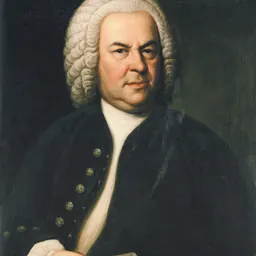
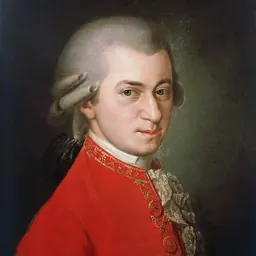
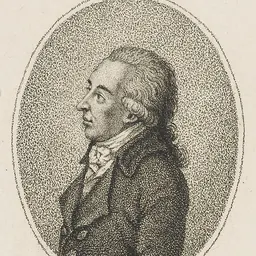



Related people
Same field, nearest in time
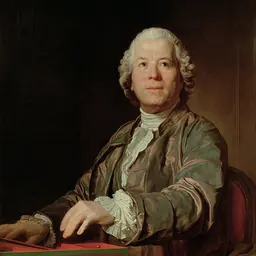
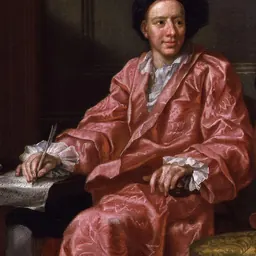
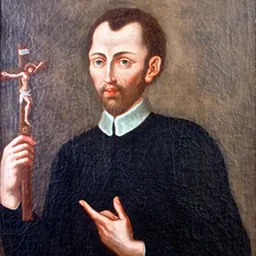

Contemporaries
People whose lives overlapped Wilhelm Friedemann Bach's



Frequently asked questions
Who was Wilhelm Friedemann Bach?
German composer, organist, harpsichordist (1710-1784)
When was Wilhelm Friedemann Bach born?
Wilhelm Friedemann Bach was born on 22 November 1710 in Weimar.
When did Wilhelm Friedemann Bach die?
Wilhelm Friedemann Bach died on 1 July 1784 in Berlin.
What was Wilhelm Friedemann Bach's occupation?
Wilhelm Friedemann Bach was a composer, organist, pianist, musician, music arranger and independent publisher.
What nationality was Wilhelm Friedemann Bach?
Wilhelm Friedemann Bach was German.
Sources & further reading
· Wikipedia: Wilhelm Friedemann Bach
· DBpedia: Wilhelm Friedemann Bach
Cite this page
APA: Biography.guide. (2026). Wilhelm Friedemann Bach. https://biography.guide/wilhelm-friedemann-bach/
MLA: "Wilhelm Friedemann Bach." Biography.guide, https://biography.guide/wilhelm-friedemann-bach/.
Chicago: "Wilhelm Friedemann Bach." Biography.guide. https://biography.guide/wilhelm-friedemann-bach/.
Data last updated: 2026-09-20 · Spot an error? Report a correction.
Page generated 2026-09-27 05:09 UTC