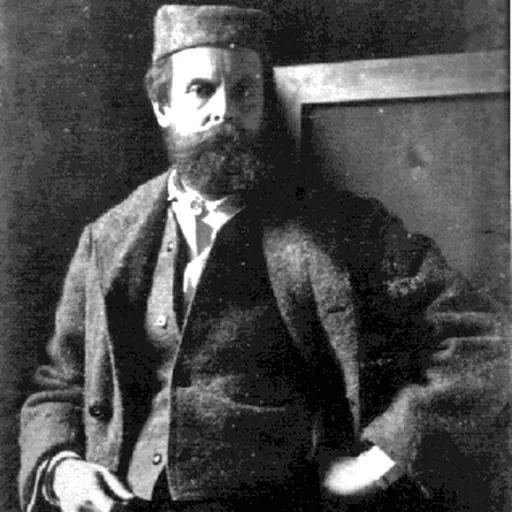
About Wilfrid Scawen Blunt
Lived 1840 – 1922 (aged 82). Wilfrid Scawen Blunt was a British poet, diplomat, writer and politician, known for Arabian horse.
Wilfrid Scawen Blunt (17 August 1840 – 10 September 1922 ), sometimes spelt Wilfred, was an English poet and writer. He and his wife Lady Anne Blunt travelled in the Middle East and were instrumental in preserving the Arabian horse bloodlines through their farm, the Crabbet Arabian Stud.
Blunt was best known for his poetry, which appeared in a collected edition in 1914, and also wrote political essays and polemics. He became additionally known for strongly anti-imperialist views that were relatively uncommon in his time.
Early life Blunt was the son of Francis Scawen Blunt, of Crabbet, by his wife Mary Chandler. Blunt was born at Petworth House in Sussex, home of his aunt's husband Baron Leconfield. He served in the Diplomatic Service 1858–1869. He was raised in the faith of his mother, a Catholic convert, and educated at Twyford School, Stonyhurst, and at St Mary's College, Oscott. He was a cousin of Lord Alfred Douglas.
Biography
In 1869 Blunt married Lady Anne Noel, daughter of the Earl of Lovelace and Ada Lovelace, and granddaughter of Lord Byron. Together the Blunts travelled through Spain, Algeria, Egypt, the Syrian Desert, and extensively in the Middle East and India.
Horse breeding
Based upon pure-blooded Arabian horses they obtained in Egypt and the Nejd, the Blunts co-founded Crabbet Arabian Stud. They later bought a property near Cairo named Sheykh Obeyd as their horse-breeding base in Egypt.
Anti-imperialism, beliefs and politics Blunt was generally anti-imperialist as a matter of belief. In 1882, He championed the cause of Urabi Pasha, which led to him being barred from Egypt for four years. Blunt remained vigorously opposed to colonial expansion, writing three books outlining his views: The Secret History of the English Occupation of Egypt... (1907), Gordon at Khartoum (1911), and My Diaries: Being a Personal Narrative of Events, 1888–1914 (2 vols. 1919–1920). Historian Robert O. Collins, who worked closely with British civil servants, described Blunt as "The most vigorous English advocate of Egyptian nationalism" and cautioned against using Blunt's work uncritically.
His support for Irish independence led to imprisonment in 1888 for chairing an anti-eviction meeting in County Galway that had been banned by the Chief Secretary, Arthur Balfour. He was held in Galway Prison, then at Kilmainham Gaol in Dublin.
Blunt's three attempts to enter Parliament were unsuccessful. He stood as a "Tory Democrat" supporting Irish Home Rule at Camberwell North in 1885 and as a Liberal at Kidderminster in 1886, where he lost by 285 votes. While in prison in Ireland, he contested a Deptford by-election in 1888, but lost by 275 votes.
As an adult Blunt became an atheist, though he underwent episodes of faith. He had a serious interest in Islam and became immersed in its reformist strands. Blunt had supposedly become a convert to Islam under the influence of Jamal al-Din al-Afghani. However, he agreed before he died to see a priest, Fr Vincent McNabb, and receive Communion, so fulfilling a prediction of Sir William Henry Gregory, as recalled by his wife: "You will see Wilfrid will die with the wafer in his mouth."
Affairs and separation Wilfrid and Lady Anne's only child to reach maturity was Judith Blunt-Lytton, 16th Baroness Wentworth, later known as Lady Wentworth. She was married in Cairo when she was an adult, but in 1904 she relocated permanently to the Crabbet Park Estate.
Wilfrid had mistresses, including long-term relations with Catherine "Skittles" Walters, and Jane Morris, the wife of his friend William Morris. He seduced and impregnated his cousin Mary Wyndham, having previously been the lover of her mother.
After he moved another mistress, Dorothy Carleton, into his home, Lady Anne legally separated from him in 1906. She signed a Deed of Partition drawn up by Wilfrid, under terms unfavourable to herself, whereby she kept the Crabbet Park property, where their daughter Judith lived, and half the horses, while Blunt took Caxtons Farm, also known as Newbuildings, and the rest of the stock.
Struggling with financial concerns and addiction, Wilfrid sold off numerous horses to pay debts and constantly attempted to obtain additional assets. Lady Anne left the management of her properties to Judith and spent many months of each year in Egypt at the Sheykh Obeyd estate, moving there permanently in 1915.
Poet More direct, conversational and wry than typical ornate Victorian verse, Blunt's poetry can be seen as transitional between late Victorian romanticism and the psychological realism of the 20th century poetry. His work reflects the many romances, his political views and his travels. His mistress Skittles, for instance, was portrayed as Esther in his Sonnets and Songs by Proteus (1875), which experiment with the sonnet form. The Wind and the Whirlwind (1883) is a long poem condemning the British intervention in Egypt of 1882. Blunt's most memorable line of poetry on the subject of anti-imperialism comes from Satan Absolved (1899), where the devil, answering a Kiplingesque remark by God, snaps back:The white man's burden, Lord, is the burden of his cash. Elizabeth Longford wrote, "Blunt stood Rudyard Kipling's familiar concept on its head, arguing that the imperialists' burden is not their moral responsibility for the colonised peoples, but their urge to make money out of them." His prison sonnet sequence In vinculis ("In chains", 1888) marks a turning point in his writing. His friend Oscar Wilde said that his imprisonment in Galway Prison changed Blunt "from a clever rhymer into a deep-thinking poet".
By the end of his life Blunt was a respected literary figure, friendly with Hilaire Belloc (a neighbour), Roger Casement, St John Philby (father of Kim), Alice and Wilfrid Meynell, Francis Thompson and Father Vincent McNabb. Six poets travelled from London to attend: W. B. Yeats, Ezra Pound, the imagists Richard Aldington and Frank Stuart Flint, and the older poets Victor Plarr and Thomas Sturge Moore. Pound later called Blunt "the last of the great Victorians".
Don’t just read it —
keep it.
Full-length biographies made to live with: read them, listen on the way to work, watch them tonight.
- E-book
- Audio
- Video
Instant download · yours to keep · every purchase keeps this site free
Important facts
Family & relationships
People in Wilfrid Scawen Blunt's life
Named in this biography and alive at the same time







Related people
Same field, nearest in time
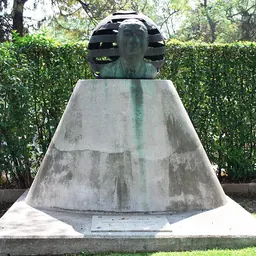
Contemporaries
People whose lives overlapped Wilfrid Scawen Blunt's
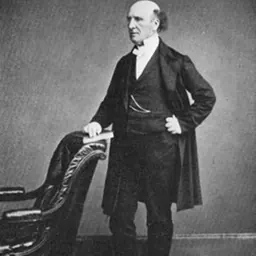
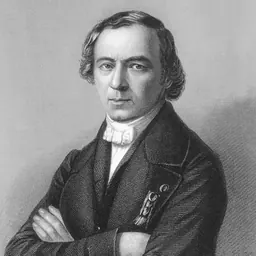

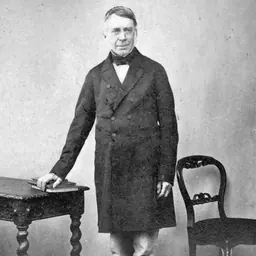
Frequently asked questions
Who was Wilfrid Scawen Blunt?
British poet and writer (1840–1922)
When was Wilfrid Scawen Blunt born?
Wilfrid Scawen Blunt was born on 17 August 1840 in Petworth.
When did Wilfrid Scawen Blunt die?
Wilfrid Scawen Blunt died on 10 September 1922 in Sussex.
What was Wilfrid Scawen Blunt's occupation?
Wilfrid Scawen Blunt was a poet, diplomat, writer and politician.
What was Wilfrid Scawen Blunt known for?
Wilfrid Scawen Blunt was known for Arabian horse.
What nationality was Wilfrid Scawen Blunt?
Wilfrid Scawen Blunt was British.
Sources & further reading
· Wikipedia: Wilfrid Scawen Blunt
· DBpedia: Wilfrid Scawen Blunt
Cite this page
APA: Biography.guide. (2026). Wilfrid Scawen Blunt. https://biography.guide/wilfrid-scawen-blunt/
MLA: "Wilfrid Scawen Blunt." Biography.guide, https://biography.guide/wilfrid-scawen-blunt/.
Chicago: "Wilfrid Scawen Blunt." Biography.guide. https://biography.guide/wilfrid-scawen-blunt/.
Data last updated: 2026-09-22 · Spot an error? Report a correction.
Page generated 2026-09-27 05:09 UTC