
Wilfrid Le Gros Clark
British scientist and surgeon
About Wilfrid Le Gros Clark
Lived 1895 – 1971 (aged 76). Wilfrid Le Gros Clark was a British paleontologist, surgeon, paleoanthropologist and anatomist.
Sir Wilfrid Edward Le Gros Clark (5 June 1895 – 28 June 1971) was a British anatomist, surgeon, primatologist and palaeoanthropologist, today best remembered for his contribution to the study of human evolution. He was one of three men who proved that the Piltdown Man was a forgery, and was Dr Lee's Professor of Anatomy at the University of Oxford.
Education Le Gros Clark was educated at Blundell's School in Devon and subsequently admitted as a medical student to St Thomas' Hospital Medical School in Lambeth.
Career After qualification he immediately joined the Royal Army Medical Corps as a medical officer and was sent to France early in 1918. He caught diphtheria and was sent back to England to recover, following which he spent the remainder of the war as a medical officer at '‘No. 8 Stationary Hospital'’ at Wimereux in northern France.
Following a period in the Department of Anatomy at St Thomas' Hospital Medical School he was appointed as Principal Medical Officer to the Sarawak Government. He was subsequently appointed as Professor of Anatomy at St Bartholomew's Hospital Medical School, followed by a period as Professor of Anatomy at St Thomas' Hospital Medical School and finally, in 1934, he was invited to take over as the Dr. Lee's Professor of Anatomy (and effectively the Chair of the Anatomy Department) at the University of Oxford. Le Gros Clark was also editor of the Journal of Anatomy between 1938 and 1945.
In 1953, Le Gros Clark was one of three men (the others being Joseph Weiner and Kenneth Oakley) who proved that the Piltdown Man was a forgery.
In 1960, Le Gros Clark was elected to the American Philosophical Society. In 1963, He was elected to the National Academy of Sciences. He was awarded the Royal Society's Royal Medal in 1961 and delivered their Ferrier Lecture in 1956. He was elected president of the Anatomical Society of Great Britain and Ireland for 1951 to 1953.
Papers relating to Le Gros Clark, his grandfather the surgeon Frederick Le Gros Clark and his brother Cyril Le Gros Clark (former Chief Secretary of Sarawak, who was murdered by the Japanese in 1945 after a period of detention at Batu Lintang camp in Borneo) are held at the Bodleian Library (Special Collections and Western Manuscripts) at Oxford University. During his career Le Gros Clark published numerous papers on human evolution and palaeontology, and an autobiography.
Don’t just read it —
keep it.
Full-length biographies made to live with: read them, listen on the way to work, watch them tonight.
- E-book
- Audio
- Video
Instant download · yours to keep · every purchase keeps this site free
Important facts
People in Wilfrid Le Gros Clark's life
Named in this biography and alive at the same time


Related people
Same field, nearest in time
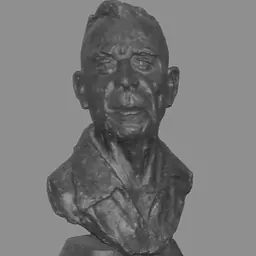



Contemporaries
People whose lives overlapped Wilfrid Le Gros Clark's

Frequently asked questions
Who was Wilfrid Le Gros Clark?
British scientist and surgeon (1895–1971)
When was Wilfrid Le Gros Clark born?
Wilfrid Le Gros Clark was born on 5 June 1895 in Hemel Hempstead.
When did Wilfrid Le Gros Clark die?
Wilfrid Le Gros Clark died on 28 June 1971 in Burton Bradstock.
What was Wilfrid Le Gros Clark's occupation?
Wilfrid Le Gros Clark was a paleontologist, surgeon, paleoanthropologist and anatomist.
What nationality was Wilfrid Le Gros Clark?
Wilfrid Le Gros Clark was British.
Sources & further reading
· Wikipedia: Wilfrid Le Gros Clark
· DBpedia: Wilfrid Le Gros Clark
Cite this page
APA: Biography.guide. (2026). Wilfrid Le Gros Clark. https://biography.guide/wilfrid-le-gros-clark/
MLA: "Wilfrid Le Gros Clark." Biography.guide, https://biography.guide/wilfrid-le-gros-clark/.
Chicago: "Wilfrid Le Gros Clark." Biography.guide. https://biography.guide/wilfrid-le-gros-clark/.
Data last updated: 2026-09-20 · Spot an error? Report a correction.
Page generated 2026-09-27 05:05 UTC