
About Wilfred Cantwell Smith
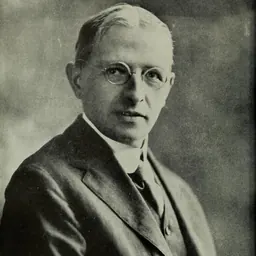
Lived 1916 – 2000 (aged 83). Wilfred Cantwell Smith was a Canadian theologian.
Wilfred Cantwell Smith, (July 21, 1916 – February 7, 2000) was a Canadian Islamicist, comparative religion scholar, and Presbyterian minister. He was the founder of the Institute of Islamic Studies at McGill University in Quebec and later the director of Harvard University's Center for the Study of World Religions. The Harvard University Gazette said he was one of the field's most influential figures of the past century. In his 1962 work The Meaning and End of Religion he notably questioned the modern sectarian concept of religion.
Early life and career Smith was born on 21 July 1916 in Toronto, Ontario, to parents Victor Arnold Smith and Sarah Cory Cantwell. He was the younger brother of Arnold Smith and the father of Brian Cantwell Smith. He primarily received his secondary education at Upper Canada College.
Smith studied at University College, Toronto, receiving a Bachelor of Arts degree with honours in oriental languages circa 1938. After his thesis was rejected by the University of Cambridge, supposedly for its Marxist critique of the British Raj, he and his wife Muriel Mackenzie Struthers spent seven years in pre-independence India (1940–1946), during which he taught Indian and Islamic history at Forman Christian College in Lahore.
In 1948, he earned a PhD in Oriental Languages from Princeton University, after which he joined the faculty at McGill University. In 1952, he founded the university's Institute of Islamic Studies. During his tenure at McGill, he invited Ismail al-Faruqi to join the Institute, where al-Faruqi taught from 1958 to 1961.
From 1964 to 1973, he was a professor at Harvard Divinity School. He later moved to Dalhousie University in Halifax, Nova Scotia, where he established the Department of Religion. He was also one of the original editorial advisors for the journal Dionysius. In 1978, he returned to Harvard.
The following year, he was awarded an honorary doctorate by Concordia University.
After retiring from Harvard in 1984, he was appointed senior research associate in the Faculty of Divinity at Trinity College, University of Toronto, in 1985.
Views on religion Critique of "religion" as a concept In The Meaning and End of Religion (1962), Smith critiqued the concept of "religion" as a systematic, identifiable entity. He argued that the term "religion" is a uniquely Western construct and not a universally valid category. Smith proposed replacing the static concept of religion with a dynamic dialectic between "cumulative tradition" (all historically observable rituals, art, music, theologies, etc.) and "personal faith".
Analysis of major religions Smith demonstrated that founders and followers of major religions did not see themselves as part of a defined system called religion, with Islam being a notable exception. In his chapter "The Special Case of Islam", Smith noted that the term Islam appears in the Qur'an, making it the only religion named by its own tradition. He also highlighted that the Arabic language does not have a word for religion equivalent to the European concept, detailing how din, usually translated as such, differs significantly.
Historical evolution of the term Smith pointed out that terms for major world religions like Hinduism, Buddhism, and Shintoism did not exist until the 19th century. He suggested that practitioners historically did not view their practices as "religion" until cultural self-regard prompted them to see their practices as different from others. For Smith, the modern concept of religion emerged from identity politics and apologetics.
Etymological study Through an etymological study, Smith argued that "religion" originally denoted personal piety but evolved to mean a system of observances or beliefs, a shift institutionalized through reification. He traced this transformation from Lucretius and Cicero through Lactantius and Augustine, with the term "faith" predominating in the Middle Ages. The Renaissance revived "religio," which retained its personal practice emphasis. During the 17th-century Catholic-Protestant debates, religion began to refer to abstract systems of beliefs, a concept further reified during the Enlightenment, exemplified by G.W.F. Hegel's definition of religion as a self-subsisting transcendent idea.
Four distinct senses of "religion" Smith concluded that "religion" now has four distinct senses: personal piety, an overt system of beliefs, practices, and values as an ideal religion, an empirical phenomenon related to a particular community's historical and sociological manifestation, and a generic summation or universal category of religion in general.
The Meaning and End of Religion remains Smith's most influential work. The anthropologist of religion and postcolonial scholar Talal Asad has called it a modern classic and a masterpiece.
Death and legacy Smith died on 7 February 2000 in Toronto. His papers are preserved in Special Collections and Archives at the University Library at California State University, Northridge.
Don’t just read it —
keep it.
Full-length biographies made to live with: read them, listen on the way to work, watch them tonight.
- E-book
- Audio
- Video
Instant download · yours to keep · every purchase keeps this site free
Important facts
Family & relationships
People in Wilfred Cantwell Smith's life
Named in this biography and alive at the same time





Related people
Same field, nearest in time



Contemporaries
People whose lives overlapped Wilfred Cantwell Smith's



Frequently asked questions
Who was Wilfred Cantwell Smith?
Canadian academic (1916–2000)
When was Wilfred Cantwell Smith born?
Wilfred Cantwell Smith was born on 21 July 1916 in Toronto.
When did Wilfred Cantwell Smith die?
Wilfred Cantwell Smith died on 7 February 2000 in Toronto.
What was Wilfred Cantwell Smith's occupation?
Wilfred Cantwell Smith was a theologian.
What nationality was Wilfred Cantwell Smith?
Wilfred Cantwell Smith was Canadian.
Sources & further reading
· Wikipedia: Wilfred Cantwell Smith
· DBpedia: Wilfred Cantwell Smith
Cite this page
APA: Biography.guide. (2026). Wilfred Cantwell Smith. https://biography.guide/wilfred-cantwell-smith/
MLA: "Wilfred Cantwell Smith." Biography.guide, https://biography.guide/wilfred-cantwell-smith/.
Chicago: "Wilfred Cantwell Smith." Biography.guide. https://biography.guide/wilfred-cantwell-smith/.
Data last updated: 2026-09-20 · Spot an error? Report a correction.
Page generated 2026-09-27 05:21 UTC