
Wilbur Olin Atwater
American agricultural chemist (1844–1907); developer of the respiration calorimeter
About Wilbur Olin Atwater
Lived 1844 – 1907 (aged 63). Wilbur Olin Atwater was an American chemist and nutritionist, known for Atwater system, Human nutrition and Metabolism.
Wilbur Olin Atwater (May 3, 1844 – September 22, 1907) was an American chemist known for his studies of human nutrition and metabolism, and is considered the father of modern nutrition research and education. He is credited with developing the Atwater system, which laid the groundwork for nutrition science in the United States and inspired modern Olympic nutrition.
Atwater was director of the first United States Agricultural Experiment Station at Wesleyan University in Middletown, Connecticut and he was the U.S. Department of Agriculture's first chief of nutrition investigations.
Early life Atwater was born in Johnsburg, New York, the son of William Warren Atwater, a Methodist Episcopal minister, temperance advocate, and librarian of Yale Law School and Eliza (Barnes) Atwater. He grew up in, and spent much of his life in New England. He opted not to fight in the American Civil War, instead pursuing his undergraduate education, first at the University of Vermont and then moving to Wesleyan University in Connecticut, where he would complete his general education in 1865. For the next three years, Atwater was a teacher at various schools and in 1868, he enrolled in Yale University's Sheffield Scientific School, where he studied agricultural chemistry under William Henry Brewer and Samuel William Johnson. During his time at Yale, Atwater worked part time as Johnson's assistant analyzing fertilizers for specific mineral content; he also performed the first chemical analysis of food or feed in the United States. Atwater spent time traveling throughout Scotland, Rome, and Naples; on his trip he wrote articles about his observations for local newspapers based in the places he had lived in the United States. In 1871, Atwater returned to the United States to teach chemistry at East Tennessee University and the next year moved to Maine State College.
While there, Atwater met Marcia Woodard (1851–1932) of Bangor, Maine, the daughter of Abram Woodard. Both he, and his mentor from Yale, Samuel Johnson, were proponents of bringing organizations to the United States similar to the agricultural experiment stations they saw in Europe. Atwater even described the German agricultural experiment stations in an 1875 report to the Department of Agriculture. To persuade the Connecticut legislature to appropriate money for a station, Orange Judd donated funds and Wesleyan offered laboratory facilities and Atwater's services on a part-time basis.
Atwater served as administrator of the trial run from 1875 until 1877 with initial research focused on fertilizers. As the Act was passed, Atwater was named director of the second agricultural experiment station in Connecticut that was established at Storrs Agricultural College, and he served there until 1892. He immediately established a journal, the Experiment Station Record, meant to be a means of keeping the stations abreast of the scientific research being conducted by their colleagues and scientists abroad. Subject exits respirator calorimeter in Atwater's laboratory. Courtesy of Special Collections, U.S. National Agricultural Library He went on to conduct metabolic studies related to the dietary standards, based on observations from his work with Voit, who had used a Rubner respiration calorimeter to conduct similar experiments on small animals. Together with Charles Ford Langworthy, they compiled a digest of close to 3,600 metabolic experiments as a primer to the research they would conduct. The calorimeter measured human metabolism by analyzing the heat produced by a person performing certain physical activities; in 1896 they began the first of what would accumulate into close to 500 experiments. Through their experiments, they were able to create a system - which became known as the Atwater system, to measure the energy in units, known as food calories. Atwater describes the apparatus in an article: "The experiments are made with a man inside a cabinet, or a respiration chamber, as it is called. It is in fact a box of copper incased in walls of zinc and wood. In this chamber he lives—eats, drinks, works, rests, and sleeps. There is a constant supply of fresh air for ventilation. The temperature is kept at the point most agreeable to the occupant. Within the chamber are a small folding cot-bed, a chair, and a table. In the daytime the bed is folded and laid aside, so as to leave room for the man to sit at the table or to walk to and fro. His promenade, however, is limited, the chamber being 7 feet long, 4 feet wide, and 6 feet high. Food and drink are passed into the chamber through an aperture which serves also for the removal of the solid and liquid excretory products, and the passing in and out of toilet materials, books, and other things required for comfort and convenience." His research was informed by the first law of thermodynamics, taking into account that energy can be transformed but it cannot be created or destroyed, despite the belief at the time that the law only applied to animals because humans were unique. Earlier experiments concerning calorie intake and expenditure had proven that the first law applied to animals and Atwater's findings demonstrated the law applied to humans as well. Through his research, he was able to demonstrate that calories from different sources might affect the body differently and in turn, published tables that compared calories in various foods. His granddaughter, Catherine Merriam Atwater, the daughter of his son, Charles, was an author whom married economist John Kenneth Galbraith.
Atwater's legacy is acknowledged through the yearly W.O. Atwater Memorial Lecture, sponsored through the United States Department of Agriculture, Agricultural Research Service. Atwater and his family's papers are held across multiple institutions, and the collections are mostly related to the holding institution.
Atwater Family Papers, 1778-2003 at Special Collections and Archives, Olin Library, Wesleyan University Subset Atwater Family Papers, 1843-1943 at Special Collections and Archives, Wesleyan University Wilbur Olin Atwater Papers, 1869-1915 at Special Collections and Archives, Wesleyan University Wilbur Olin Atwater Papers at Special Collections of United States Department of Agriculture National Agricultural Library Images from the Wilbur Olin Atwater Papers , Collection Number: 2223, Division of Rare and Manuscript Collections, Cornell University Library Wilbur Olin Atwater Papers, circa 1883-1889, Smithsonian Institution Archives The Wilbur O. Atwater Laboratory at the University of Connecticut is named in his honor.
Don’t just read it —
keep it.
Full-length biographies made to live with: read them, listen on the way to work, watch them tonight.
- E-book
- Audio
- Video
Instant download · yours to keep · every purchase keeps this site free
Important facts
People in Wilbur Olin Atwater's life
Named in this biography and alive at the same time

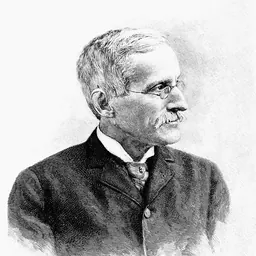
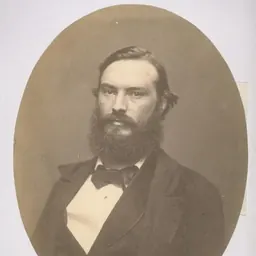


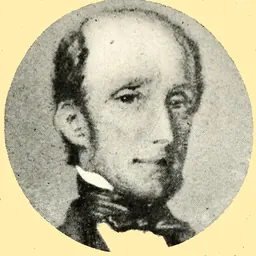
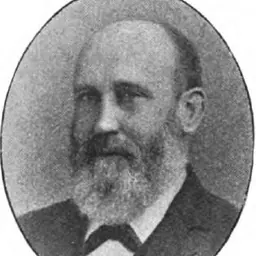

Related people
Same field, nearest in time


Contemporaries
People whose lives overlapped Wilbur Olin Atwater's
Frequently asked questions
Who was Wilbur Olin Atwater?
American agricultural chemist (1844–1907); developer of the respiration calorimeter
When was Wilbur Olin Atwater born?
Wilbur Olin Atwater was born on 3 May 1844 in Johnsburg.
When did Wilbur Olin Atwater die?
Wilbur Olin Atwater died on 22 September 1907 in Middletown.
What was Wilbur Olin Atwater's occupation?
Wilbur Olin Atwater was a chemist and nutritionist.
What was Wilbur Olin Atwater known for?
Wilbur Olin Atwater was known for Atwater system, Human nutrition and Metabolism.
What nationality was Wilbur Olin Atwater?
Wilbur Olin Atwater was American.
Sources & further reading
· Wikipedia: Wilbur Olin Atwater
· DBpedia: Wilbur Olin Atwater
Cite this page
APA: Biography.guide. (2026). Wilbur Olin Atwater. https://biography.guide/wilbur-olin-atwater/
MLA: "Wilbur Olin Atwater." Biography.guide, https://biography.guide/wilbur-olin-atwater/.
Chicago: "Wilbur Olin Atwater." Biography.guide. https://biography.guide/wilbur-olin-atwater/.
Data last updated: 2026-09-20 · Spot an error? Report a correction.
Page generated 2026-09-27 05:27 UTC