
About Wiktor Eckhaus
Lived 1930 – 2000 (aged 70). Wiktor Eckhaus was a Dutch and Polish mathematician and university teacher, known for Eckhaus equation and Eckhaus instability.
Wiktor Eckhaus (28 June 1930 – 1 October 2000) was a Polish–Dutch mathematician, known for his work on the field of differential equations. He was Professor Emeritus of Applied Mathematics at the Utrecht University.
Biography Eckhaus was born into a wealthy family, and raised in Warsaw where his father was managing a fur company. During the German occupation of Poland, he, his mother and sister had to hide because of their Jewish descent. His father, after being a prisoner of war, joined the Russian Army. After the war, in 1947, the re-united family came to Amsterdam – via a refugee camp in Austria.
Wiktor passed the state exam of the Hogere Burgerschool in 1948, and started to study aeronautics at the Delft University of Technology. Following his graduation he worked with the National Aerospace Laboratory in Amsterdam, from 1953 till 1957. In the period 1957–1960 he worked at the Massachusetts Institute of Technology, where Eckhaus earned a PhD in 1959 under Leon Trilling on a dissertation entitled "Some problems of unsteady flow with discontinuities".
In 1960, he became a "maître de recherches" (senior research fellow) at the Department of Mechanics of the Sorbonne. In 1964 he was a visiting professor at the University of Amsterdam and the Mathematical Centre. Thereafter, in 1965, he became professor at the Delft University of Technology, in pure and applied mathematics and mechanics. From 1972 until his retirement in 1994, Eckhaus was professor of applied mathematics at the Utrecht University.
Initially he studied the flow around airfoils, leading to his research on the stability of solutions to (weakly) nonlinear differential equations. This resulted in what is now known as the Eckhaus instability criterion and Eckhaus instability, appearing for instance as a secondary instability in models of Rayleigh–Bénard convection. Later, Eckhaus worked on singular perturbation theory and soliton equations.
In 1983 he treated strongly singular relaxation oscillations – called "canards" (French for "ducks") – resulting in his most-read paper "Relaxation oscillations including a standard chase on French ducks". Eckhaus used standard methods of analysis, on a problem qualified before, by Marc Diener, as an example of a problem only treatable through the use of non-standard analysis.
He became a member of the Royal Netherlands Academy of Arts and Sciences in 1987.
Publications
Don’t just read it —
keep it.
Full-length biographies made to live with: read them, listen on the way to work, watch them tonight.
- E-book
- Audio
- Video
Instant download · yours to keep · every purchase keeps this site free
Important facts
People in Wiktor Eckhaus's life
Named in this biography and alive at the same time

Related people
Same field, nearest in time
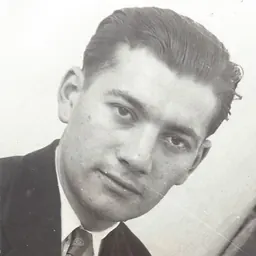

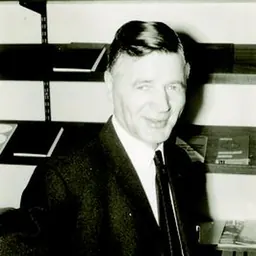
Contemporaries
People whose lives overlapped Wiktor Eckhaus's
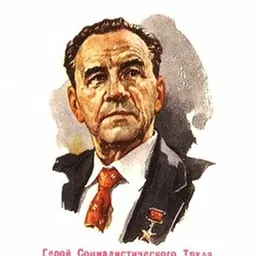
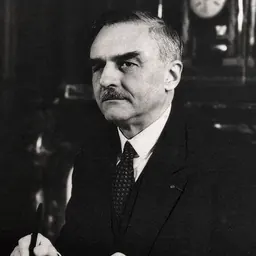

Frequently asked questions
Who was Wiktor Eckhaus?
Polish–Dutch mathematician
When was Wiktor Eckhaus born?
Wiktor Eckhaus was born on 28 June 1930 in Skole, Ivano-Frankivsk.
When did Wiktor Eckhaus die?
Wiktor Eckhaus died on 1 October 2000 in Amstelveen.
What was Wiktor Eckhaus's occupation?
Wiktor Eckhaus was a mathematician and university teacher.
What was Wiktor Eckhaus known for?
Wiktor Eckhaus was known for Eckhaus equation and Eckhaus instability.
What nationality was Wiktor Eckhaus?
Wiktor Eckhaus was Dutch and Polish.
Sources & further reading
Cite this page
APA: Biography.guide. (2026). Wiktor Eckhaus. https://biography.guide/wiktor-eckhaus/
MLA: "Wiktor Eckhaus." Biography.guide, https://biography.guide/wiktor-eckhaus/.
Chicago: "Wiktor Eckhaus." Biography.guide. https://biography.guide/wiktor-eckhaus/.
Data last updated: 2026-09-20 · Spot an error? Report a correction.
Page generated 2026-09-27 04:57 UTC