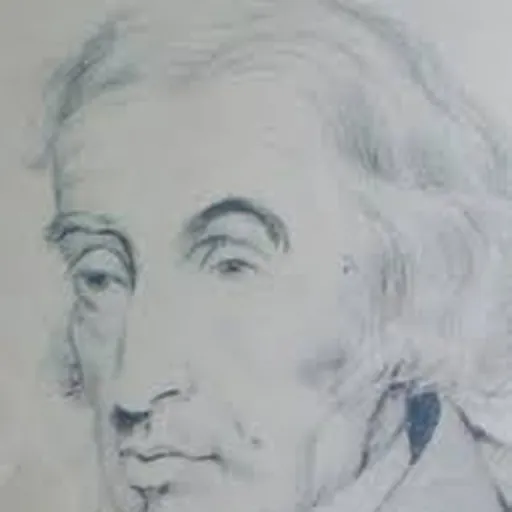
About Whitley Stokes
Lived 1763 – 1845 (aged 81–82). Whitley Stokes was a physician and botanist.
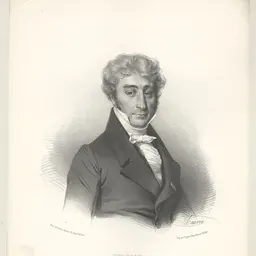
Whitley Stokes (1763–1845) was an Irish physician and polymath. A one-time United Irishman, in 1798 he was sanctioned by Trinity College Dublin for his alleged republicanism. In 1821, he published a rebuttal of Robert Malthus's thesis that, as spurs to population growth, in Ireland attempts to improve the general welfare are self-defeating. The country's problem, Stokes argued, was not her "numbers" but her indifferent government.
Medical and academic career Stokes was born in Waterford, son of Gabriel Stokes (1732–1806), DD, chancellor of the cathedral, and master of Waterford endowed school, where the young Stokes had his primary education. At age 16 he was admitted to Trinity College Dublin (TCD) (Scholar 1781, BA 1783, MA 1789, MB & MD 1793) and completing studies medicine at the University of Edinburgh.
His first venture as a medical practitioner was in public health. He studied not only his patients' ailments but also their environments, noting that in the slums of Dublin certain families rented a small room for a few guineas a year, sub-letting to others who paid them sixpence-halfpenny per week to lay down a bed of straw in a corner. was too rhetorical.
A month in advance of the first of the United Irish risings in May 1798, at TCD Stokes was brought before the Lord Chancellor of Ireland, Lord Clare. He admitted to having collected and given evidence to the liberal Lord Moira on the atrocities and tortures visited upon country people by Crown forces as they sought to break up and disarm the United Irish organisation; but denied himself having had any part in the movement as it prepared for insurrection. Clare found him "a most improper person to be entrusted in any degree with the government or direction of the college". He was suspended as a tutor, and barred from election to senior fellowship, for three years.
Stokes allowed his membership of the United Irishmen to lapse, but when in January 1793 the Society appointed a committee to draw up a scheme of parliamentary reform, he had submitted a plan. It broadened the franchise but fell short of the principle of universal male suffrage that the Society ultimately approved.
In July 1792, he had accompanied Tone on a visit to Belfast where Tone introduced him to his fellow physician-polymath Dr James MacDonnell. In the new work, he questioned the "trap" or "spectre" of population growth proposed by Robert Malthus: the argument that as common people use "abundance" to enlarge families rather than to increase their comforts, "all attempts ... to ameliorate the condition of the poor are fruitless and mistaken".
Already, as a medical man, he had deplored what he depicted as the Malthusian view of hospitals, workhouses and quarantines as vain attempts to "delay the thinning of the people, which is necessary to the happiness of mankind". He urged the government to ignore the new fixation with numbers and make health a priority.
Insisting upon the advantages mankind derives from "improved industry, improved conveyance, improvements in morals, government and religion", in Observations Stokes faulted Malthus's calculations. He denied that there was a "law of nature" that procreation must outrun the means of subsistence. Ireland was not, as English opinion so widely held, overpopulated thanks to the prolific potato. Rather than fret about “our numbers", Stokes argued for the division of large holdings, the encouragement and assistance of manufacture, and investment in inland navigation and roads. Once the Irish begin to feel "whole clothes" on their backs, "effort for profit will be made."
In An Inquiry Concerning the Population of Nations containing a Refutation of Mr. Malthus's Essay on Population (1818), George Ensor had developed a similar broadside against Malthusian political economy, arguing that poverty was sustained not by a reckless propensity to propagate, but rather by the state's indulgence of the heedless concentration of private wealth. It is not clear whether Stokes was familiar with the work.
Personal life In 1796 Stokes married Mary Ann Picknall. They had five sons and five daughters. He was the father the physician William Stokes (1804–78) who succeeded him as Regius Professor of Physic at TCD, and through William the grandfather of Whitley Stokes, the Celtic Scholar (1830–1909), and the Irish antiquarian Margaret Stokes (1832–1900),
Whitley Stokes died 13 April 1845 at 16 Harcourt St., Dublin, aged 82.
Publications 1795: A reply to Mr Paine's Age of Reason addressed to the Students of Trinity College, Dublin 1799: Projects for re-establishing the internal peace and tranquillity of Ireland. Dublin, For James Moore. 1808: Observations on the necessity of publishing the Scriptures in the Irish language 1808: "On an Eruptive Disease of Children" Stokes W., US National Library of Medicine National Institutes of Health: Med Phys J. 1808 Apr;19(110):344-350. 1818: Observations on contagion. Dublin, For Hodges and McArthur 1821: Observations on the population and resources of Ireland, Dublin, Joshua Porter
Don’t just read it —
keep it.
Full-length biographies made to live with: read them, listen on the way to work, watch them tonight.
- E-book
- Audio
- Video
Instant download · yours to keep · every purchase keeps this site free
Important facts
People in Whitley Stokes's life
Named in this biography and alive at the same time


Related people
Same field, nearest in time




Contemporaries
People whose lives overlapped Whitley Stokes's





Frequently asked questions
Who was Whitley Stokes?
botanist (1763-1845)
When was Whitley Stokes born?
Whitley Stokes was born in 1763 in Waterford.
When did Whitley Stokes die?
Whitley Stokes died in 1845 in Dublin.
What was Whitley Stokes's occupation?
Whitley Stokes was a physician and botanist.
Sources & further reading
· DBpedia: Whitley Stokes (physician)
Cite this page
APA: Biography.guide. (2026). Whitley Stokes. https://biography.guide/whitley-stokes-physician/
MLA: "Whitley Stokes." Biography.guide, https://biography.guide/whitley-stokes-physician/.
Chicago: "Whitley Stokes." Biography.guide. https://biography.guide/whitley-stokes-physician/.
Data last updated: 2026-09-22 · Spot an error? Report a correction.
Portrait: Wikimedia Commons · author & licence
Page generated 2026-09-27 04:57 UTC