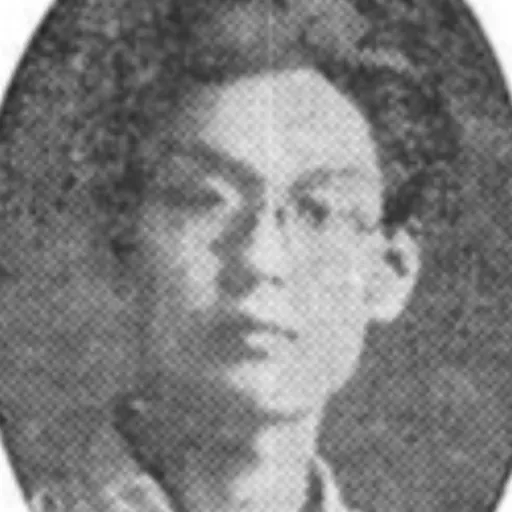
About Whanki Kim
Lived 1913 – 1974 (aged 61). Whanki Kim was a South Korean and Korean painter.
Kim Whanki (; April 3, 1913 – July 25, 1974) was a Korean painter and pioneering abstract artist. Kim lived and worked in a number of cities and countries during his lifetime, including Tokyo, Japan; Seoul and Busan, Korea; Paris, France; and New York City, USA, where he died.
Kim belongs to the first generation of Korean Abstract artists, mixing oriental concepts and ideals with abstraction. With refined and moderated formative expression based on Korean Lyricism, he created his characteristic art world. His artworks largely dealt with diverse hues and patterns. Kim's early works were semi-abstract paintings which allowed viewers to see certain forms, but his later works were more deeply absorbed abstract paintings, filled with lines and spaces.
The artist's partner Hyang-an Kim established the Whanki Foundation in 1978 and opened the Whanki Museum in 1992. The Museum, located in Seoul, was built by Korean American architect Kyu Sung Woo.
A pioneer of abstract painting and the godfather of the Dansaekhwa movement, Whanki Kim established his place in Korean history and art at an early age. Whanki Kim was an artist whose profound impact on the history of Korean art was seen in the first wave of abstract art. His nomadic lifestyle led him to many different places, like Japan, France, and the U.S., which differentiated his artwork from other artists, who created their art based in Korea, due to the lack of opportunities for travel. As a peripatetic artist gaining inspiration from artists of other origins, Whanki Kim's style of abstract art transformed from geometric abstraction to art with traditional Korean motifs to monochrome paintings of dots and lines. He balanced keeping Korean values and beliefs close and incorporating new foreign techniques into his works, which evidently reflect his personal identity and Korea's national identity, impacted by the political and social conditions of the mid-1900s.
Biography Early life Born as the fourth child and only son of wealthy farmer and local landowner Kim Sang-hyeon (김상현), Kim Whanki grew up comfortably in Eupdong-ri, Kijwado, Anjwa-myeon, Sinan County, Zenranan-dō, Korea, Empire of Japan. After graduating from elementary school, Kim was sent to Seoul to live with his older sister and attend Choongdong Middle School (중동중학교). His family then supported him to study abroad in Tokyo, Japan, where he attended . During his five years of study, he learned to play the violin. Once Kim returned home in 1932, his father objected to Kim's wishes to continue his studies and set Kim to marry.
Tokyo, Japan: 1932–1937 Having decided to become an artist against his father's wishes, Kim secretly boarded a vessel bound for Japan. During his second year into the program, Kim joined the Avant-Garde Western Painting Institute (アヴァンギャルド洋画研究所, AbuangyarudoYōga Kenkyūjo), led by Japanese artists who were introducing to Japan Cubism, Futurism, and Surrealism based on their experience living and working in Europe. Among his mentors were Togo Seiji and Tsuguharu Foujita. In 1935, Kim is awarded for his first submission to the prestigious Second Section Association (二科会, Nikakai, 이과전, Igwajŏn), When the Skylarks Sing (종달새 노래할 때), marking his debut as an artist. The painting portrays a woman dressed in hanbok, whose body was rendered in geometric, simplified forms. The basket upon her head is "transparent" by showing its content at an impossible angle, revealing Kim's interest apart from realism and towards abstraction. His experiments of incorporating Korean motifs as simplified forms onto the flat picture plane continued, as can be seen in House <집> (1936) and Sauce Jar Terrace <장독대> (1936). Features often seen in traditional Korean houses, such as wooden gates, paper screen doors, stone walls, stairs, and pottery, are also noted to have added a sense of order and repetition to his paintings, further illustrating his development towards pure abstraction. His first solo exhibition took place at the Amagi Gallery in Tokyo in January 1937, only months before returning to Korea. Even after he left Tokyo, Kim continued to submit works to the Free Artists' Association in Japan until 1941, including Rondo <론도> (1938). As one of the earliest examples of abstract art in modern Korea, the country's government designated the painting as a Registered Cultural Property (No. 535) in 2013. His works of 1937 and 1938, such as Rondo, Aria, and White Seagull, are said to show a clear turn toward abstraction with their compositions of pure geometric shapes consisting of repeated rhythmic circular and oblong shapes with squares intersecting or overlapping.
Whanki Kim's early art experimentation with geometric abstraction drew inspiration from Cubism. His first piece that gained popularity was When Skylarks Sing (1935), which depicts a woman holding a basket on top of her head. The building in the background plays with light and shadows and is one of the many geometric shapes that creates depth in the painting. Whanki Kim contrasts the realistic depiction of a traditional Korean woman with an ambiguous background that muddles the exact setting of the painting. There is also a lack of details on the woman's body and face. The artwork reflects Whanki Kim's perception of colonial Korea under Japan's rule, in which Kim as a Korean was relatively distanced from society and had different perspectives than a Korean artist who was attached and impacted by the war.
Seoul: 1938–1951
After returning from his studies in Tokyo, Kim continued to befriend members of the Korean literary circle while gaining more interest in traditional Korean art. By 1940, this exhibition was no longer called the Free Artists Exhibition. It was called the Creative Artists Association, due to increasing military tensions that did not encourage new ideas. The Creative Artists Association made a branch in Korea and held its first exhibition in Seoul, where Kim, fellow Korean artists, as well as a number of Japanese artists exhibited their work. Participating members included Chang Ucchin, Paek Youngsu (백영수, 白榮洙, 1922–2018), and Lee Jung-seob.
Based on his submissions to the neorealism exhibitions, Kim's works during 1942 and 1950 show inspiration from nature and everyday life. His desire to present pure composition and simplified objects is evident in work such as Woods. Submitting three works–Moonlight in Summer Night <여름 달밤> (1961), Moonlight Night of Island <섬의 달밤> (1959), and Cloud and Moon <운월> (1963)–Kim was awarded an Honorable Mention for painting.
Thus in 1963, Kim relocated to New York, a city that was emerging as a new center for modern Art. Hyang-an Kim joined Kim in New York the following year. With a grant from the Asia Society funded by the foundation of John D. Rockefeller III, they settled in a studio on the Upper West Side of Manhattan. Drastically different from Kim's work from Korea that depicted Korean motifs and sentiments, his purely abstract style left a great impression to the Korean art scene. The work was included in Kim's solo show at New York's Poindexter Gallery, where he continued to show annually, until his death in 1974.
Dansaekhwa, also known as the monochrome painting movement, included paintings of gray, brown, beige, and white hues produced in the late 1960s and applied to paintings that manifested a merger between the artist's body and mind by exploring the physicality of the painting materials. This movement stemmed from the desire to reclaim their stolen "Koreanness" pride from the war and the need for strong political and social control. It was also a departure from the Japanese-style Nihonga that represented the colonial period of Korea and adopted abstract paintings in Western art scenes during the era of modernization. In Universe (1971), Kim painted repeating rows of circles made of dots that capture the essence of waves pulsating on the shore. The dots "seem to proliferate like living cells" and "represent the flow of powerful solar energy", which allows the audience to experience synesthesia. Since no two dots are the same, the movement of each piece is uneven and causes the eye to lose focus and get lost in the painting. Whanki Kim distinguishes himself from other artists with the temporality of his work. American paintings tend to have that "all-at-once" aspect, while Whanki Kim's work is constantly dynamic and there is an implicit sense of movement at all times. New York was a significant transitional period because the usual motifs, like the bird and moon, were gradually replaced by dots and lines, as seen in this work. His pieces became less figurative and more abstract with linear horizontals and verticals and diagonal arrangements. Compared to his earlier works with very bright hues, Universe, along with his later works, were gray-blue or black and encapsulated the "Whanki Blue" palette. Further, Kim designed this piece so that the audience could picture the movement of shimmering heavenly bodies mimicked by the dynamic dots. Individuals are stimulated to become "one" with the painting. This transition and disappearance of Korean motifs can also speak to Whanki Kim's distance from his Korean identity as he settled in New York and became engrossed in foreign works.
During his career in New York, works depicting cosmic, planetary subjects, sound, echo, and music arose.
Death Kim had an operation on his cervical spine to correct neck pain resulting from a lifetime of stooping over his detailed work for up to 10 hours a day. The operation went well, but Kim experienced a fall in the hospital and suffered an intracerebral hemorrhage, which caused his death at age 61.
Descendents His great-nephew is Choi Seung-hyun (b. 1987), an artist, actor, and rapper active under the moniker T.O.P as well as a former member of Big Bang.
Don’t just read it —
keep it.
Full-length biographies made to live with: read them, listen on the way to work, watch them tonight.
- E-book
- Audio
- Video
Instant download · yours to keep · every purchase keeps this site free
Important facts
People in Whanki Kim's life
Named in this biography and alive at the same time



Related people
Same field, nearest in time

Contemporaries
People whose lives overlapped Whanki Kim's



Frequently asked questions
Who was Whanki Kim?
South Korean painter (1913-1974)
When was Whanki Kim born?
Whanki Kim was born on 27 February 1913 in Zenra-nan Prefecture.
When did Whanki Kim die?
Whanki Kim died on 25 July 1974 in New York City.
What was Whanki Kim's occupation?
Whanki Kim was a painter.
What nationality was Whanki Kim?
Whanki Kim was South Korean and Korean.
Sources & further reading
Cite this page
APA: Biography.guide. (2026). Whanki Kim. https://biography.guide/whanki-kim/
MLA: "Whanki Kim." Biography.guide, https://biography.guide/whanki-kim/.
Chicago: "Whanki Kim." Biography.guide. https://biography.guide/whanki-kim/.
Data last updated: 2026-09-23 · Spot an error? Report a correction.
Portrait: Wikimedia Commons · author & licence
Page generated 2026-09-27 05:07 UTC