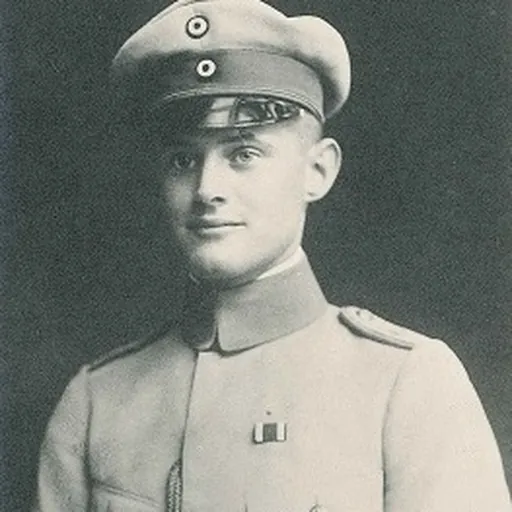
About Werner Kissling
Lived 1895 – 1988 (aged 92). Werner Kissling was a German film director, photographer, ethnographer and ethnologist.
Werner Friedrich Theodor Kissling (or Kißling) (11 April 1895 – 3 February 1988) was an ethnographer and photographer. His mother, Johanna, was a photographer and she was a central figure in his life. They were both noted for their work in Scotland.
Werner studied the Scottish crofters of Eriskay and South Uist, the farmers and fisherfolk of Dumfries and Galloway, the Māori of New Zealand, After service in both the Prussian Army cavalry and the Imperial German Navy during World War I, Kissling studied international law and history at the Friedrich-Wilhelm University in Berlin, and at the University of Königsberg (now Kaliningrad in Russia). He then pursued a diplomatic career for the new Weimar Republic, training at the Consular School in Vienna. His first German Foreign Office posting was in Latvia, where he took his earliest surviving photographs. Other postings took him to Spain, Hungary, Switzerland and the UK. He was also part of the German delegation to the League of Nations.
In 1931, Kissling came to Britain as Second Secretary in the German embassy in London. This would be his last diplomatic posting and Kissling would never see Germany again. The rise of the Nazi Party in the Weimar Republic continued to distress him and after Adolf Hitler's National Revolution in 1933, Kissling was forced to resign his position at the German embassy. Ralph Coleman, a librarian in Dumfries, where Kissling would eventually settle, relates : "After Kissling resigned, Hitler rang to tell him his regiment needed him. Werner told him that his regiment no longer existed. Hitler told him that he was a traitor to Germany, but he replied he might be a traitor to Hitler, but not to his country". Kissling moved to Cambridge, having acquired the position as ‘Keeper of Collections’ at the Museum of Archaeology and Ethnology.
Less than a year later, however, with Hitler's intelligence services keeping him under surveillance, Kissling decided to move on. Borrowing a friend's yacht, Elspeth, and armed with his Leica III 35mm rangefinder camera and a cine camera, he set sail for sanctuary in the Western Isles of Scotland, a place he had visited in previous years. Kissling was particularly interested in the architecture of the traditional house, and the Hebridean blackhouse of the Western Isles would feature prominently in his work. Indeed, he would spend 3 months living in such a house with its limited facilities, light years away from what he would have been accustomed to back in his ancestral home in Germany. During this period, in the Outer Hebrides, as well as taking hundreds of photographs, Kissling filmed some footage of daily life in the islands, footage which would form the basis of the film Eriskay: A Poem of Remote Lives.
In 1944, Kissling's brother, Georg Conrad Kissling, an officer in the Wehrmacht, committed suicide, before he could be arrested by the Nazis for his part in the 20 July plot to assassinate Hitler and overthrow the Nazi single party state. In 1945, Kissling managed to get his mother, Johanna, smuggled out of Germany with the family fortune of around £2m. The fortune, though, was not well managed, and most of it would be gone by the time of his mother's death, 16 years later, after a failed venture into the hotel business in 1952, when he bought the Kings Arms Hotel in Melrose in the Scottish Borders. Between 1952 and 1961, Kissling earned a living as a part-time writer and photographer for the School of Scottish Studies, photographing traditional skills in the Hebrides, the Scottish Borders and south-western Scotland. From 1962 to 1966, Kissling would journey to North Yorkshire for three months each summer to undertake photographic fieldwork for the University of Leeds. During 1967, Kissling mainly worked as a part-time research archivist at the English Institute of Dialect and Folk Life Studies.
These views of the islanders at work are intermingled with panoramic shots of the island and its bays, including shots of the Eriskay fishing boats, as they head off to the fishing grounds, the Eriskay Pony, and Kissling's own yacht, Elspeth.
The film was edited to raise funds for the people of Eriskay. Kissling was always concerned with the plight of the islanders including the expansion of the road network and the water supply. The resultant film was entitled Eriskay: A Poem of Remote Lives and comprised 15m 40s of the original silent, black-and-white footage. An introduction was added, together with sound, featuring narration, Scottish traditional music and conversations in Scottish Gaelic. on 3 February 1988 at the Moorheads Nursing Home in Dumfries, leaving behind him one of the most extensive photographic records of the Scottish Hebrides ever made. In his room, was found a single suitcase, filled with personal papers, photographs and lantern slides reflecting his involvement with the people of the Western Isles. Also, in the suitcase was a postcard sent by his mother from the Isle of Lewis in 1905, which must have inspired in Kissling a love of the Hebrides which was to last until his death.
Kissling was buried in the town's St Michael's kirkyard in an unmarked grave, a stone's throw from that of Robert Burns. Two years after his death, Ralph Coleman, the Dumfries librarian, organised a public subscription for a gravestone. £500 was raised to finance a simple granite headstone, inscribed with the words: SOLDIER, DIPLOMAT, SCHOLAR, GENTLEMAN. Coleman comments: “The epitaph is fitting. That's what he was – an amazing man with a depth of perception which allowed him to see what Nazism meant to Europe”.
Alfred Truckell, ex-curator of the Dumfries museum, describes Kissling as ”a brilliant man whose interests were wide-ranging and of international importance”. He says: “He took some magnificent photographs, one of which I thought was sheer brilliance. It was of the advance of the Red Army over the bridge at Riga. He made a splendid film on the Māoris of New Zealand, and he spent three months in a black house getting an insight into crofting life.”
He was a private man who wished no public recognition for himself or his work while he was alive. "He considered his research to be a race against time, and he only gave up when forced by ill-health and crippling arthritis," Mr David Lockwood, the Dumfries museum curator, wrote in Kissling's obituary.
BBC Alba commissioned a documentary on Werner Kissling from Argyll-based 'Eala Bhan'. Michael Russell, chief executive of the Scottish National Party, produced the film which was entitled, "Kissling – Duin' Ioma Fhillte", and was first broadcast in November 2009.
Films Eriskay: A Poem of Remote Lives, 1934 (see video in External Links)
Collections Dumfries Museum Dr Kissling's life and family photographs A 1978 exhibition of Dr Kissling's photographs with his own original captions Dr Kissling's photographs of blacksmithing in Dumfries and Galloway British Museum – New Zealand Photographs and Negatives Leeds Archive of Vernacular Culture – Yorkshire The Māori photographs of Werner Kissling by Amiria Salmond Haddon Photographic Collection
Publications The Character and purpose of the Hebridean Black House J.R.A.I., Vol. LXXIII, Royal Anthropological Institute, 1943 Kissling, Werner: 'House Traditions in the Outer Hebrides. The Black House and the Beehive Hut', Man, Vol. XLIV, 1944
Don’t just read it —
keep it.
Full-length biographies made to live with: read them, listen on the way to work, watch them tonight.
- E-book
- Audio
- Video
Instant download · yours to keep · every purchase keeps this site free
Important facts
People in Werner Kissling's life
Named in this biography and alive at the same time




Related people
Same field, nearest in time



Contemporaries
People whose lives overlapped Werner Kissling's

Frequently asked questions
Who was Werner Kissling?
German photographer ethnographer (1895–1988)
When was Werner Kissling born?
Werner Kissling was born on 11 April 1895 in Wrocław.
When did Werner Kissling die?
Werner Kissling died on 3 February 1988 in Dumfries.
What was Werner Kissling's occupation?
Werner Kissling was a film director, photographer, ethnographer and ethnologist.
What nationality was Werner Kissling?
Werner Kissling was German.
Sources & further reading
Cite this page
APA: Biography.guide. (2026). Werner Kissling. https://biography.guide/werner-kissling/
MLA: "Werner Kissling." Biography.guide, https://biography.guide/werner-kissling/.
Chicago: "Werner Kissling." Biography.guide. https://biography.guide/werner-kissling/.
Data last updated: 2026-09-22 · Spot an error? Report a correction.
Page generated 2026-09-27 05:10 UTC