
About Werner J. Dannhauser
Lived 1929 – 2014 (aged 84–85). Werner J. Dannhauser was an academic, editor, political scientist, writer and philosopher.
Werner Joseph Dannhauser (May 1, 1929 – April 26, 2014) was an American political philosophy professor and magazine editor. A German-Jewish émigré, he became an expert on the philosophy of Friedrich Nietzsche and on Judaism and politics and was a longtime professor of government at Cornell University. A protégé of Leo Strauss at the University of Chicago, Dannhauser had earlier been a writer and editor at Commentary magazine during the 1960s.
Early years Dannhauser was born on May 1, 1929, in Buchau in southwestern Germany. and an older sister Rose (1924–2018) also came with him. He became an American citizen in 1944.
Dannhauser earned a bachelor's degree from The New School for Social Research in 1951. There he studied for his Ph.D. under Leo Strauss, He was also an instructor at the University of Maryland at some point.
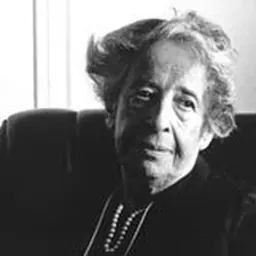
By 1963, Dannhauser's doctoral thesis, entitled The Political Philosophy of Nietzsche, was described as having been accepted for publication. The political theorist Hannah Arendt, who had an affiliation with the Committee on Social Thought, had an awareness of Dannhauser's work on his dissertation, and objected to his "tone-deafness" and what she saw as one-dimensional interpretations that ignored elements of irony and ambiguity in Nietzsche's work. In any case, Dannhauser would not finally get his Ph.D. degree until eight years later. In common with many American Jews, Dannhauser celebrated Israel's victories in the Six-Day War of June 1967.
Marriage and family Dannhauser married Shoshana Zaltzman in 1967. She was an Israeli who studied Semitic languages. she subsequently was an instructor at Cornell. of cancer. Dannhauser raised the daughters as a single parent. (this was despite his not yet having his Ph.D.) There he joined Allan Bloom and Walter Berns, two other former students of Strauss, making the department known as a bastion of political philosophy teaching. In February 1973, Dannhauser was promoted to associate professor at Cornell.
Dannhauser did not publish much as an academic, in part due to bouts with writer's block. His most prominent work was the book Nietzsche's View of Socrates, published in 1974. Arthur A. Cohen, reviewing for The New York Times Book Review, said that Dannhauser had "edited with grace and ingenuity".
Instead, Dannhauser was mainly known as a teacher. He focused on a "great books" approach to political philosophy. He was given the Clark Award in 1971, Cornell's highest recognition for teaching undergraduates.
Dannhauser's 1975 essay, "On Teaching Politics Today", published in Commentary, gained considerable notice, This stance brought about negative-to-outraged reactions from professors and students in letters to The Cornell Daily Sun over the next several days, including ones which mentioned eminent women philosophers, and subsequent negative-to-sarcastically insulting rejoinders by Dannhauser.
He was a Fellow of the National Endowment for the Humanities during the 1974–75 year. During 1981–83, he was a Visiting Fellow at the National Humanities Center. but subsequently retired from teaching altogether. Dannhauser did not mind being portrayed as a womanizer by Bellow, but did not like that Bellow had revealed details of Bloom's private life in the novel. Nevertheless, Dannhauser still felt that Bellow had gone too far: "I don't believe everything is justified for art." The volume's contributors included Francis Fukuyama, who took pains to disassociate Straussians from the "neoconservative" label. Services for him were held in Cleveland Heights, Ohio. He is buried at Zion Memorial Park Cemetery in Bedford Heights, Ohio.
John Podhoretz, son of Norman, wrote upon the passing that Dannhauser "was an American original—and of a type of which there are, sadly, fewer and fewer as the years pass. He was a deeply serious intellectual—and a bit of a reprobate."
Published books Nietzsche's View of Socrates, Cornell University Press, 1974 (second printing, 1976; republished 2019; translated to Chinese as 尼采眼中的苏格拉底, 2013). On Jews and Judaism in Crisis: Selected Essays, Gershom Scholem [editor and translator], Schocken Books, 1976 (republished Paul Dry Books, 2012).
Don’t just read it —
keep it.
Full-length biographies made to live with: read them, listen on the way to work, watch them tonight.
- E-book
- Audio
- Video
Instant download · yours to keep · every purchase keeps this site free
Important facts
People in Werner J. Dannhauser's life
Named in this biography and alive at the same time





Related people
Same field, nearest in time





Contemporaries
People whose lives overlapped Werner J. Dannhauser's

Frequently asked questions
Who was Werner J. Dannhauser?
American academic (1929–2014)
When was Werner J. Dannhauser born?
Werner J. Dannhauser was born in 1929 in Bad Buchau.
When did Werner J. Dannhauser die?
Werner J. Dannhauser died in 2014 in Frederick.
What was Werner J. Dannhauser's occupation?
Werner J. Dannhauser was an academic, editor, political scientist, writer and philosopher.
Sources & further reading
· Wikipedia: Werner J. Dannhauser
· DBpedia: Werner J. Dannhauser
Cite this page
APA: Biography.guide. (2026). Werner J. Dannhauser. https://biography.guide/werner-j-dannhauser/
MLA: "Werner J. Dannhauser." Biography.guide, https://biography.guide/werner-j-dannhauser/.
Chicago: "Werner J. Dannhauser." Biography.guide. https://biography.guide/werner-j-dannhauser/.
Data last updated: 2026-09-20 · Spot an error? Report a correction.
Page generated 2026-09-27 05:00 UTC